
Active noise cancellation vs passive isolation in earbuds
Advertisements
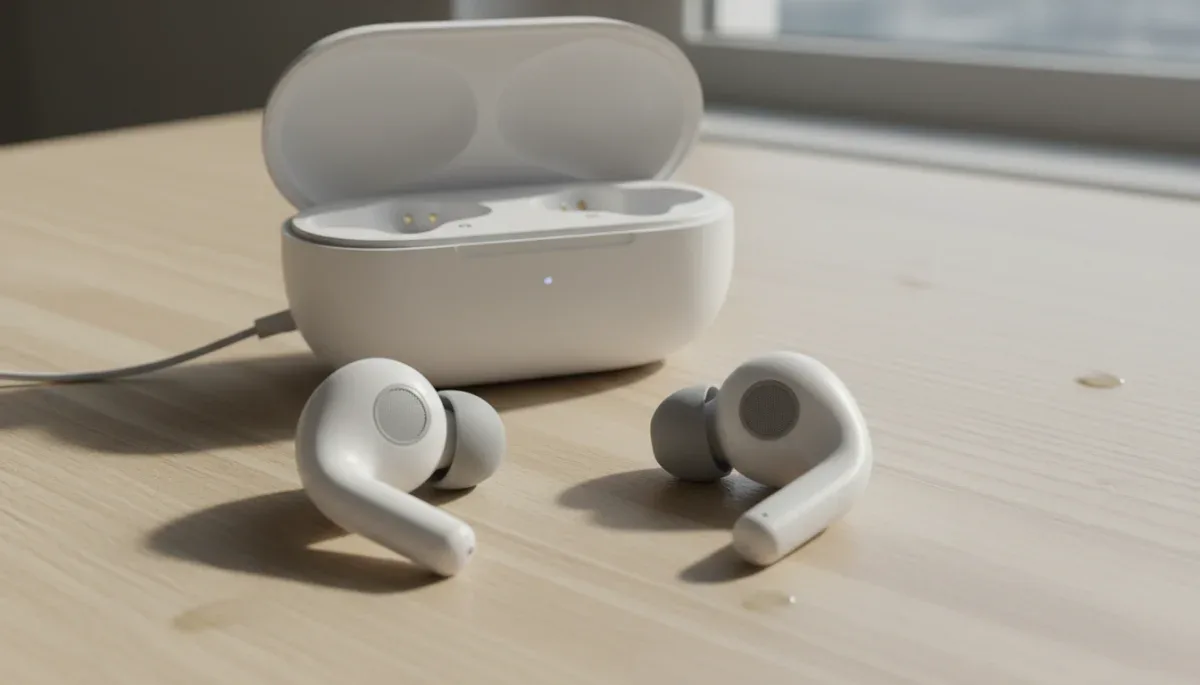
Active noise cancellation uses internal microphones and digital processors to neutralize ambient sound waves, whereas passive noise isolation depends entirely on an airtight physical seal inside the ear canal to block external noise.
This comparison helps daily commuters, remote workers, and budget-conscious electronics shoppers evaluate whether paying extra for battery-powered audio chips delivers real value over an inexpensive pair of well-fitted acoustic tips. The catch is that inexpensive active noise cancellation earbuds frequently introduce audible background hiss and deplete battery reserves quickly without blocking human voices any better than basic foam sleeves.
How passive noise isolation blocks sound physically
Passive noise isolation is an acoustic barrier created by the physical materials of the earbud housing and the tip seated inside the ear canal. When an object completely closes off an opening, sound vibrations traveling through the air cannot easily pass through the dense physical barrier into the auditory canal. Every in-ear headphone inherently provides some level of passive isolation, but the depth and density of the seal determine how much ambient decibel level drops before reaching the eardrum.
Advertisements
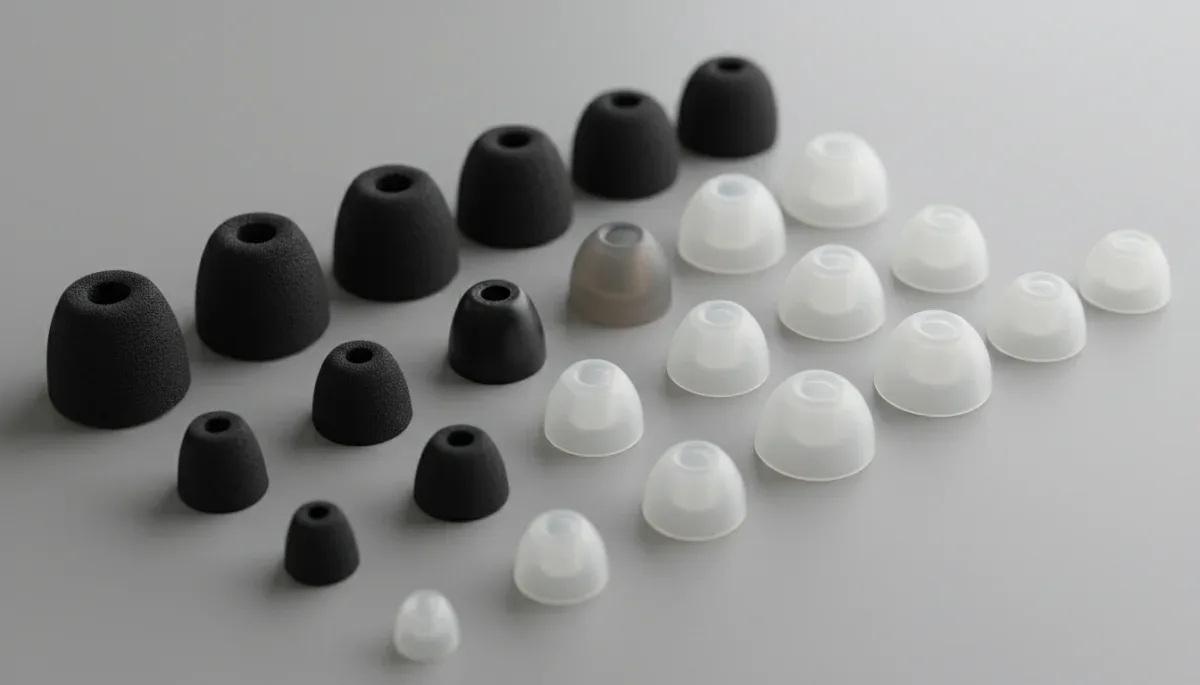
The effectiveness of passive isolation rests almost entirely on tip composition and individual ear anatomy. Standard medical-grade silicone tips offer durability and washability, but they may create microscopic air gaps if their shape does not match an irregular canal wall. Memory foam tips compress under finger pressure, expand gradually once inserted, and mold to the exact contours of cartilage, offering superior acoustic damping across mid-range and high-frequency sounds such as nearby conversations, keyboard clicks, and clattering dishes.
Advertisements
Key factors that determine passive isolation performance
- Acoustic seal integrity: An airtight contact perimeter prevents ambient sound pressure from entering the ear canal alongside the music.
- Tip material density: Viscoelastic memory foam absorbs higher kinetic sound energy than single-flange thin silicone rubber.
- Insertion depth: Deeper canal placement creates a more stable acoustic chamber that attenuates airborne treble frequencies.
- Shell ergonomics: An earbud body that rests flush against the concha prevents sound leakage around the perimeter of the nozzle.
Because passive isolation requires zero electrical energy, it never degrades audio reproduction with processing artifacts or digital noise floors. Listeners who prioritize pure audio dynamics often favor strong passive attenuation because the sound waves leaving the speaker driver reach the eardrum unmanipulated by real-time equalization algorithms.
The acoustic engineering behind active noise cancellation
Active noise cancellation, commonly abbreviated as ANC, operates on the physics principle of destructive phase interference. Sound propagates as longitudinal waves featuring peaks of high atmospheric pressure and troughs of low atmospheric pressure. An active cancellation system analyzes incoming ambient sound and instantly generates an inverted acoustic wave—a mirror image with peaks aligned to troughs—effectively canceling out the sound energy before the brain registers it.
To execute this calculation in milliseconds, active noise cancellation earbuds employ miniature microphones mounted on the exterior shell, interior sound chamber, or both. Feedforward systems rely on outward-facing microphones to sample external noises before they enter the canal. Feedback systems use inward-facing microphones to monitor what the ear actually hears and correct errors. Advanced hybrid configurations employ both orientations simultaneously, using a dedicated digital signal processor (DSP) to compare external sound against internal resonance and adjust the inverted waveform in real time.
This electronic process excels at erasing continuous, repetitive, low-frequency sound waves. Constant rumbles from jet engines, train tracks, bus chassis vibrations, and building heating units fall directly into the frequency band where cancellation algorithms perform most reliably. However, non-repetitive high-frequency sounds—such as sirens, laughing, or sudden speech—move too rapidly for consumer-grade processors to sample, invert, and project before the wave enters the ear canal.
Battery drain and hardware compromises in budget earbuds
Adding active noise cancellation to a wireless earbud demands substantial computing power from micro-sized lithium-ion cells. The digital signal processor and audio microphones draw continuous current, meaning that running active noise cancellation earbuds with cancellation switched on shortens playback duration by roughly twenty to thirty-five percent per charge cycle compared to standard playback mode.
Budget manufacturers frequently market active cancellation on entry-level products by cutting corners on acoustic components or battery volume. In lower-tier wireless accessories, manufacturers sometimes pair a generic noise-cancellation chipset with budget drivers, resulting in prominent white noise or self-noise when listening in quiet environments. Additionally, if the manufacturer keeps the battery compact to preserve a lightweight case, consumers may find themselves searching for a charging outlet after only three or four hours of continuous listening.
Common hardware trade-offs on low-cost active models
- Reduced playback lifespan: Continuous digital wave calculation drains earbud cells substantially faster than standard Bluetooth decoding.
- Increased internal noise floor: Cheap signal processors can generate a subtle hiss or background hum noticeable during quiet song passages.
- Fragile microphone grilles: External microphone ports are vulnerable to skin oil, earwax, and moisture accumulation that degrades calibration.
- Inconsistent software updates: Budget brands rarely issue firmware patches to refine cancellation filters or improve digital battery management over time.
Shoppers browsing discount electronic listings should look past broad marketing banners and inspect published battery capacities listed in milliampere-hours (mAh). Comparing estimated listening times with cancellation activated against passive listening times reveals the real efficiency of the internal chipset.
Sound quality and the ear pressure sensation problem
Active noise cancellation alters the listening experience in ways beyond mere volume suppression. Many users experience a distinct sensation often described as eardrum suction or atmospheric pressure when engaging active cancellation modes. This physiological reaction does not stem from actual barometric pressure shifts, but rather from the brain misinterpreting the sudden, artificial absence of low-frequency ambient cues while the inner ear senses normal atmospheric conditions.
Furthermore, active cancellation circuits inevitably affect frequency response curves. Because the speaker driver must output both the musical track and the anti-noise cancellation wave simultaneously, lower-cost drivers can suffer from intermodulation distortion. Bass frequencies may sound muddy or unnaturally boosted because the digital signal processor compensates heavily for low-end leakage, masking subtle details in acoustic instruments and vocal tracks.
Passive noise isolation sidesteps these acoustic compromises entirely. Since passive attenuation reduces sound evenly across the upper frequency spectrum through physical obstruction, it does not trick inner ear sensory nerves into detecting false pressure gradients. Audio signals transmit directly from the dynamic driver or balanced armature into an undisturbed acoustic cavity, preserving the original studio mix without digital coloration.
Daily scenarios and safety considerations for commuters
Choosing between passive isolation and active noise cancellation depends heavily on your daily environment, travel habits, and basic situational safety requirements. While silencing the outside world provides relaxation on a passenger train or in an open office, absolute auditory disconnection poses serious risks when navigating metropolitan streets, pedestrian crossings, or shared exercise paths.
Active cancellation earbuds generally include a digital transparency or ambient awareness mode, which uses the external microphones to blend real-world environmental sounds back into your audio feed. This electronic pass-through feature allows users to order coffee, hear transit gate announcements, or detect oncoming vehicles without physically removing the earbuds. However, digital transparency can sound robotic or struggle with wind noise if the microphone ports lack aerodynamic baffles.
Passive isolation offers a fixed level of physical muffling that remains constant regardless of battery state or software settings. If you use memory foam tips that seal your ears completely, you must physically remove one earbud to hold a conversation or check for traffic hazards. Conversely, for indoor study sessions, long flights, or noisy coffee shops, active noise cancellation earbuds provide a customized bubble of silence that passive rubber tips cannot match against prolonged engine drone.
Evaluating published specs and return policies before buying
Online tech listings on major retail platforms often promote exaggerated performance metrics to entice bargain shoppers. Phrases like active noise reduction or environmental noise cancellation are frequently conflated in product descriptions. Environmental noise cancellation, or ENC, typically refers only to microphone filters that clean up your outgoing voice during phone calls, offering zero cancellation benefits to your own listening experience.
When reviewing product specification sheets, look for decibel reduction figures stated across specific frequency bands rather than vague percentage claims. Legitimate audio specifications report cancellation depth between twenty and forty decibels, usually concentrated below one kilohertz. If a brand claims total silence across all frequency spectrums, the marketing description is misrepresenting standard acoustic physics.
Finally, always confirm the merchant return policy before purchasing in-ear electronics. Because earbud performance hinges entirely on an airtight canal seal, an earbud model that fits one listener comfortably may leak sound or fall out of another. Several online discount marketplaces restrict returns on opened personal audio equipment due to hygiene classifications, leaving buyers stuck with ineffective gear. Verify whether the retailer provides a thirty-day trial period with prepaid returns in case the tip sizes or electronic cancellation modes cause physical discomfort.
At a glance
| Evaluation factor | What to know |
|---|---|
| Noise reduction method | Active uses powered electronic wave inversion; passive uses physical sound-blocking materials. |
| Battery impact | Active cancellation reduces runtime by roughly twenty to thirty-five percent per charge. |
| Best sound targets | Active eliminates low-frequency vehicle hums; passive dampens sudden mid-to-high pitch voices. |
| Acoustic fidelity | Passive preserves original track dynamics; budget active chips often add subtle background hiss. |
Frequently asked questions
Does active noise cancellation work without playing music?
Yes, active noise cancellation functions independently of media playback as long as the earbuds are powered on. The microphones and processors continue generating inverted sound waves to hush ambient low-frequency rumble, making them useful for resting on airplanes or working quietly in busy library environments.
Can passive noise isolation damage your hearing?
No, passive noise isolation does not damage hearing and actually helps protect it. By physically blocking ambient background noise, a tight seal allows listeners to keep their audio volume at lower, safer decibel levels rather than turning up tracks to drown out environmental sounds.
Why do voices sound clear when active noise cancellation is on?
Active cancellation algorithms target repetitive, low-frequency hums and lack the processing speed to anticipate irregular human speech patterns. Because background engine rumbles vanish while high-frequency vocal spikes pass through, nearby conversations can paradoxically sound more noticeable to the listener.
Are memory foam tips better than silicone tips for isolation?
Yes, memory foam tips generally provide superior passive isolation compared to single-flange silicone tips. Memory foam expands to fill individual canal irregularities, creating an airtight, vibration-absorbing barrier that blocks several additional decibels of mid-frequency sound without needing electrical power.
The bottom line
Active noise cancellation provides noticeable relief from monotonous low-frequency travel rumbles, but it introduces extra battery drain, digital processing coloration, and added cost. Passive isolation costs less, uses zero battery, and dampens high-frequency ambient chatter effectively when paired with high-density tips. Before ordering active noise cancellation earbuds from any online merchant, verify the store return policy to confirm you can return personal in-ear audio if the fit fails to form an airtight seal.

Written by
Mariana Viana
Mariana Viana covers discounts and savings for S2YOU, from coupons and cashback to free-trial and sample programs. She compares offers and program rules across retailers, and checks every detail on the brand's official site before publishing.