
Earbud water resistance ratings: how IP codes work
Advertisements
An Ingress Protection code explains how effectively an electronic enclosure seals out unwanted matter, ranging from microscopic dust particles to pressurized streams of water. Knowing how to read these codes helps shoppers choose audio equipment suited for rainy runs, humid workouts, or simple desk duty without overpaying for rugged features they never use, though it is important to remember that factory ratings reflect controlled lab conditions rather than unpredictable everyday accidents.
Retail packaging frequently highlights claims like sweatproof or fully waterproof, yet these marketing phrases carry no legal or technical requirement on their own. Instead, reputable manufacturers test their devices against established international benchmarks to verify durability claims before printing them on the box. Understanding the numbers behind these badges prevents expensive misunderstandings, especially because liquid intrusion remains one of the most common causes of device failure that standard manufacturer warranties refuse to cover.
The international standard behind official IP codes
The Ingress Protection classification system was established by the International Electrotechnical Commission under standard IEC 60529. This global framework provides buyers with an objective measurement system, replacing subjective marketing slogans like weather-resistant or gym-ready with uniform engineering criteria. When a company submits hardware for testing, an independent or certified in-house laboratory subjects the unit to standardized exposures under strict atmospheric conditions, including specific water temperatures, water flow rates, spray angles, and durations.
Advertisements
An authentic rating always starts with the letters IP, followed directly by two alphanumeric characters. The first digit represents resistance to solid foreign objects such as fingers, coarse tools, sand, and fine dust. The second digit represents protection against moisture, moving from light vertical dripping up to prolonged underwater submersion. If a brand skips formal testing for solids, that digit is replaced with the letter X, indicating that the device has not been officially graded for dust exclusion rather than implying zero resistance.
Advertisements
Because testing facilities utilize still, clean fresh water during their evaluations, the resulting numbers describe a baseline performance under ideal conditions. In real-world environments, water contains dissolved minerals, sweat introduces caustic salts, and swimming pools contain harsh chlorine or bromine. These extra chemical factors can degrade acoustic meshes, charging pins, and adhesive gaskets far faster than the pristine laboratory fluids used during original standard compliance checks.
Decoding the first digit for solids and dust
The mechanical barrier against particulate matter runs on a scale from zero to six. Level zero means the enclosure offers no barrier against contact with internal components. Levels one through four measure defense against larger objects, such as fingers, screwdrivers, wires, and small stones wider than one millimeter. For pocketable electronics like wireless earbuds, the ratings that matter most are levels five and six, which govern fine powders and road grit.
The common solid protection tiers
- IP5X dust protected: Ingress of dust is not entirely prevented, but particulate matter cannot enter in amounts that interfere with the safe electrical operation of the device.
- IP6X dust tight: Complete protection against dust ingress, verified by running a continuous vacuum inside the housing while surrounded by circulating talcum powder for up to eight hours.
- IP0X or IPX: The device has no published protection against solids or was not submitted for mechanical particulate validation.
For individuals who run along dusty rural roads, exercise on sandy ocean beaches, or work in woodworking shops, a solid rating of five or six offers meaningful protection. Fine dust can settle inside microphone ports, lodge beneath tactile buttons, or clog speaker sound bores, leading to muffled audio or unresponsive touch controls over time. When selecting earbuds specifically for dirty environments, prioritizing a verified first digit provides reliable defense against structural contamination.
Decoding the second digit for water and moisture
Moisture resistance uses a scale running from zero to nine, with higher numbers indicating stronger defenses against progressively challenging liquid intrusions. While zero denotes an open chassis with zero moisture shielding, intermediate ratings between three and six address falling, splashing, and projected liquids. High-tier numbers like seven and eight enter the realm of true immersion, where liquid pressure builds against internal seals.
A critical detail shoppers frequently overlook is that water ratings are not strictly cumulative across every single tier. While levels one through six measure dynamic mechanical spray from oscillating tubes and high-pressure nozzles, levels seven and eight measure static hydrostatic pressure under still water. A device rated IPX7 can survive immersion in a bucket of water, yet it might theoretically fail an aggressive high-velocity jet spray test unless it also holds an IPX6 certification. Some manufacturers note dual ratings, such as IP66/IP68, to confirm resistance against both blasting spray and deep submersion.
Liquid temperature also plays an essential role during testing. Laboratory guidelines call for water temperatures close to ambient room levels. Exposing earbuds to hot water, such as wearing them inside a hot shower or a steam room, introduces thermal expansion. Steam expands gaskets, while hot vapor easily slips past membrane barriers that would easily repel cold splashes, leading to rapid electronic failure from internal condensation.
Common earbud ratings compared
Budget earbuds sold through discount platforms or included free with smartphones frequently lack any IP rating at all. While an unrated pair can handle an occasional dry commute, routine sweat exposure can slowly seep into the seams, shorting the battery or corroding the driver terminals. Knowing where a specific rating falls on the performance spectrum helps narrow down the right model for daily routines.
Everyday moisture benchmarks
- IPX4 moisture resistance: Protects against water splashing from any direction for at least ten minutes, making it the industry standard for gym workouts and light drizzle.
- IPX5 water jet defense: Withstands sustained low-pressure water streams from a 6.3-millimeter nozzle, handling heavier rainstorms and quick rinses under a bathroom tap.
- IPX7 short-term submersion: Survives immersion in clean fresh water up to a depth of one meter for thirty minutes, offering strong protection against dropped items in puddles or sinks.
- IP68 ultimate durability: Features complete dust-tight construction and handles continuous immersion beyond one meter, with depth and duration defined specifically by the brand.
For general urban commuting, office calls, and light cardio, choosing a product with an IPX4 specification delivers sufficient protection against sweat drops and unexpected raindrops. Upgrading to an IPX7 or IP68 model makes practical sense if you regularly participate in intense training, trail running in muddy conditions, or outdoor water sports, where sudden accidental submersions in shallow water are a realistic possibility.
The charging case limitation
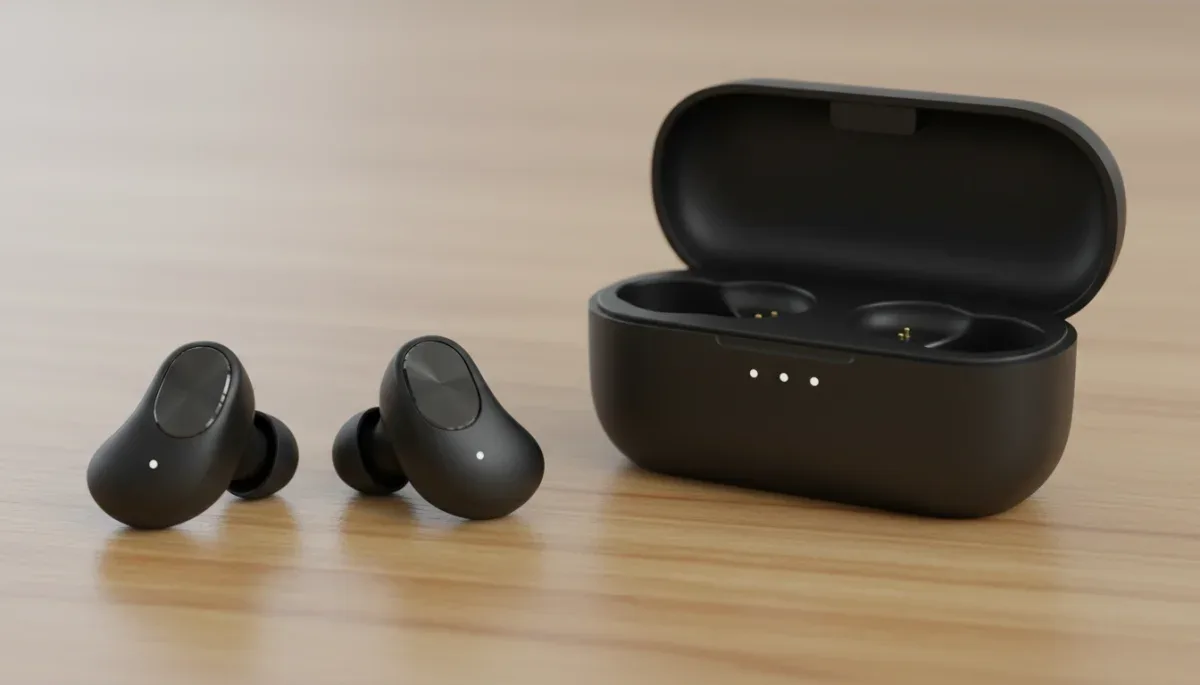
One of the most frequent misconceptions among wireless earbud owners involves the charging case. While the earbuds themselves might carry a robust IPX7 or IP68 badge, the case that houses and charges them rarely shares the same defensive rating. Developing waterproof cases requires complex rubber seals around USB-C ports, wireless charging coils, and magnetic lids, which increases physical bulk and manufacturing costs.
In most consumer audio packages, the charging case carries either no rating at all or a substantially lower classification, such as IPX2 or IPX4. Placing soaking wet earbuds back into an unsealed charging cradle exposes the internal charging pins to electrical short circuits. Moisture trapped inside a closed charging case creates a humid, enclosed microclimate that corrodes brass and copper contacts through galvanic reaction within a matter of days.
To preserve your hardware, always wipe down each earbud with a clean, lint-free microfiber cloth after workouts or walks in wet weather. Ensure that the metallic charging contacts on the stem or inner housing are completely dry before seating them inside the case. Leaving the charging lid open for several minutes in a ventilated room helps residual moisture evaporate harmlessly before power flows back through the circuitry.
Warranty fine print and wear over time
Marketing campaigns often present high IP ratings as an indestructible shield, but consumer warranty policies tell a distinctly different story. Major tech brands and third-party electronics makers include explicit clauses stating that liquid damage is excluded from standard limited warranty coverage. When you send defective hardware in for service, technicians inspect internal Liquid Contact Indicators, which permanently turn pink or red when touched by fluids, leading to immediate claim denial.
Furthermore, an Ingress Protection rating reflects the structural integrity of a brand-new device fresh off the assembly line. Every time a pair of earbuds drops onto pavement, tumbles onto a gym floor, or gets tossed roughly into a bag, the miniature acoustic meshes and internal glued seams experience physical micro-stress. Over months of regular use, normal wear and tear causes seals to dry out, stretch, or detach entirely, significantly diminishing moisture resistance.
Chemical exposure also accelerates the breakdown of protective barriers. Sunscreen lotions, insect repellents, hair care products, and salty sweat gradually dissolve adhesive bonds and degrade silicone gaskets. If your earbuds encounter anything other than clean moisture, rinse them briefly under low-pressure fresh water, pat them dry, and allow them to air dry thoroughly before connecting them to any electrical power source.
At a glance
| Rating code | Real world capability |
|---|---|
| IPX4 | Protects against light sweat and splashes from any direction during basic daily gym workouts. |
| IPX5 | Withstands steady low-pressure water sprays and heavier rain without penetrating the outer shell. |
| IPX7 | Survives temporary accidental submersion in fresh water up to one meter for thirty minutes. |
| IP68 | Blocks all ambient dust ingress and withstands continuous water submersion past one meter depth. |
Frequently asked questions
Can I wear IPX8 earbuds while swimming in a pool?
Swimming is generally not recommended unless the manufacturer explicitly markets the product for swim laps. Pool water contains chlorine that damages protective seals, and Bluetooth wireless signals cannot travel through more than an inch or two of water, causing instant audio cutouts when your head goes beneath the surface.
Does an IPX4 rating protect against heavy gym sweat?
Yes, an authentic IPX4 rating provides reliable protection against sweat during intense workout routines. The rating ensures resistance to splashing liquid from any angle. However, you should still wipe the hardware dry after training, as sweat contains corrosive salts that degrade exposed charging pins over prolonged periods.
What should I do if unrated earbuds get dropped in water?
Retrieve the earbuds immediately, power them down, and do not place them inside the charging case. Gently shake out excess water from the speaker nozzles and dry the exterior with a clean microfiber cloth. Leave them in an open, dry area with good airflow for twenty-four hours before testing them.
Why do some brands list an IP rating as IPX rather than IP6?
The letter X indicates that the manufacturer chose not to pay for or conduct formal testing against solid dust particles. It does not mean the earbud has zero physical resistance, but rather that only the subsequent moisture rating has been formally tested and verified in an accredited laboratory setting.
The bottom line
Ingress Protection ratings provide a clear, standardized way to evaluate earbud durability without relying on ambiguous marketing claims. For most listeners, an IPX4 rating delivers dependable safety against exercise sweat and unexpected rain, while outdoor adventurers benefit from IP67 or IP68 ratings. Before making a purchase, always check the manufacturer specifications to see whether the rating extends to the charging case, and confirm whether liquid damage is excluded under their warranty policy.

Written by
Mariana Viana
Mariana Viana covers discounts and savings for S2YOU, from coupons and cashback to free-trial and sample programs. She compares offers and program rules across retailers, and checks every detail on the brand's official site before publishing.