
What to check before using holiday lightning deals
Advertisements
Before purchasing any holiday lightning deals, check the item price history, the return policy exclusions, and the seller profile to make sure the markdown is genuine. Digital timers and dwindling inventory meters are designed to force quick decisions, but taking two minutes to review the fine print prevents costly mistakes on items you cannot return.
This checklist helps holiday shoppers navigate seasonal promotions across major multi-brand marketplaces and budget retail apps. The catch is that retailers often mark seasonal clearance items as final sale or quietly raise base list prices before applying promotional badges, meaning that a ninety-minute flash deal may not offer any real savings over standard pricing.
Verifying the true price history before you click buy
The primary marketing tool behind holiday lightning deals is the strike-through price. Marketplaces display a high original price crossed out next to a bold promotional figure, giving the impression of an extraordinary discount. However, retailers often use a manufacturer suggested retail price or an artificially elevated list price that the item rarely sells for during normal periods. In many cases, the current promotional rate is simply the everyday selling price dressed up with an urgency badge.
Advertisements
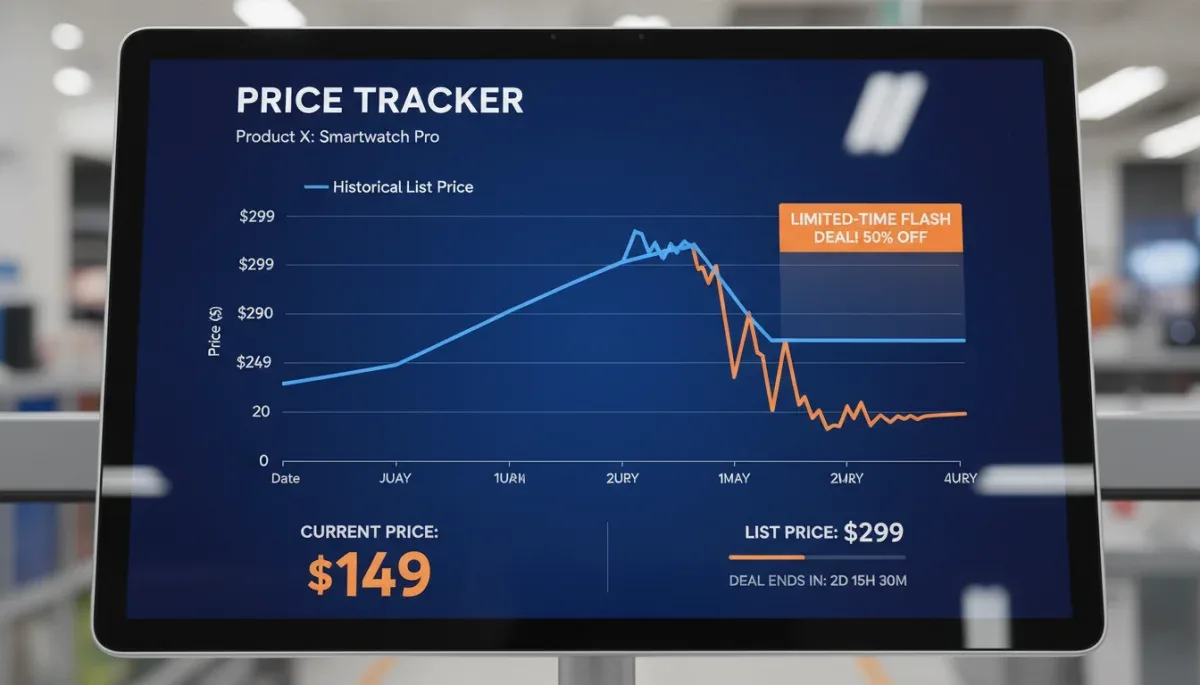
To determine whether the markdown represents genuine value, look at external price-tracking tools or search the exact item model across two competing retail sites. Independent pricing trackers maintain records of price fluctuations on major marketplaces over thirty, sixty, and ninety days. If the tracking graph reveals that the product maintained the same promotional price three weeks earlier, the holiday lightning deal is simply normal inventory repackaged to capitalize on gift-buying pressure.
Advertisements
Comparing identical stock-keeping units across alternative storefronts also establishes a realistic baseline. Pay close attention to bundle configurations during the holiday quarter. A seller might offer an electronics bundle or a multi-pack of home goods through a flash deal, claiming massive savings, while individual components purchased separately elsewhere total less than the promotional bundle price. Always isolate the core product and verify its standalone market value before committing your funds.
Examining return windows and holiday exclusion rules
While many national retailers extend their return windows through January for purchases made in November and December, promotional flash items frequently operate under separate rules. Merchants routinely designate lightning deals, doorbusters, and clearance events as final sale. If a garment does not fit or a gadget fails to perform out of the box, standard seasonal return guarantees will not apply if the listing contains an explicit final-sale notation.
Read the exact return terms displayed on the product page rather than relying on the general marketplace banner. Look specifically for restocking fees and return shipping charges. Even when a platform accepts returns on flash stock, the merchant may require the buyer to cover return postage or deduct a processing fee between ten and twenty percent of the refund amount. For low-cost clothing or home accessories, return shipping fees can easily wipe out the entire value of the initial savings.
Key return details to inspect on the listing
- Final-sale tags: Verify whether the checkout screen marks the inventory as non-returnable or exchange-only.
- Return postage liability: Confirm whether the seller provides prepaid labels or requires you to pay carrier rates.
- Condition requirements: Check if opening original packaging or removing protective wraps voids the return eligibility.
- Extended window dates: Confirm whether the item qualifies for the standard January return cutoff or must be returned within fourteen days.
Evaluating third-party seller ratings and fulfillment channels
Major online platforms allow millions of independent sellers to participate in seasonal promotional events. Just because a lightning deal appears on a trusted marketplace does not mean the platform itself sources, inspects, or delivers the product. Third-party merchants often supply promotional items, and their reliability can vary drastically when peak holiday logistics place strain on international and domestic fulfillment networks.
Inspect the seller name and fulfillment method before placing your order. When an item is sold and shipped directly by the primary platform, customer service disputes, lost parcels, and refund requests are typically processed under standard platform protections. When an order is fulfilled by a third-party seller operating from overseas, shipping delays can stretch for several weeks, meaning a planned holiday gift might arrive well after celebrations conclude.
Review the seller feedback tab rather than relying solely on product star ratings. Look specifically for recent negative reviews logged within the past thirty to sixty days. Frequent complaints regarding incorrect sizes, missing components, slow dispatch times, or unresponsive customer support are clear signals to skip the deal. A heavy discount offers zero practical benefit if the merchandise arrives broken or fails to reach your doorstep on schedule.
Calculating total checkout costs and shipping thresholds
Flash promotions often advertise single-item price cuts that appear irresistible at first glance, but the initial price tag rarely reflects your out-of-pocket total. Digital retail checkout systems use countdown clocks to keep shoppers moving forward, discouraging them from scrutinizing add-on costs such as baseline shipping, handling fees, or minimum spending requirements that wipe out the advertised markdown.
Many marketplaces restrict complimentary delivery to orders exceeding a specific monetary threshold, such as thirty-five or fifty dollars at the time of writing. If you purchase an eight-dollar lightning deal that incurs a seven-dollar shipping fee, the realized discount disappears. Alternatively, shoppers often add unnecessary filler items to their cart simply to clear the free shipping barrier, ultimately spending more money than they originally intended to save.
Always review the final payment screen to verify applied taxes, shipping charges, and any automatic warranty upsells. Certain platforms automatically opt customers into protection plans, subscription trials, or priority handling upgrades during accelerated checkout sequences. Unchecking these pre-selected boxes ensures that your final receipt accurately matches the promotional price advertised on the product page.
Assessing product specifications and model variations
Retailers frequently use holiday lightning promotions to clear warehouses of older, discontinued, or modified hardware iterations. While the promotional image might look identical to the latest market release, the model number often reveals an older generation lacking updated components, software support, or modern connectivity standards. This practice is especially common with home audio, portable power banks, smart home accessories, and seasonal apparel.
Cross-reference the explicit model code listed in the technical specifications against the manufacturer catalog. In the electronics category, look closely at battery capacity, charging ports, wireless protocols, and display resolutions. For apparel and household textiles, examine the material composition table rather than relying on marketing titles. Synthetic polyester blends are frequently marketed with terms like silk-touch or cashmere-feel to mimic premium fabrics while using low-cost construction.
Product details that warrant careful review
- Model numbers: Confirm the manufacturing year to ensure software updates remain supported.
- Fabric composition: Review the precise percentage of synthetic fibers versus natural materials.
- Physical dimensions: Check metric and imperial measurements to avoid misleading photo scale.
- Included accessories: Verify whether charging cables, power adapters, or required batteries come in the box.
Recognizing behavioral pressure tactics during checkout
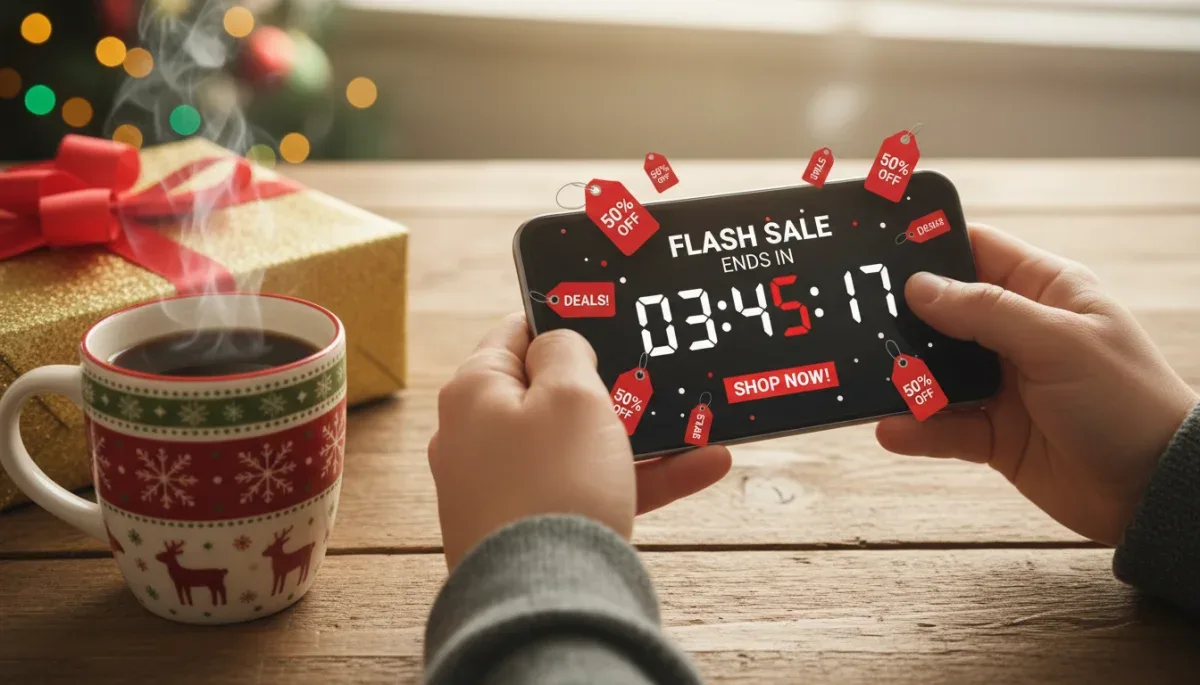
E-commerce interfaces rely on behavioral cues known as dark patterns to nudge consumers toward rapid spending during sales events. Lightning deal displays prominently feature ticking stopwatches, progress bars showing claims of ninety percent claimed, and banners stating that twenty other shoppers have the item in their cart. These indicators are engineered to induce fear of missing out, which reduces deliberate consideration.
Recognizing these urgency mechanisms as standard digital design elements allows you to retain control over your shopping budget. The claimed percentage meter is often tied to an arbitrary promotional quota rather than true warehouse exhaustion; once a lightning allocation expires, the product frequently remains available at normal retail pricing or transitions into a subsequent deal round shortly after.
Maintain an intentional gift list with firm price ceilings throughout the shopping season. If an item appears in a flash sale that was not on your original planning list, step away from the device for fifteen minutes. The pressure to secure the deal will dissipate, allowing you to evaluate whether the purchase serves an actual household need or simply satisfies an impulse triggered by a colorful website countdown.
At a glance
| Check factor | What to verify |
|---|---|
| Price baseline | Check third-party tracking tools to ensure the list price was not inflated right before the sale. |
| Return terms | Confirm the item is not marked final sale and verify whether return shipping fees apply. |
| Merchant identity | Review whether the seller is an authorized merchant and check their recent shipping feedback. |
| Landed cost | Check whether delivery charges or cart-minimum requirements eliminate the promotional savings. |
Frequently asked questions
Can I return an item bought during a lightning deal?
Yes, unless the retailer specifically marks the item as final sale or clearance. Always inspect the product page for non-returnable designations, and confirm whether you must pay for return postage or restocking fees before completing checkout.
Are flash sale countdown timers real?
Yes, the timer reflects the promotional price window set by the seller, but it does not mean inventory will disappear. Once the deal ends, the product usually remains in stock at its standard everyday price.
Why do some lightning deals seem more expensive than normal?
Sellers sometimes raise base prices immediately before a sale event to make promotional discounts appear larger than they are. Using external price trackers reveals whether the markdown provides genuine value compared to recent historical averages.
Do lightning deal prices include free shipping?
No, promotional prices do not automatically guarantee free delivery. Unless your cart meets the store minimum threshold or your account includes a delivery membership, standard shipping fees will be added at the final checkout screen.
The bottom line
Holiday flash promotions offer real savings only when the underlying product meets your standards, carries full return protections, and avoids inflated list prices. Digital timers create urgency, but taking time to calculate total landed costs protects your budget from buyer remorse. Before you complete your purchase, confirm the exact return terms on the product page to ensure you can send it back if it fails to meet your expectations.

Written by
Rita Luiza
Rita Luiza covers home and kitchen for S2YOU, from everyday essentials and small appliances to product-testing panels for household goods. She compares prices, warranties and return policies across retailers, and checks every detail on the brand's official site before publishing.