
How to inspect clothing seam construction online
Advertisements
You can evaluate clothing seam construction from online store photos by zooming into high-stress joints, checking stitch tension along hemlines, and examining pattern alignment across panel borders. Examining these visual clues helps you verify whether a garment is built to withstand repeated wearing and laundering before you place an order.
This visual inspection technique helps online apparel shoppers avoid garments that tear, twist, or unravel quickly, though digital smoothing tools and aggressive studio lighting on commercial retail websites can sometimes mask subtle structural flaws.
Recognizing common seam types in catalog photos
Different garments require specific seam structures depending on the fabric weight, stretch, and intended purpose. When browsing product listings, zooming in on edge transitions and joining lines reveals the method used to assemble the pieces. Woven fabrics like cotton poplin, denim, and linen rely on structured seams to prevent edge fraying, whereas knit fabrics require flexible seams that stretch with the body.
Advertisements
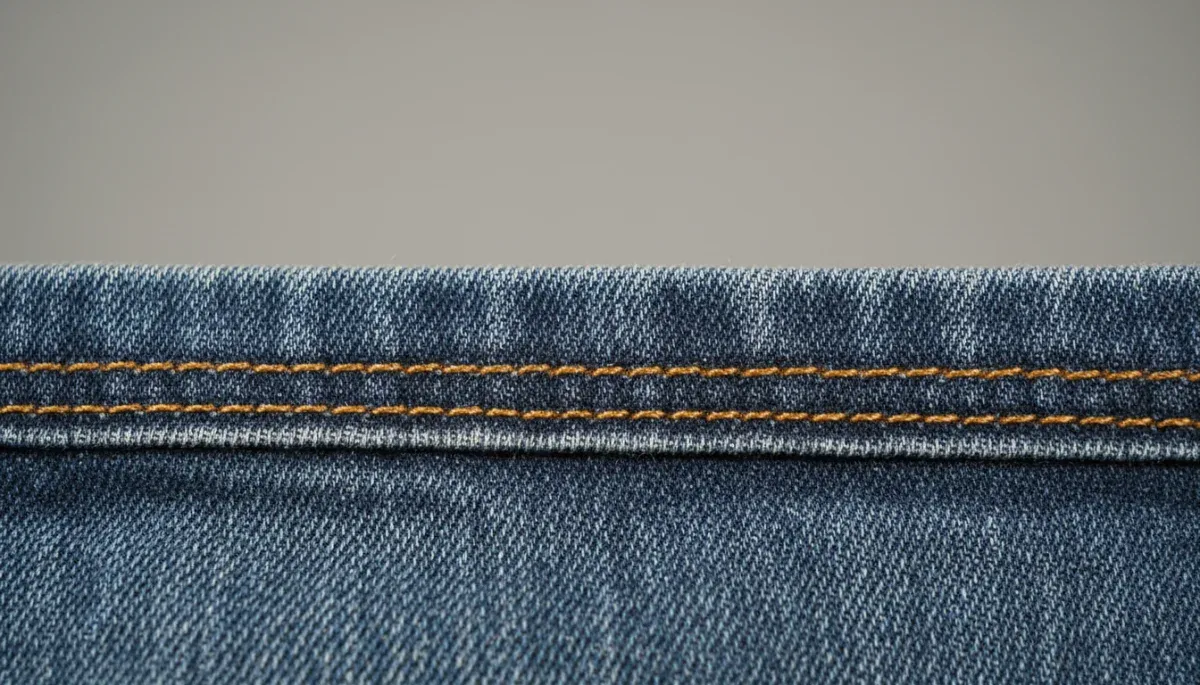
Enclosed seams represent a high standard of garment assembly because raw fabric edges are fully encased within the stitch structure. A flat-felled seam features two parallel rows of visible topstitching with all raw edges tucked neatly inside, which is standard on durable workwear, jeans, and tailored dress shirts. French seams, frequently found on delicate fabrics such as silk, chiffon, and lightweight rayon, encase raw edges internally without exterior topstitching, creating a sleek, smooth profile that lies flat against the body.
Advertisements
Key seam structures to identify in product galleries
- Flat-felled seams: Identifiable by two parallel stitch lines on the outside of the garment, offering exceptional structural reinforcement.
- French seams: Apparent through narrow, clean exterior joins on sheer or lightweight fabrics without visible overlock threads.
- Overlock or serged seams: Characterized by interlocking thread loops along interior edges, commonly visible when retailers display inside-out views.
- Plain pressed-open seams: Distinct flat panel connections where the seam allowances are ironed open to reduce bulk on heavier tailored garments.
- Coverstitch seams: Standard on knit hemlines, presenting two parallel straight lines on the exterior and a looping grid on the interior.
If a product listing displays close-up photos of sheer fabrics and shows loose, unsealed threads along the side joins, the garment lacks enclosed construction. High-quality manufacturing chooses seam types that match fabric characteristics to ensure longevity.
Spotting poor tension, puckering, and skipped stitches
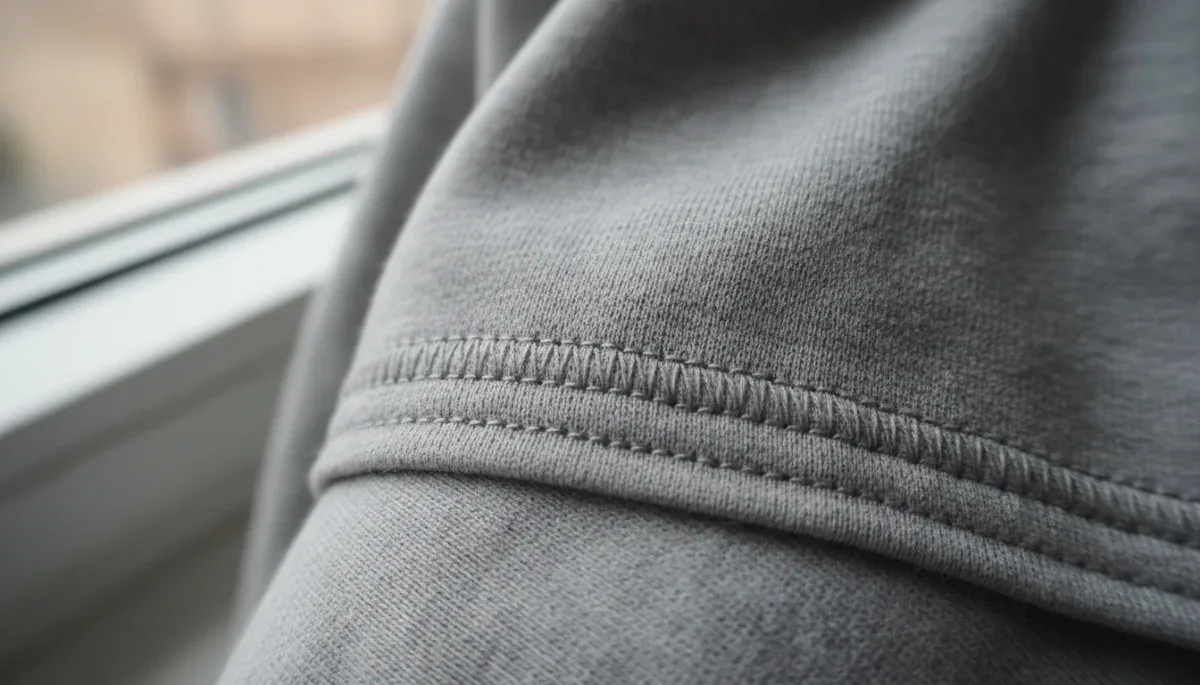
Stitch quality directly reflects the precision of the manufacturing process. Balanced thread tension ensures that the upper and lower threads lock securely in the middle of the fabric layers. When tension is poorly calibrated on factory sewing machines, visible defects appear along the seamlines that are readily identifiable in sharp catalog images.
Puckering occurs when the sewing machine pulls the fabric unevenly during stitching or when the thread tension is set too tight. This defect creates a rippled, wavy appearance along an otherwise flat seam. In woven shirts and trousers, puckering along the placket, yoke, or outseam indicates that the fabric will likely warp further after being washed. While intentional design gathers create deliberate, uniform fullness, tension puckering looks uneven, tight, and distorted.
Visual red flags in product photo close-ups
- Wavy seamlines: Seams that fail to lie completely flat against the mannequin or model, forming unwanted ripples.
- Visible thread loops: Loose loops of thread sitting on top of the fabric surface, indicating loose top tension.
- Skipped stitches: Noticeable gaps in an otherwise continuous stitch line where the needle failed to catch the bobbin thread.
- Thread bunching: Small clusters or nests of tangled thread at the beginning or end of a visible stitch row.
Skipped stitches severely compromise seam integrity because a single broken loop can cause the entire stitch row to unravel under standard tension. When reviewing zoomable product images, examine the stitch uniformity across long straight sections to confirm that the spacing remains even from start to finish.
Checking seam placement and pattern alignment at junctions
Pattern matching at seam junctions is a reliable indicator of manufacturing quality. Cutting fabric panels to align stripes, plaids, and large geometric prints requires additional fabric yardage and precise manual cutting. Budget production methods often stack multiple layers of fabric and cut them quickly without regard for pattern continuity, resulting in jarring misalignments at the side seams, front plackets, and sleeve heads.
Horizontal stripes should flow seamlessly across the front and back panels at the side seams. When a striped garment shows horizontal lines that drop or rise abruptly where two panels meet, the construction lacks precision. On button-up shirts, check whether the print on the breast pocket aligns with the background fabric of the shirt body. Complete continuity indicates that the garment was cut with care.
Seam alignment at anatomical intersection points provides another critical quality check. On trousers and shorts, the four-way crotch intersection—where the front, back, and inseams meet—should form a precise cross. Misaligned, offset seam junctions at the crotch or armscye indicate hasty assembly that can lead to uneven stress distribution and premature tearing along the joint.
Evaluating hem finishing and interior edge treatments
Hemlines anchor the edges of garments and protect the fabric from fraying, curling, or stretching out of shape. Examining the lower edge of skirts, dresses, trousers, and shirts in catalog photos reveals whether the manufacturer invested in durable edge treatments or took shortcuts to save production time.
A double-turned hem involves folding the raw fabric edge under twice before stitching, completely sealing the raw edge within the fold. This method provides stability, weight, and clean lines. In contrast, a single-fold hem with visible overlock stitching along the underside is faster to produce but offers less structural body and can curl upward after washing. On lightweight dresses and tops, look for blind hems where the stitches are nearly invisible from the exterior, preserving a clean aesthetic.
Hem attributes to verify before purchasing
- Uniform hem depth: The folded allowance should maintain an even measurement all the way around the garment circumference.
- Flat edge drape: The hemline should hang level without flaring outward or curling upward at the corners.
- Secure edge sealing: Knit edges should feature flexible coverstitching, while wovens should feature enclosed turns or tight bindings.
- Clean corner mitering: Garment vents and split hems should display neatly folded, square corners without protruding thread ends.
Raw-edge hems, where the fabric is simply cut and left unstitched, occasionally appear as a stylistic choice. However, on fabrics that are prone to unraveling, an unfinished edge significantly shortens the wearable lifespan of the item unless reinforced with a stay-stitch line.
Assessing reinforced stress points and hardware attachments
Pockets, belt loops, zipper bases, and slit openings endure continuous mechanical stress during everyday movement. Quality clothing seam construction incorporates specialized reinforcement techniques at these vulnerability zones to prevent the fabric from ripping away from the main body.
Look for bar tacks—dense, closely spaced zig-zag stitch bars—at the upper corners of patch pockets, along the top and bottom of belt loops, and at the base of zipper openings. On jeans and heavy outerwear, metal rivets often provide this essential reinforcement. If an online photo shows deep pockets or heavy belt loops attached with only a single, delicate straight stitch, the joint is susceptible to tearing under normal use.
Buttonholes and zipper insertions also demand careful visual inspection. A properly constructed buttonhole features dense, tight purl stitching around the slit with clean, stabilized edges that prevent the base fabric from fraying. Examine photos of open jackets and cardigans to ensure that zippers are sewn straight without rippling the surrounding placket fabric, which happens when the zipper tape is stretched unevenly during attachment.
Using customer review photos to verify real-world construction
Retailer studio photography relies on strategic styling, hidden clips, professional pressing, and digital editing to present garments in their best possible light. Customer review sections offer unedited photographs that show how the clothing seam construction appears in real environments under standard lighting conditions.
Focus your attention on customer images that show the garment laid flat on a surface or hung on a hanger. These angles allow you to inspect the true drape of the side seams and hemlines without body movement masking structural imbalances. Pay close attention to review photos that capture the garment after it has been laundered, as washing often exposes latent tension issues, such as twisted side seams caused by fabric panels cut off-grain.
Some helpful shoppers post photos of garment interiors, revealing serging quality, lining attachments, and pocket bags. An interior lined with fully finished overlock stitching and neatly secured seam allowances confirms that the internal construction matches the exterior appearance, ensuring comfort and long-term durability against skin friction.
At a glance
| Construction factor | What to look for |
|---|---|
| Seam puckering | Check for rippling along straight seams that indicates improper thread tension. |
| Pattern matching | Look for continuous horizontal stripes or plaids across side seams and pockets. |
| Stress point reinforcement | Verify that bar tacks or rivets secure pocket corners, belt loops, and slits. |
| Hemline finishing | Ensure hems are double-folded or neatly coverstitched with an even width throughout. |
Frequently asked questions
What is the most durable seam type to look for on heavy clothing?
Flat-felled seams offer the highest durability for heavy garments like jeans and jackets. They encase raw fabric edges completely and feature two parallel rows of exterior topstitching, providing exceptional resistance to tension and wear.
Why do some side seams twist forward after washing?
Side seams twist when garment panels are cut off-grain to conserve fabric during manufacturing. Once washed, the misaligned yarn structure shrinks unevenly, pulling the seamline toward the front or back of the garment permanently.
How can I tell if a knit hem will stretch without breaking?
Look for a coverstitch hem, which displays two parallel lines on the outside and a flexible looping grid on the reverse side. This specific stitch configuration allows the hemline to stretch alongside the elastic knit fabric without popping threads.
Can photo editing completely hide poor stitching online?
Digital retouching can smooth minor puckering, but it rarely conceals fundamentally mismatched patterns, uneven hemlines, or absent reinforcement stitches. Zooming in closely on unedited customer review photos provides the most reliable verification of real construction quality.
The bottom line
Carefully evaluating clothing seam construction from online store photos helps you identify well-crafted apparel before committing to a purchase. By zooming in on high-stress intersections, checking for balanced stitch tension, and verifying pattern alignment across seam boundaries, you can accurately assess garment durability. Before finalizing your order, cross-reference the promotional studio images with unedited customer review photos to confirm that the real-world stitching and internal finishes match the advertised presentation.

Written by
Lucas Bastos
Lucas Bastos covers electronics and gadgets for S2YOU, from audio, smart-home and phone accessories to product-testing programs for tech. He compares specs, prices and return policies across retailers, and checks every detail on the brand's official site before publishing.