
Stacking coupons and rewards at retail checkout
Advertisements
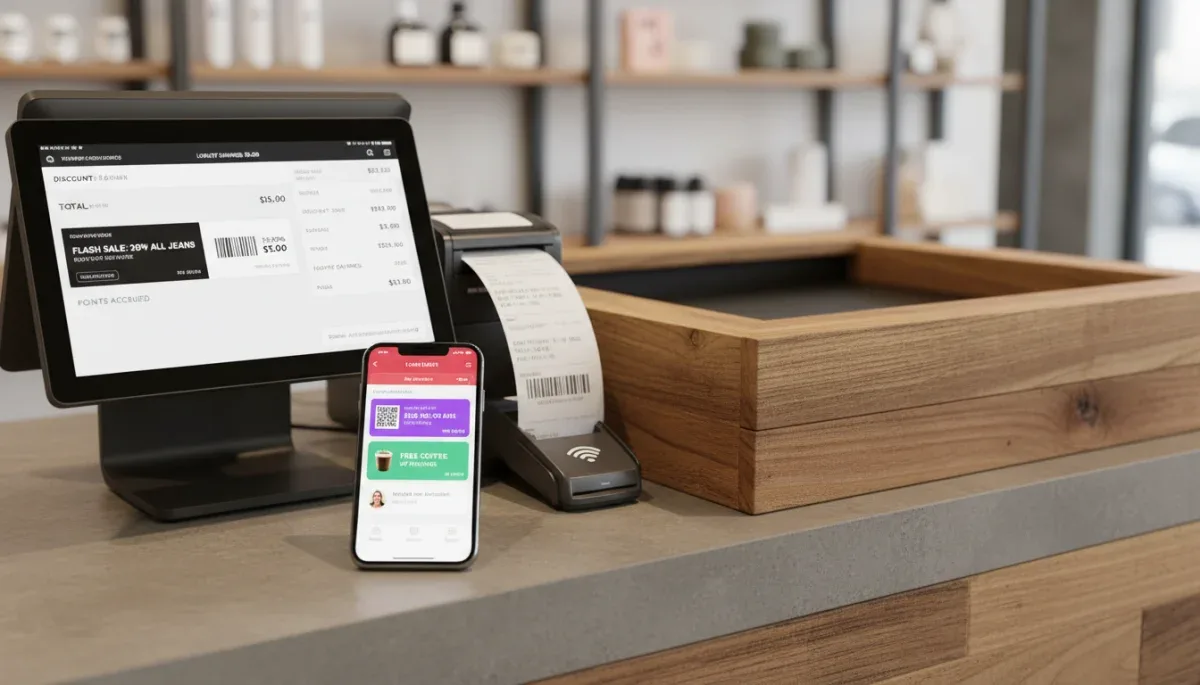
Retail checkout registers allow stacking coupons and rewards only when the applied discounts belong to completely different promotional classifications within the store system. Combining manufacturer vouchers, store-wide promo codes, and earned loyalty balances depends entirely on whether the register program treats an incentive as an item discount, a transaction discount, or tender.
This breakdown helps shoppers who want to reduce out-of-pocket costs on routine purchases, but the catch is that automated point-of-sale programming determines the sequence of deductions, which can quietly shrink the value of percentage-off coupons or disqualify minimum spending requirements.
How checkout software distinguishes coupons from rewards
Point-of-sale systems run on pre-configured software that categorizes every discount code, scannable paper slip, and digital account perk into specific operational tiers. A coupon is technically defined as a price reduction, which lowers the cost of either an individual product or the entire merchandise total before taxes. In contrast, store rewards earned through loyalty programs frequently function as tender, meaning the checkout system treats them like store-issued cash, gift cards, or store credit rather than a direct reduction of merchandise cost.
Advertisements
Because these promotional instruments belong to separate accounting categories, registers can theoretically accept both on the exact same transaction without triggering an automated block. When an item has a manufacturer coupon attached to it, the retailer collects reimbursement from the product brand for that specific barcode. Because the store does not finance that portion of the discount, many store policies allow shoppers to combine that brand-funded discount with a store coupon, such as a category discount for personal care items.
Advertisements
Conflict arises when a shopper attempts to present multiple offers from the same structural category. Most registers restrict checkout totals to one store-wide promotional percentage and one manufacturer coupon per physical item. Attempting to add a second discount from an identical classification will prompt the register to reject the newest scan or overwrite the previous promotion with the higher-value alternative.
The impact of checkout calculation sequence
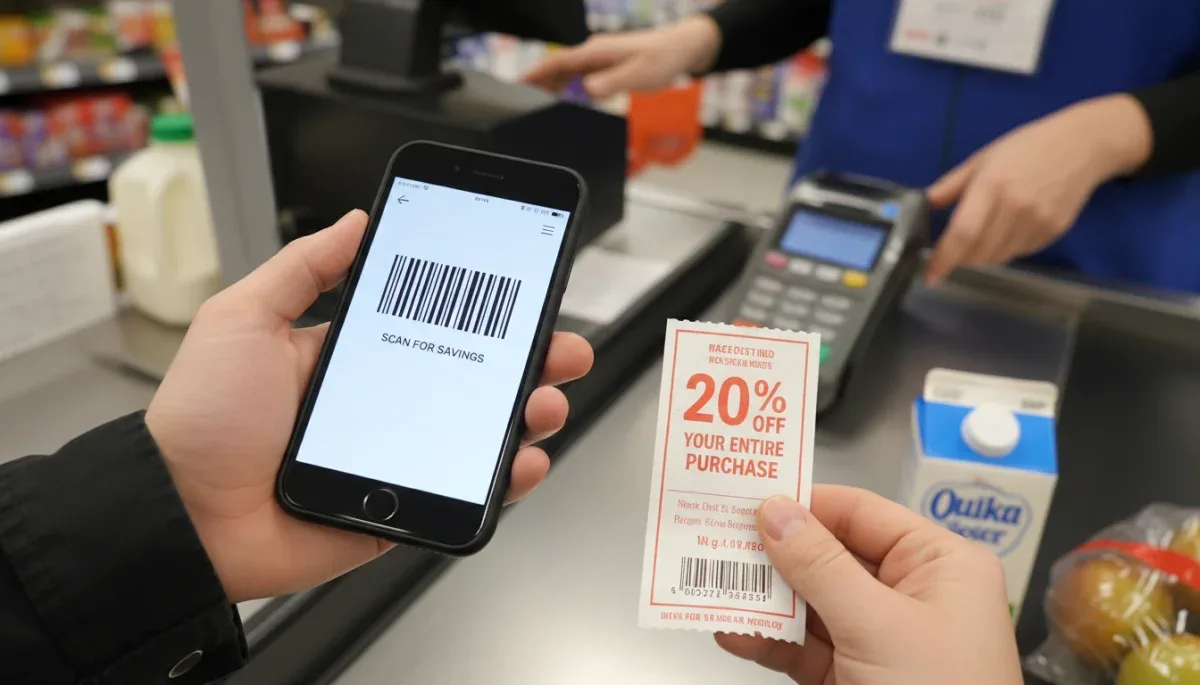
The order in which promotional deductions apply significantly alters the final receipt balance. Modern checkout registers follow an automated math hierarchy that customers cannot manually adjust at the payment terminal. In most retail programs, item-specific manufacturer coupons apply first, followed by category-specific store promotions, then transaction-wide percentage reductions, and finally earned store rewards or digital loyalty certificates.
When a percentage-off promotion is applied after fixed-dollar rewards or item coupons, the overall financial savings decrease. If a customer holds a 20 percent store coupon and twenty dollars in earned rewards certificates for a one-hundred-dollar cart, the calculation path changes the bottom line. If the register deducts the twenty-dollar certificate first, the transaction subtotal drops to eighty dollars, causing the twenty percent coupon to yield sixteen dollars in savings instead of twenty dollars.
Common calculation steps at register
- Individual manufacturer coupons reduce the listed price of eligible items first.
- Store-wide dollar-off thresholds deduct from remaining eligible merchandise subtotals.
- Percentage coupons apply against the modified balance rather than original shelf prices.
- Earned store rewards process as alternative tender against the remaining balance.
Shoppers who monitor the register monitor screen can observe these step-by-step subtotals shifting with each scanned barcode. Understanding this built-in sequence prevents confusion when a percentage coupon produces a smaller price deduction than expected on a stacked receipt.
Common rules across major retail loyalty programs
National retail chains maintain official written coupon policies that outline their exact stacking allowances, though automated register programming enforces the final decision. Drugstore chains have historically supported complex stacking methods, enabling loyalty members to pair paper manufacturer coupons with digital in-app deals and accrued loyalty cash balances on a single purchase, provided the total price does not drop below zero dollars.
Department stores and apparel retailers tend to enforce stricter boundaries around their proprietary reward currencies. Programs such as promotional cash vouchers usually function as transaction-level coupons rather than tender. At these stores, applying promotional cash automatically lowers the qualifying cart balance before any percentage-based discount codes scan, which diminishes the relative impact of general sale promotions.
Big-box retailers generally permit stacking one manufacturer coupon with one store-issued discount per item, provided the items meet specific size and brand criteria. However, many mass-market stores no longer offer overage, which occurs when a coupon value exceeds the price of the product. At checkout, the register simply reduces the coupon value to match the item cost, preventing customers from applying remaining voucher amounts toward other items in the basket.
Minimum spend thresholds and coupon exclusions
A frequent obstacle during checkout stacking involves meeting minimum spending requirements for threshold coupons, such as receiving ten dollars off a purchase of fifty dollars or more. Retail software tracks both the raw retail total and the discounted qualifying total throughout the checkout process. Whether the register applies your threshold coupon depends on whether the system measures your spending before or after other coupons scan.
Many checkout systems require the cart balance to sit at or above the threshold amount after all item-level manufacturer coupons and category markdowns have processed. If a customer scans fifty dollars in goods and immediately applies fifteen dollars in manufacturer coupons, the qualified merchandise total falls to thirty-five dollars, instantly invalidating the transaction-level coupon.
Typical items excluded from threshold requirements
- Prescription medications and clinical pharmacy services.
- Prepaid gift cards, financial instruments, and phone cards.
- Alcoholic beverages, tobacco products, and state-regulated goods.
- Shipping surcharges, delivery fees, and local sales tax levies.
Reviewing the fine print of a threshold promotion reveals whether the required amount applies to the pre-tax, pre-coupon total or the post-discount balance. Factoring in exclusions before arriving at the cash register protects customers from unexpected transaction failures.
Online cart limitations compared to in-store registers
Digital checkout interfaces enforce rules much more strictly than in-store physical registers. When shopping through a mobile app or desktop browser, the promotional code field is often limited to a single entry box, preventing customers from combining multiple promo codes even if physical store policy permits it at the register.
Physical store registers often feature automated multi-scan capabilities and allow cashier overrides within set managerial limits. An in-store point-of-sale terminal can accept a printed paper coupon, scan an app-based loyalty code, and subtract earned account rewards without triggering an error. In contrast, an online checkout engine validates entries against a rigid software algorithm that immediately flags overlapping promotions as incompatible.
Some retailers have begun integrating digital wallet systems into their shopping apps to mirror physical register capabilities. These platforms allow shoppers to check boxes next to manufacturer deals, store coupons, and reward balances within their digital accounts. When paying, scanning a single master barcode transmits all clipped incentives to the transaction at once, reducing checkout friction while adhering strictly to automated stacking limits.
Managing returns when deals were stacked
Returning an item that was purchased using multiple stacked promotions creates complicated receipt adjustments. Retailers do not return coupons or distribute unspent manufacturer voucher values as cash. Instead, modern inventory and accounting software prorates applied discounts across every qualified product on the transaction.
When a transaction uses a twenty-dollar transaction coupon across four different twenty-five-dollar items, the system does not take twenty dollars off one item. It assigns a five-dollar discount to each of the four products. If a customer subsequently returns just one of those items, the refund amount reflects the net purchase price of twenty dollars, not the full twenty-five-dollar retail value shown on the shelf tag.
Earned loyalty rewards present unique return challenges depending on store accounting policies. Some stores credit used rewards certificates back to the member account balance within several business days, while others permanently forfeit the redeemed points once the purchase completes. Checking the customer service refund terms on the store website confirms whether promotional tender is restored or lost after processing an item return.
At a glance
| Factor | What to know |
|---|---|
| Stacking clearance | Registers permit combinations across distinct promotional classifications like tender, manufacturer, and store codes. |
| Calculation order | Fixed discounts often apply before percentage codes, reducing the total dollar savings of percentage discounts. |
| Spend thresholds | Many stores calculate minimum threshold requirements after other coupons have already lowered the cart subtotal. |
| Return proration | Promotions distribute evenly across qualifying items, reducing the refund amount for individual returned goods. |
Frequently asked questions
Can I combine two store coupons on the same item?
No, retail checkout registers almost universally limit items to one store coupon each. You can generally pair one store coupon with one manufacturer coupon on a single product, but attempting to add a second store-issued discount will cause the register to reject the entry or replace the existing deal.
Do store rewards count as coupons or as cash payment?
Store rewards typically function as tender rather than standard coupons, meaning the register processes them like store credit. However, some retailers program proprietary rewards as transaction-level discounts, which lowers your pre-tax total and can reduce the effectiveness of percentage coupons applied afterward.
What happens if my coupon value is higher than the item price?
Most major retail checkout systems automatically adjust the coupon value downward to match the exact retail price of the item. True cash overage is rare across modern retail registers, meaning unused discount value will not apply toward other merchandise in your shopping cart.
Will returning an item restore the reward points I redeemed?
Policy varies by store, with some retailers returning loyalty balances to your account within several days while others forfeit the value entirely. Because store rules differ, review the written return policy on the retailer official website to confirm whether promotional tender is restored or lost after processing an item return.
The bottom line
Stacking coupons and rewards allows shoppers to secure lower checkout prices, but transaction success depends on whether store software treats incentives as coupons or tender. Because deduction sequences change how much percentage discounts save and whether minimum thresholds are met, review the official coupon and rewards policy on the retailer website before completing your transaction.

Written by
Rita Luiza
Rita Luiza covers home and kitchen for S2YOU, from everyday essentials and small appliances to product-testing panels for household goods. She compares prices, warranties and return policies across retailers, and checks every detail on the brand's official site before publishing.