
How tracking price history reveals real holiday deals

Advertisements
Tracking price history reveals whether an advertised holiday discount is a genuine price reduction or an artificial markdown calculated from a temporary price hike. Monitoring historical costs enables shoppers to identify baseline price tags across previous months and avoid misleading promotional banners.
This strategy protects budget-conscious consumers looking for electronics, apparel, and home essentials, though it requires setting up tools in advance and learning how different platforms report their retail baselines.
How retailers manipulate reference prices before major sales
A standard retail practice across online marketplaces involves adjusting reference figures in the weeks leading up to major promotional periods. To present an impressive percentage discount, a seller may raise an item's selling price to its full list rate in September or October. When the promotional week arrives, the merchant drops the cost back to its normal everyday selling level while marketing the shift as a substantial seasonal markdown. Without historical context, consumers assume the product has reached an unprecedented low point.
Advertisements
The Federal Trade Commission publishes Guides Against Deceptive Pricing to regulate how list prices and former prices are presented to consumers in the United States. Under these guidelines, an advertised former price must be a bona fide price at which the article was offered to the public on a regular basis for a reasonably substantial period of time. However, enforcement across thousands of third-party marketplace sellers remains challenging. Automated marketplace algorithms constantly adjust numbers based on competitor activity and stock levels, creating pricing records that obscure the genuine baseline cost of standard goods.
Advertisements
Understanding reference terminology is essential when reviewing retail listings during high-volume sales seasons. Merchants routinely display multiple numbers simultaneously to influence buyer perception and encourage immediate checkout decisions.
Common retail pricing labels to distinguish
- List price: The manufacturer suggested retail price, which many goods rarely sell for during regular operating months.
- Strike-through price: A visual design showing a higher rate crossed out, which may represent a previous short-term rate rather than an average cost.
- Sale price: The current transaction amount required to purchase the item at checkout before taxes and shipping fees.
- Marketplace average: A rolling calculation of the actual price paid across different vendors over thirty, sixty, or ninety days.
Independent tools and methods for tracking price history
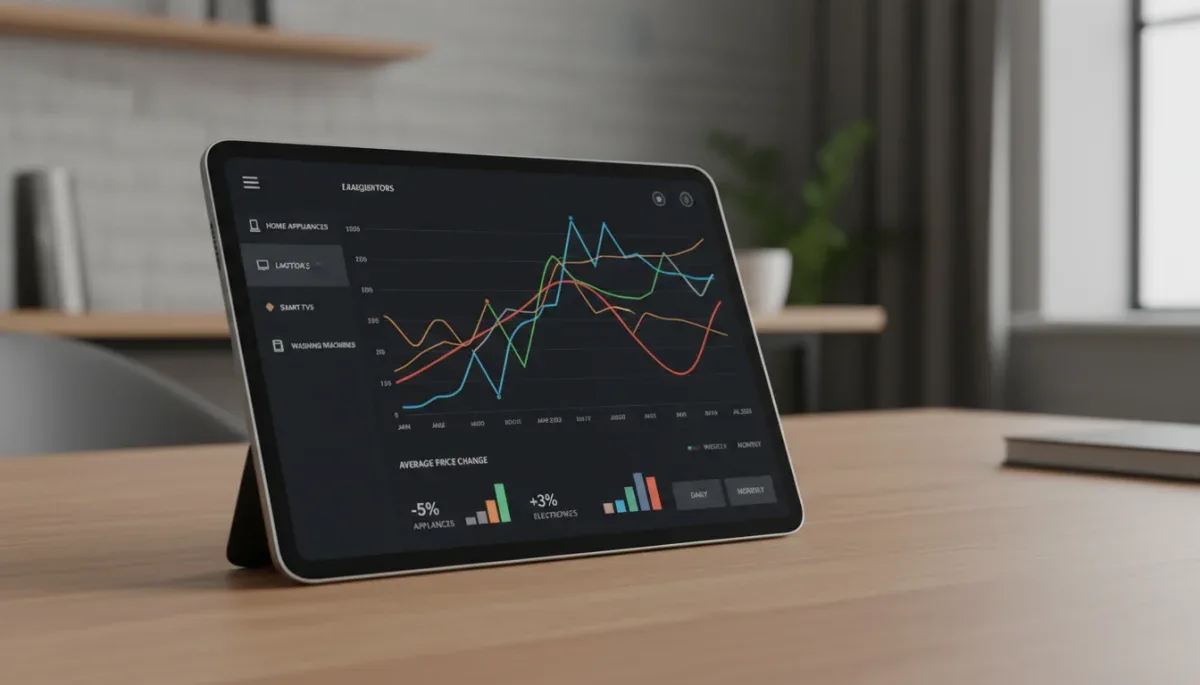
Independent tracking tools collect and archive daily price updates from public product listings across major online storefronts. These platforms operate via web portals, mobile utilities, and browser extensions that automatically overlay price history charts onto product pages. By consulting these charts, consumers can view an item's price trajectory across three months, six months, or several years. This data highlights whether an item frequently drops to the advertised discount level throughout the year or if the current offer represents an authentic annual low.
Different tools focus on specific retailers and catalog types. Some utilities specialize in cataloging single-vendor marketplaces by tracking third-party seller inventory, direct retail stock, and warehouse condition variations. Other web scrapers compare prices across multiple national retailers simultaneously, tracking whether a lower cost at one chain forced automated matching algorithms to lower costs elsewhere. Setting target alerts within these platforms allows shoppers to receive automated notifications when an item drops below a predetermined dollar amount, eliminating the need to check storefront pages daily.
To use tracking tools effectively, consumers must understand the specific data categories captured by tracking software. Relying on a single metric can create an incomplete picture of total acquisition costs.
Core data points to evaluate in price charts
- Third-party versus first-party stock: Historical graphs often display separate lines for items sold directly by the retailer versus those fulfilled by external marketplace vendors.
- Shipping fee inclusion: Basic price plots may omit carrier delivery fees, making an item appear cheaper than its true final cost.
- Coupon overlays: Dedicated tracking software may document whether regular digital clip-coupons were available alongside baseline prices.
- Frequency of cyclical drops: Regular valley patterns on a chart indicate that an item goes on sale routinely every few weeks.
The difference between manufacturer list prices and market value
The manufacturer suggested retail price, commonly abbreviated as MSRP, is the figure recommended by the original brand for retail distribution. In numerous product sectors, particularly consumer tech accessories, fast fashion, and seasonal home decor, items are rarely sold at their original MSRP after their initial production run. Third-party vendors regularly list products with permanently inflated list figures to make everyday promotional discounts look far more substantial than they are in practice.
Evaluating market value requires examining the price point at which transactions consistently clear across multiple competing merchants. If a pair of wireless headphones carries an MSRP of one hundred dollars but has sold for sixty dollars across major platforms for six consecutive months, sixty dollars represents its true fair market value. A holiday banner advertising a drop to fifty-five dollars is an eight percent discount relative to actual market rates, rather than the forty-five percent markdown claimed against the obsolete list figure.
Certain product categories carry much higher discrepancies between published list numbers and realistic transaction rates. Identifying these segments prevents shoppers from falling for inflated percentage claims.
Categories with frequent list price inflation
- Small kitchen appliances: Blenders, air fryers, and pressure cookers often carry high suggested list figures despite selling at lower baseline numbers year-round.
- Fast-fashion apparel: Garment retailers frequently run continuous site-wide discounts against theoretical full-price tags that few customers ever pay.
- Bedding and textiles: Sheet sets and mattress toppers routinely feature large strike-through prices that do not reflect regular off-season costs.
- Consumer electronics accessories: Charging cables, power banks, and mounting stands consistently sell far below their packaging list numbers.
The mechanics of dynamic pricing algorithms and user tracking
Online retailers utilize dynamic pricing algorithms that modify product costs in real time based on demand patterns, regional shopping data, inventory levels, and competitor pricing. These automated pricing models continuously monitor market conditions and can adjust catalog listings multiple times within a single twenty-four-hour window. When aggregate shopping activity increases during national holidays, dynamic pricing models balance inventory clearance against profit preservation, which can cause erratic price swings on popular gift items.
Shoppers often wonder whether their individual web browsing habits and device setups influence the prices they see online. While retailers emphasize that dynamic adjustments stem from broad market supply and aggregate customer demand, localized conditions such as regional fulfillment logistics and local competition can produce price differences. Testing product URLs across private browsing sessions or separate devices provides an unvarnished view of standard catalog rates, ensuring that localized caching or saved session cookies are not displaying outdated figures.
To navigate dynamic catalog changes without paying temporary rate surges, shoppers should adopt structured habits during high-traffic promotional periods.
Tactics to manage dynamic price shifts
- Check prices across multiple networks: Reviewing product pages on mobile networks versus home broadband reveals whether geographic delivery zones affect shown rates.
- Monitor inventory thresholds: When stock warnings indicate only a few items remain, algorithms often increase prices due to perceived scarcity.
- Clear browser storage: Deleting local site cache and tracking cookies removes stale pricing fragments that may linger in web browsers.
- Avoid impulse purchasing during surges: Price peaks during holiday promotional weekends often settle back down once high web traffic subsides.
Evaluating return policies and price match guarantees
A low price tag provides little value if the item is excluded from standard customer service protections or subject to restrictive return policies. During late-autumn sales, many national retailers introduce extended holiday return windows that allow items purchased in October or November to be returned through January. However, specific product lines, such as open-box tech, clearance apparel, or large appliances, are frequently marked as final sale or carry mandatory restocking fees that diminish the value of the initial markdown.
Price matching policies also undergo significant alterations during peak holiday sales weeks. Under normal conditions, many major retailers match the current advertised price of direct retail competitors. During promotional shopping weeks, however, stores routinely suspend price match guarantees on limited-quantity doorbuster deals, marketplace listings, and online-only sales events. Checking whether a store honors subsequent price drops after purchase ensures you do not miss out if a competitor lowers the price further in December.
Reviewing retail terms of service before finalizing checkout prevents unexpected financial friction if an item needs to be exchanged or refunded later.
Policy details to inspect before completing an order
- Restocking fee requirements: Confirm whether opening tech packaging triggers a mandatory ten to fifteen percent return fee.
- Return shipping liabilities: Verify whether the merchant deducts the cost of return postage from your total refund amount.
- Price adjustment windows: Check how many days you have to claim a refund if the retailer lowers the price post-purchase.
- Holiday return cutoffs: Note the exact date in January when seasonal return privileges expire for each merchant.
A step-by-step checklist for verifying holiday discounts
Verifying a promotional deal requires a methodical evaluation process before entering payment information. The initial step is locating the precise product model number on the retailer listing. Manufacturers frequently produce special holiday derivative models for promotional events. These units may feature altered model numbers with minor internal component downgrades, such as fewer connection ports or lower-grade display panels, allowing stores to offer an apparent steep discount on an item that is not identical to the regular flagship model.
Once the exact model is confirmed, cross-reference its identification number across multiple price tracking engines to review historical selling data. Determine the median rate for the preceding ninety days and compare it against the advertised discount. If the current price sits within five percent of the standard autumn average, the sale represents a routine transaction rather than an exceptional seasonal savings event. Finally, account for external costs including standard delivery fees, regional sales taxes, and potential return shipping charges to determine the true out-of-pocket total.
Following a strict pre-purchase sequence keeps seasonal spending focused on verified price drops rather than high-pressure countdown timers.
Verification steps before purchasing promotional items
- Identify the exact model number: Confirm that the product is a standard production model rather than a stripped-down holiday derivative.
- Examine ninety-day pricing graphs: Verify that the item did not experience an artificial price hike immediately preceding the sale.
- Survey secondary merchants: Check whether competing storefronts offer the same unit at a matched price with better shipping terms.
- Calculate landed costs: Add delivery charges, handling fees, and taxes to the promotional price before determining total savings.
- Confirm return eligibility: Ensure the product is covered by extended holiday return rules and does not carry final-sale limitations.
At a glance
| Factor | What to know |
|---|---|
| Baseline price | Check the ninety-day average rather than relying on crossed-out list figures. |
| Price tracking tools | Browser extensions and trackers log actual transaction numbers over time. |
| Derivative models | Retailers sometimes sell modified product versions made specifically for sales events. |
| Return terms | Confirm whether extended holiday return rules or restocking fees apply to the purchase. |
Frequently asked questions
How far back should you review price history before buying?
Review at least ninety days of pricing records before making a purchase. This three-month timeframe exposes whether the merchant raised prices in late summer or early autumn to exaggerate the depth of the seasonal holiday discount.
Are holiday doorbuster deals always genuine historical lows?
Doorbuster items are not guaranteed to be historical lows. Many doorbuster electronics are purpose-built seasonal variants with fewer features, while other items simply match standard promotional discounts offered periodically throughout the spring and summer shopping seasons.
Do price tracking extensions monitor all online stores?
Price tracking tools cover major retail websites and marketplace platforms, but they do not index every specialty boutique or regional storefront. Some independent brands block automated scraping bots, requiring shoppers to track those prices manually.
Can you ask for a price match during holiday sales?
Price matching policies are often restricted or temporarily suspended during major November sales events. Many national retailers exclude competitor doorbusters, limited-quantity promotions, and marketplace listings, so verify the store's current written policy before assuming a match.
The bottom line
Tracking price history is the most dependable method to distinguish genuine retail markdowns from artificial sales promotions during holiday shopping periods. By analyzing three-month pricing trajectories, checking exact product model numbers, and verifying that crossed-out list rates reflect real transaction data, consumers can avoid deceptive retail strategies. Before completing any transaction, always confirm the merchant's current return policy and verify whether restocking fees apply on the official retailer website.

Written by
Rita Luiza
Rita Luiza covers home and kitchen for S2YOU, from everyday essentials and small appliances to product-testing panels for household goods. She compares prices, warranties and return policies across retailers, and checks every detail on the brand's official site before publishing.