
Velvet vs wooden hangers for your closet storage
Advertisements
Choosing between velvet vs wooden hangers depends on whether your main storage goal is gaining rod space or preserving the shoulder structure of heavy clothing. Velvet hangers solve the problem of overcrowded rods and slippery fabrics, while wooden hangers prevent heavy winter coats and tailored garments from losing their natural shape over time.
This comparison helps anyone working with limited apartment closets or organizing an everyday wardrobe on a budget, though it requires assessing your closet rod strength and garment weights before you buy. Understanding how each hanger style behaves under daily use ensures your clothes stay wrinkle-free and your closet hardware remains secure.
How velvet hangers maximize tight closet space
Velvet hangers, frequently marketed as slimline or non-slip felt hangers, feature an ultra-thin profile that measures approximately one-quarter of an inch thick. That compact design allows you to hang substantially more clothing along a single closet rod compared to bulkier storage alternatives. If you share a standard reach-in closet or store seasonal wardrobes in tight bedroom spaces, swapping bulky plastic or tubular wire frames for slim velvet models creates instant breathing room between items.
Advertisements
The defining benefit of velvet coating is traction. The textured synthetic flocking creates surface friction that prevents wide-neck blouses, silk camisoles, satin dresses, and lightweight knit sweaters from sliding off the frame onto the closet floor. Because clothes stay balanced and centered without manual readjustment, your closet looks uniform and organized with minimal daily effort.
Advertisements
Practical advantages of slim velvet models
- The narrow silhouette increases usable rod capacity across standard closet dimensions.
- Flocked coating holds delicate, open-neck, and slippery synthetic materials securely in place.
- Built-in shoulder notches provide dedicated anchor points for thin straps and interior dress loops.
- Swivel steel hooks allow effortless garment alignment without removing clothes from the frame.
Despite their popularity, velvet models have physical limitations. The thin plastic or composite core cannot withstand heavy vertical loads without flexing. When loaded with dense winter parkas, double-breasted wool coats, or thick denim garments, the frame can bow at the neck or snap entirely. Additionally, wet or damp clothing should never be placed on velvet frames, as synthetic flocking can transfer dye onto damp fabric or shed fibers when saturated with moisture.
Why wooden hangers protect heavy garments and tailoring
Wooden hangers provide substantial, rigid support designed specifically to mimic the natural curve of human shoulders. Most quality wooden frames are carved from solid hardwoods such as lotus wood, ash, beech, or cedar. Their defining feature is thickness, with everyday shirt styles measuring roughly half an inch wide and tailored coat models expanding up to two inches across the flared shoulder ends.
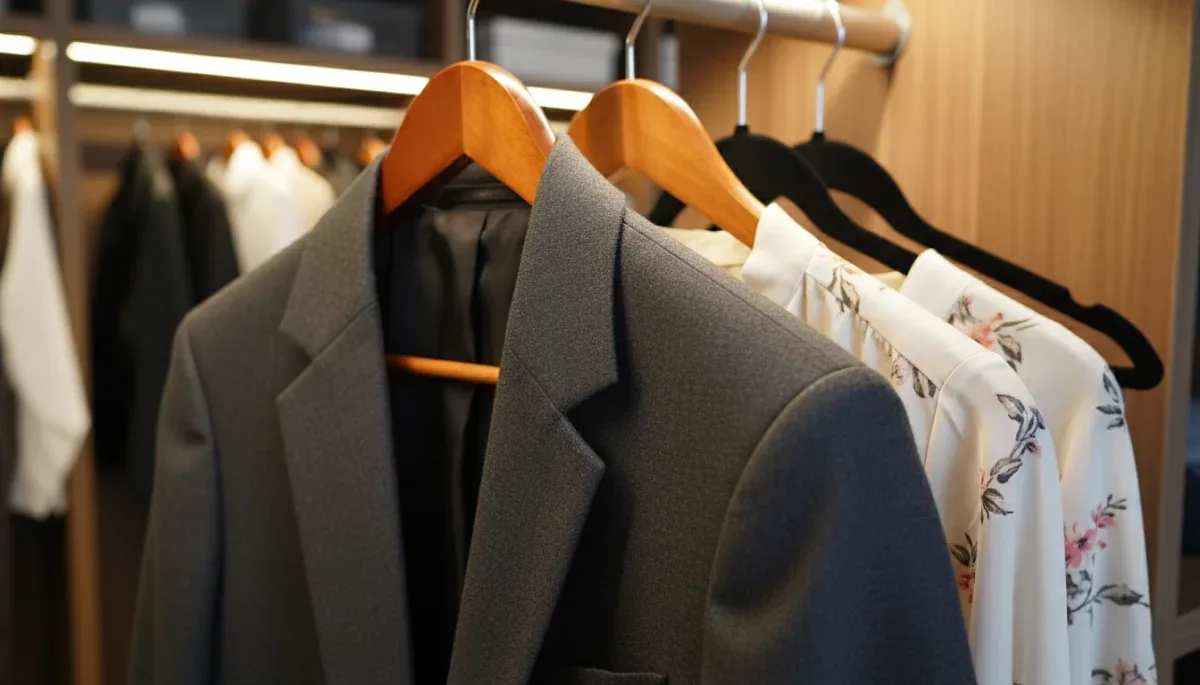
This wide surface area distributes the weight of a garment evenly across the entire shoulder seam. Heavy wool overcoats, tailored blazers, leather jackets, and dense trench coats require continuous structural support so gravity does not pull the fabric downward, causing shoulder dimples or permanent puckering. The solid wood construction also prevents the hanger from sagging, ensuring your valuable outerwear retains its intended drape over years of closet storage.
Key characteristics of solid wood construction
- Curved, contoured shoulders preserve the tailored chest and shoulder lines of formal wear.
- Sturdy horizontal wooden crossbars with non-slip vinyl wraps keep suit trousers crease-free.
- Solid hardwood builds handle heavy garments without bending, cracking, or breaking.
- Natural unfinished cedar options provide subtle aromatic properties that deter common storage pests.
The tradeoff for this structural strength is physical bulk. Wooden hangers take up two to four times the horizontal rod space of ultra-slim alternatives. In a compact closet, filling an entire rail with wide-shoulder wooden units can make retrieving individual garments difficult, causing friction and wrinkling between adjacent sleeves.
Durability and garment damage risks to evaluate
Every hanger material introduces specific risks if matched with the wrong garment or used in improper storage conditions. While velvet models prevent slippage, lower-quality versions are prone to shedding loose nylon or polyester flocking onto light-colored fabrics. If you frequently wear white linen shirts or pale silk blouses, black or navy velvet frames can leave fine dark lint around the collar and shoulders. Choosing ivory or neutral gray velvet significantly reduces the visibility of fiber transfer.
Another durability issue with velvet units lies in the swivel hook anchor point. The metal hook is typically screwed or pressed directly into a small plastic socket at the top of the frame. Repeatedly tugging garments off the hanger by pulling down on the fabric creates torque that can loosen or pop the hook out of the frame. Once the inner socket strips, the hanger cannot be repaired and must be discarded.
Wooden frames present different maintenance considerations. Low-cost wooden hangers often feature thin clear-coat lacquers that can chip, leaving rough spots or exposed wood splinters. A single raw splinter can easily snag fine knits, cashmere sweaters, or delicate synthetic linings when you pull a garment off the rod. Before placing any expensive clothing on a new set of wooden hangers, running a soft microfiber cloth across the neck, shoulders, and pant bar helps you quickly identify any rough patches or lacquer drips that require light sanding.
Practical closet measurements and rod weight limits
Before purchasing replacement hangers in bulk, you must measure your closet interior and calculate the total weight load of your wardrobe. Standard residential closet depth in the United States ranges between 22 and 24 inches from the back wall to the closed door. Most standard wooden and velvet hangers measure between 17 and 18 inches wide, which provides ample clearance for standard shirts and blouses without their sleeves rubbing against interior walls.
Weight capacity is where closet physics become critical. A single wooden hanger weighs roughly four to six ounces, whereas a velvet hanger weighs less than two ounces. When you multiply that weight difference across 80 or 100 hangers, the physical hardware of your closet carries significant dead weight before you even hang a single piece of clothing.
A standard wooden or metal closet rod supported only at the wall ends can bow or pull loose from dry-wall anchors when overloaded. If you use slim velvet hangers to double the number of garments hanging along a single four-foot span, the cumulative weight of those additional clothes puts tremendous downward pressure on the rod. Always check that your closet rod features a sturdy center support bracket if your hanging span exceeds 36 to 48 inches.
How to choose the right hanger for every clothing type
A balanced closet rarely relies on one single hanger material. Organizing your wardrobe effectively means assigning each hanger style to the specific garment category it was engineered to hold. Creating designated zones inside your closet maintains order while protecting your clothing investment.
Velvet hangers are the superior choice for high-volume, everyday garments that lack rigid inner tailoring. Button-down cotton shirts, casual blouses, rayon dresses, lightweight cardigans, and scoop-neck tees benefit directly from the non-slip grip and compact footprint. Because these garments do not carry excessive weight, they will not compromise the thin composite frame.
Wooden hangers should be reserved for your heaviest pieces and structured clothing. Any garment that features canvas interlining, shoulder pads, heavy wool, or real leather belongs on a contoured wooden hanger. Suit jackets, formal blazers, winter pea coats, heavy denim jackets, and formal trousers stay better preserved on thick wooden frames with reinforced locking crossbars.
What to inspect before buying hangers online
Buying closet organizers online offers convenience and affordable multipack pricing, but product descriptions often omit key quality indicators. Reading product specifications closely helps you avoid weak construction, defective hardware, and damaged clothes.
When shopping for velvet models, check whether the hook swivels a full 360 degrees. Fixed hooks make hanging clothes facing the same direction frustrating. Look for listings that specify a reinforced plastic neck or ABS plastic core, which resists snap fractures better than recycled polystyrene. Check customer feedback specifically for mentions of dye bleeding, chemical odors, or excessive flocking fallout straight out of the box.
When purchasing wooden units, verify the wood species and the method used to attach the pant bar. Solid hardwood listings made from lotus wood or solid ash hold up significantly better than soft composite woods or glued laminates. Look for pant crossbars that are grooved or lined with a clear non-slip rubber grip, and ensure the bar is secured into the side arms with interior metal dowels or recessed screws rather than simple staples.
At a glance
| Hanger factor | What to know |
|---|---|
| Space efficiency | Velvet models use minimal rod space while wooden designs take up twice as much width. |
| Garment support | Wooden hangers provide wide, curved shoulder contours that prevent misshapen heavy clothing. |
| Slip resistance | Flocked velvet surfaces stop slippery fabrics from falling without using secondary clips. |
| Weight capacity | Hardwood frames carry dense overcoats and leather jackets without bending or cracking. |
Frequently asked questions
Can velvet hangers hold heavy winter coats?
No, standard velvet hangers are not designed for heavy winter coats or thick outerwear. The slim inner plastic frame can bow or snap under heavy fabrics like wool or down. Broad wooden hangers provide the necessary weight capacity and wide shoulder contours that coats require.
Do velvet hangers leave lint or color on clothes?
Yes, low-quality dark velvet hangers can shed fine fibers or transfer dye onto light-colored fabrics if wet garments are hung on them. Choosing light gray, beige, or white flocked hangers minimizes visible lint transfer, and garments should always be completely dry before hanging.
Are wooden hangers worth the higher price?
Yes, wooden hangers are worth purchasing for structured clothing, blazers, and long-term outerwear care. Their rigid construction lasts for decades without degrading, and the wide shoulder profile prevents costly damage, puckering, and fabric stretching along delicate shoulder seams of tailored garments.
Why do clothes slide off some wooden hangers?
Clothes slide off wooden hangers because smooth, polished lacquer finishes offer little surface friction against silky materials. You can easily resolve this by purchasing wooden hangers with rubberized non-slip shoulder strips or by reserving smooth wooden frames for structured jackets and buttoned shirts.
The bottom line
A functional wardrobe uses velvet hangers to conserve space and secure lightweight, slippery garments while relying on wooden hangers to protect structured suits, blazers, and heavy winter coats. Splitting your closet by garment category gives you maximum storage capacity without sacrificing tailoring care. Before purchasing new hangers in bulk, measure your interior closet depth and inspect your hanging rod brackets to ensure they can support the combined weight of your planned wardrobe setup.

Written by
Maria Teixeira
Maria Teixeira covers clothing and shoes for S2YOU, from seasonal sales and sizing guides to free-trial and review programs run by fashion brands. She compares prices, return policies and program rules across retailers, and checks every detail on the brand's official site before publishing.