
Advertisements
In 2026, Water Conservation at Home has reached a critical turning point as the U.S. faces one of the driest years on record, with federal agencies like the EPA and Bureau of Reclamation implementing urgent new “climate-resilient” standards.
To counter rising costs and record-low reservoir levels, households are now prioritizing three high-impact, simple strategies: fixing “silent” leaks, upgrading to ultra-low-flow WaterSense fixtures, and adopting smart irrigation for climate-adapted landscaping.
These accessible changes are essential for meeting the national goal of a 15% usage reduction, ensuring both lower utility bills and a stable water supply through the summer of 2026.
Advertisements
Understanding the Mandate for Water Conservation at Home
The call for Water Conservation at Home has never been more urgent. Facing increasing pressure from climate change and growing populations, the United States is pushing for significant reductions in domestic water consumption.
Federal and local agencies are actively promoting initiatives aimed at fostering a culture of water efficiency within households.
Advertisements
The target of a 15% reduction by 2026 is ambitious but entirely achievable through concerted efforts and practical adjustments.
This objective is not merely an environmental plea; it represents a crucial step towards ensuring long-term water security and mitigating the economic impacts of water scarcity on communities nationwide.
The Economic and Environmental Imperative of Water Saving
Beyond the immediate environmental benefits, effective Water Conservation at Home directly translates into tangible economic savings for households.
Reduced water bills contribute significantly to monthly budgets, especially in regions with tiered pricing structures.
Environmentally, every gallon saved lessens the strain on local water sources, preserves aquatic ecosystems, and reduces the energy required for water treatment and distribution.
This holistic approach underscores the multi-faceted advantages of embracing water-saving practices.
The collective impact of individual household efforts can dramatically influence regional water supplies and energy grids. Investing in water-efficient appliances and habits now yields substantial returns for both personal finances and planetary health.
Strategy 1: Optimizing Bathroom Water Usage
The bathroom typically accounts for the largest portion of indoor household water consumption.
Implementing smart changes here can lead to substantial reductions in overall water use, making it a prime target for Water Conservation at Home efforts.
Simple modifications, such as installing low-flow showerheads and toilets, can dramatically cut down on daily water expenditure without sacrificing comfort or efficiency.
These fixtures are designed to deliver satisfactory performance using significantly less water.
Beyond hardware upgrades, conscious habits like shorter showers and turning off the faucet while brushing teeth or shaving contribute immensely. These behavioral shifts are often the easiest and most immediate ways to conserve water.
Low-Flow Fixtures: A Smart Investment
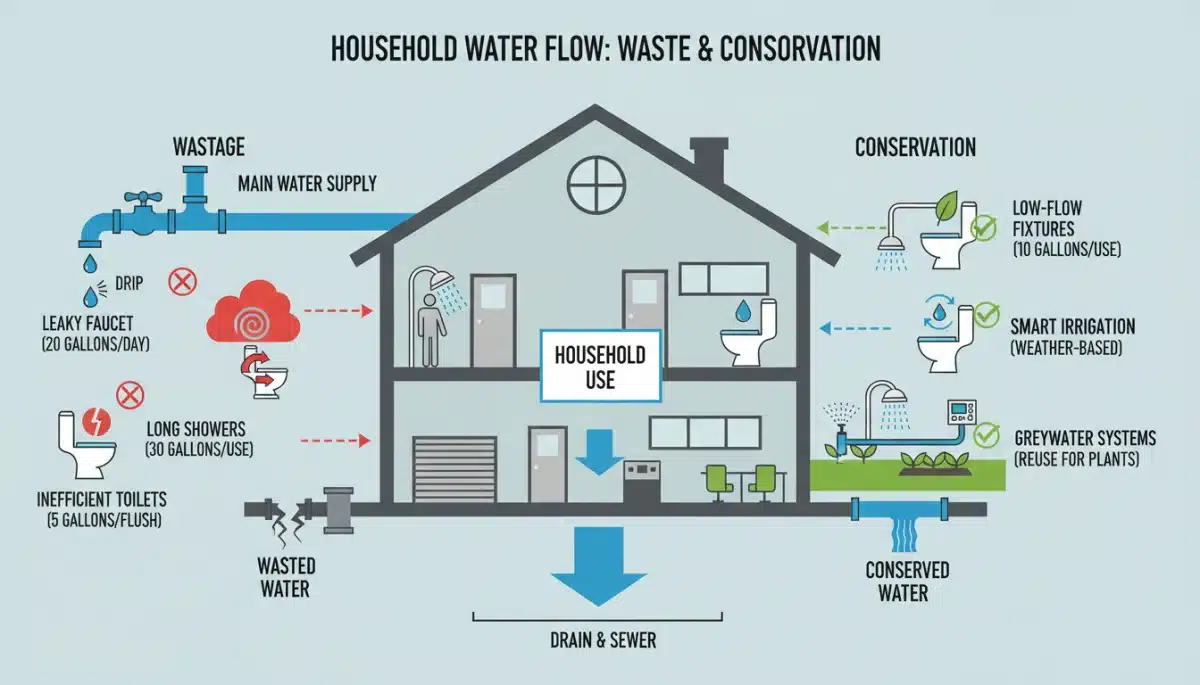
Replacing older, inefficient toilets with WaterSense-labeled models can save thousands of gallons annually. Modern low-flow toilets use 1.28 gallons per flush or less, compared to older models that can use up to 3.5 to 7 gallons.
Similarly, upgrading to low-flow showerheads can reduce water consumption by 2.5 gallons per minute or more, while still providing ample pressure.
These fixtures often pay for themselves through reduced utility bills in a relatively short period.
- Install WaterSense certified toilets and showerheads.
- Check for and repair any leaky faucets or running toilets promptly.
- Consider aerators for all bathroom faucets to reduce flow without impacting pressure.
Mindful Showering and Personal Hygiene
Reducing shower times by just a few minutes can save dozens of gallons each week. Utilizing a timer can help individuals become more aware of their water usage during showers.
Turning off the water while lathering shampoo or soap, or when brushing teeth, are small actions that collectively make a big difference. These habits are easy to adopt and reinforce a general awareness of water consumption.
Even small adjustments in daily routines, such as filling a cup for rinsing when brushing teeth instead of letting the faucet run, contribute to the overarching goal of Water Conservation at Home.
Strategy 2: Enhancing Kitchen and Laundry Efficiency
The kitchen and laundry room are other significant areas where water is routinely consumed. Implementing water-saving practices and upgrading to efficient appliances in these spaces can further boost efforts towards Water Conservation at Home.
From how dishes are washed to how laundry cycles are run, there are numerous opportunities to reduce water footprint. Modern appliances are designed with efficiency in mind, offering significant savings over their older counterparts.
Making conscious choices in these high-usage areas can lead to substantial reductions in water consumption, contributing directly to the 15% reduction target by 2026.
Dishwashing Practices for Water Conservation
Running a dishwasher only when it’s full is a fundamental rule for water efficiency. Modern dishwashers are often more water-efficient than handwashing, especially if they are Energy Star certified.
Scraping food off plates instead of rinsing them under running water can save several gallons per load. For handwashing, filling a basin with soapy water and another for rinsing is far more efficient than continuous running water.
- Run dishwashers only when fully loaded.
- Scrape plates clean instead of pre-rinsing under running water.
- Use a basin for handwashing dishes, minimizing running water.
Laundry Room Water-Saving Solutions
High-efficiency washing machines use significantly less water than traditional models, often by 50% or more. These machines are a key investment for long-term Water Conservation at Home.
Selecting the appropriate water level for each load and always washing full loads are simple but effective habits. Many modern machines also offer eco-friendly cycles that further optimize water usage.
Consider reusing towels and clothes more than once before washing to reduce the frequency of laundry cycles. This not only saves water but also energy and detergent.
Strategy 3: Smart Outdoor Water Management
Outdoor water use, particularly for landscaping and gardening, can account for a significant portion of a household’s total water consumption, especially in drier climates.
Implementing smart outdoor management is critical for effective Water Conservation at Home.
Adopting responsible irrigation practices and choosing drought-tolerant landscaping can drastically reduce the need for supplemental watering. These strategies not only save water but also promote healthier, more resilient outdoor spaces.
Understanding local climate conditions and plant needs is paramount to optimizing outdoor water use. The goal is to provide adequate moisture without waste, aligning with the 15% reduction target by 2026.
Efficient Irrigation Techniques
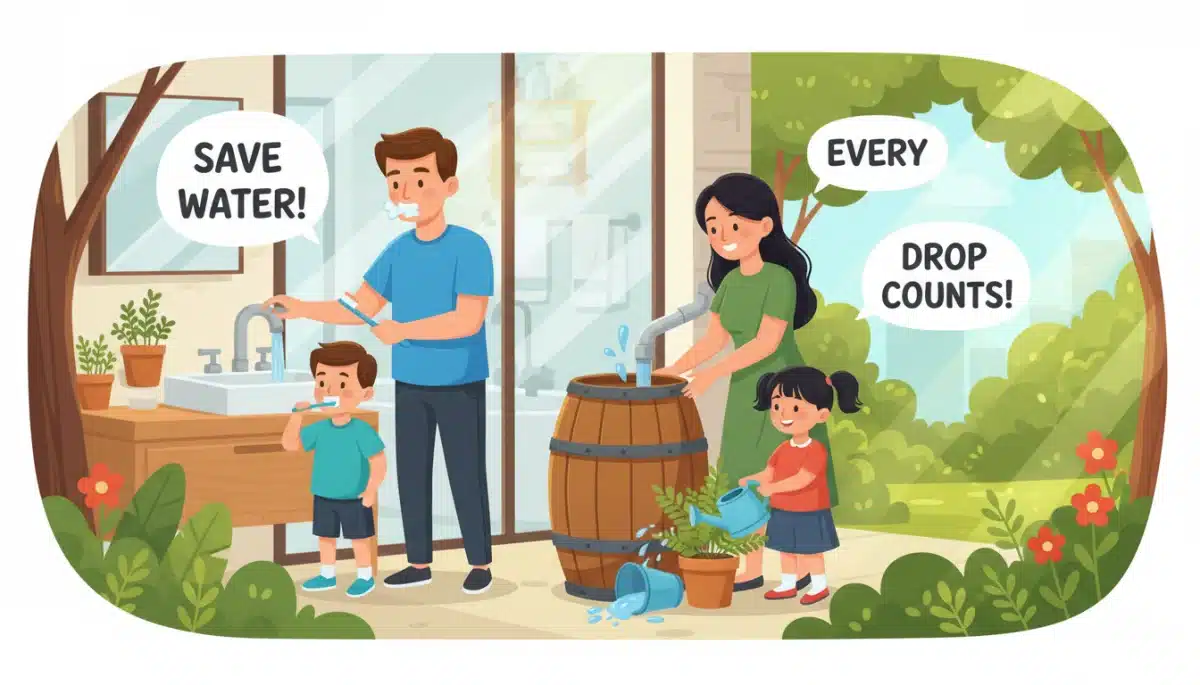
Installing a smart irrigation system that adjusts watering schedules based on local weather conditions and soil moisture can prevent overwatering. Drip irrigation systems deliver water directly to plant roots, minimizing evaporation and runoff.
Watering during the cooler parts of the day, typically early morning or late evening, reduces water loss due to evaporation. Avoiding watering on windy days also helps ensure water reaches its intended target.
Regularly checking irrigation systems for leaks or misaligned sprinkler heads can prevent significant water waste. Even small leaks can add up to hundreds of gallons over time, undermining Water Conservation at Home efforts.
Drought-Tolerant Landscaping and Rainwater Harvesting
Opting for native plants and xeriscaping (landscaping that requires little or no irrigation) can dramatically reduce the need for supplemental watering. These plants are adapted to local climate conditions and thrive with minimal intervention.
Collecting rainwater in barrels or cisterns provides a free and sustainable source of water for gardening and other outdoor uses. This practice reduces reliance on municipal water supplies and conserves valuable resources.
- Choose native and drought-tolerant plants for landscaping.
- Install a rainwater harvesting system for garden use.
- Apply mulch around plants to retain soil moisture and reduce evaporation.
Addressing Leaks and Water Waste
Undetected leaks are silent culprits in water waste, often accounting for a significant percentage of a household’s total water consumption.
A proactive approach to identifying and repairing leaks is fundamental for effective Water Conservation at Home.
Even a small, constant drip from a faucet can waste thousands of gallons annually, while a running toilet can waste even more. Regular inspections and prompt repairs are essential to curb this preventable loss.
Many leaks go unnoticed because they are hidden, such as those in irrigation systems or underground pipes. Learning how to detect these subtle signs of waste can lead to substantial savings.
Detecting Hidden Leaks
To check for toilet leaks, add a few drops of food coloring to the toilet tank and wait 10-15 minutes without flushing. If color appears in the bowl, there’s a leak that needs attention.
For a comprehensive home leak check, read your water meter before and after a two-hour period during which no water is used.
If the meter reading changes, you likely have a leak somewhere in your system, which requires immediate attention for Water Conservation at Home.
Pay attention to unusually high water bills or damp spots in your yard or home, which could indicate a hidden pipe leak. Addressing these issues promptly can prevent significant water loss and potential property damage.
Community and Policy Support for Water Conservation at Home
Individual efforts in Water Conservation at Home are significantly bolstered by community initiatives and supportive government policies. Many municipalities offer incentives, rebates, and educational programs to encourage water-efficient practices.
These programs can make the adoption of water-saving technologies more accessible and affordable for households. Engaging with local water authorities can provide valuable resources and guidance tailored to specific regional needs.
Public awareness campaigns play a vital role in fostering a collective commitment to water conservation, demonstrating that individual actions contribute to a larger, sustainable future.
Local Initiatives and Rebate Programs
Many water utilities offer rebates for installing high-efficiency toilets, showerheads, and smart irrigation controllers. These incentives can significantly offset the upfront cost of upgrades, making Water Conservation at Home more accessible.
Some communities also provide free water-saving kits, including faucet aerators and leak detection tablets. Checking your local utility’s website is often the best way to discover available programs.
Participation in these programs not only saves money but also contributes to broader community-wide water reduction goals, reinforcing the importance of collective action.
The Future of Water Conservation at Home
Looking towards 2026 and beyond, the emphasis on Water Conservation at Home will only intensify. Innovations in smart home technology, water recycling, and drought-resistant landscaping are continually evolving, offering new avenues for efficiency.
Future policies may introduce more stringent water efficiency standards for new construction and appliance manufacturing. The integration of artificial intelligence into home water management systems could revolutionize how we monitor and control our water usage.
Ultimately, achieving the 15% reduction target by 2026 relies on a combination of technological advancements, supportive policies, and a sustained commitment from every household to prioritize water as a precious resource.
| Key Strategy | Brief Description |
|---|---|
| Bathroom Optimization | Install low-flow fixtures and adopt mindful hygiene habits. |
| Kitchen & Laundry Efficiency | Use efficient appliances and optimize washing practices. |
| Outdoor Water Management | Implement smart irrigation and drought-tolerant landscaping. |
| Leak Detection & Repair | Regularly check for and fix all household water leaks. |
Frequently Asked Questions About Water Conservation at Home
The primary goal is to reduce household water usage by 15% by 2026 through practical strategies. This initiative aims to ensure long-term water security, lower utility costs, and lessen environmental impact by preserving precious water resources. It emphasizes both technological upgrades and behavioral changes.
Installing WaterSense-certified low-flow showerheads and toilets can lead to significant savings. Toilets alone can save thousands of gallons annually, while low-flow showerheads reduce water consumption by several gallons per minute, contributing substantially to Water Conservation at Home efforts.
Yes, many local water utilities and government programs offer rebates for installing high-efficiency toilets, showerheads, and smart irrigation systems. Checking your local utility’s website is recommended to find available incentives that support Water Conservation at Home initiatives.
Easy outdoor water conservation methods include watering during cooler parts of the day, using drip irrigation, and selecting drought-tolerant plants. Collecting rainwater for gardening is also an effective and sustainable practice for Water Conservation at Home, reducing reliance on municipal supplies.
It is advisable to check for leaks regularly, at least once every few months. Pay attention to dripping faucets, running toilets, and unusually high water bills. A simple water meter test can help detect hidden leaks, which are critical to address for effective Water Conservation at Home.
Looking Ahead: Sustaining Water Conservation at Home
The commitment to Water Conservation at Home is a continuous journey that extends beyond the 2026 target.
The strategies outlined are foundational steps, but ongoing vigilance and adaptation to new technologies and environmental conditions will be essential.
Households are encouraged to stay informed about local water policies and emerging water-saving innovations.
The collective effort of millions of households adopting these practices will define the success of future water security, ensuring a sustainable resource for generations to come.
To deepen your impact and discover practical daily habits, check out these top 10 ways for you to save water at home and protect our rivers.
