
Advertisements
The latest shifts within the banking industry are redefining how financial institutions interact with a tech-savvy global population.
As a result, the convergence of digital-first strategies and ethical finance is prioritizing a more seamless, secure, and user-centric economic landscape.
By focusing on these verified structural changes now, both consumers and professionals can successfully navigate an ecosystem that evolves in real-time.
Advertisements
Ultimately, understanding these dynamics is the most effective method to ensure competitive relevance in a globalized and highly automated market.
The Rise of AI-Powered Predictive Analytics
One of the most significant advancements in home security innovations 2026 involves the widespread adoption of AI-powered predictive analytics.
Advertisements
These systems move beyond simply reacting to incidents, instead analyzing patterns and behaviors to anticipate potential threats before they materialize, significantly enhancing proactive protection.
By continuously learning from data, AI can differentiate between routine activities and suspicious anomalies, reducing false alarms while increasing the effectiveness of security responses.
This intelligent foresight allows homeowners to take preventative measures, creating a more secure environment for their families and assets.
The integration of machine learning algorithms enables these systems to adapt to changing conditions and evolving threats, ensuring that your home security remains robust and relevant.
This represents a paradigm shift from reactive to truly proactive security measures.
Enhanced Threat Anticipation
AI algorithms are now sophisticated enough to analyze various data points, including historical crime data, local events, and even social media trends, to predict potential vulnerabilities.
This allows the system to adjust its monitoring parameters and alert homeowners to increased risks in their vicinity.
For instance, if a pattern of burglaries is reported in a nearby neighborhood, the system could automatically heighten surveillance sensitivity around your property.
Such insights provide an invaluable layer of defense, turning raw data into actionable security intelligence.
Behavioral Pattern Recognition
Advanced AI can learn the daily routines of residents, distinguishing between family members, pets, and unknown individuals.
It can identify unusual movements or loitering near your property, triggering alerts only when genuine threats are detected, minimizing unnecessary notifications.
This capability ensures that the system is not merely a sensor network but an intelligent observer capable of making nuanced judgments.
The ability to recognize deviations from normal behavior is a cornerstone of effective home security innovations 2026.
Biometric Access Control Systems
Traditional keys and passcodes are becoming relics of the past as biometric access control emerges as a leading trend in home security innovations 2026.
Fingerprint, facial, and even iris recognition systems offer unparalleled levels of security and convenience for homeowners.
These technologies eliminate the vulnerabilities associated with lost keys or forgotten codes, providing a unique and virtually unforgeable method of entry.
The speed and accuracy of modern biometric scanners also enhance the user experience, allowing for swift and secure access.
Beyond basic entry, biometric systems can be integrated with other smart home features, such as personalized lighting and temperature settings upon recognition.
This creates a truly seamless and individualized experience while maintaining robust protection.
Fingerprint and Facial Recognition
High-resolution fingerprint scanners and 3D facial recognition cameras are becoming standard for secure entry points, offering quick and reliable authentication.
These systems are difficult to bypass and provide an audit trail of who enters and exits the property, enhancing accountability.
The technology has evolved to withstand attempts at spoofing, such as using photographs or prosthetic fingers.
This robust authentication is critical for the next generation of home security innovations 2026, ensuring only authorized individuals gain access.
Voice and Iris Authentication
- Voice authentication: Uses unique vocal patterns for access, ideal for hands-free entry.
- Iris scanning: Offers the highest level of biometric security, being virtually impossible to replicate.
- Multi-factor biometrics: Combines several biometric methods for ultimate security.
- Integrated biometric database: Securely stores authorized biometric data for quick verification.
Integrated Smart Home Security Ecosystems
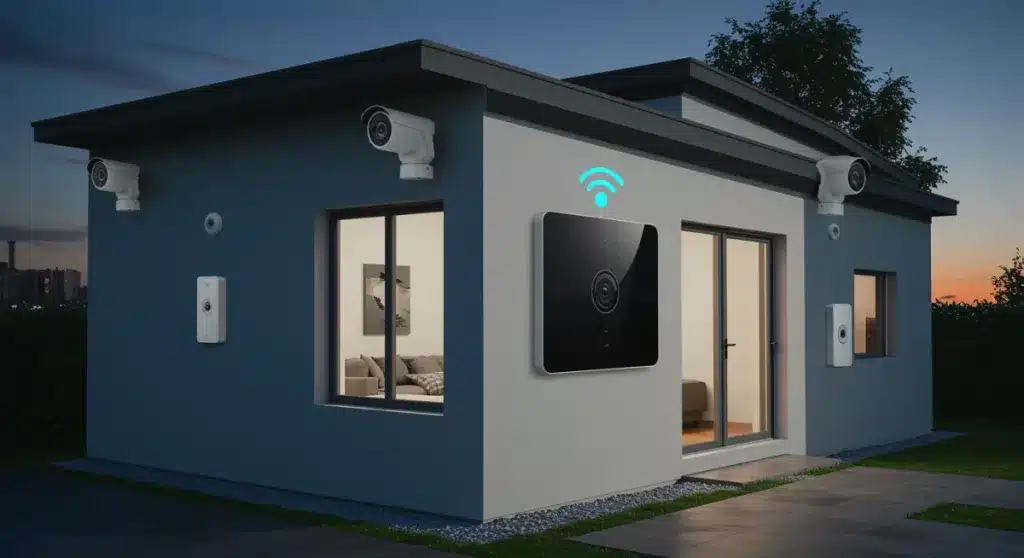
The future of home security innovations 2026 lies in fully integrated smart home ecosystems where all devices communicate seamlessly.
This interconnected approach allows for a holistic security strategy, far more effective than disparate components operating independently.
From smart locks and cameras to environmental sensors and lighting, every element works in concert to protect the property and its occupants.
A central hub or voice assistant can manage these systems, providing unified control and real-time status updates.
This convergence of technologies creates a responsive and adaptive security network, capable of responding to a wide range of threats and emergencies.
The synergy between devices amplifies their individual effectiveness, making the entire system greater than the sum of its parts.
Centralized Control and Automation
Homeowners can manage their entire security setup from a single interface, whether a smartphone app or a dedicated control panel.
This includes arming/disarming, viewing live camera feeds, and adjusting smart locks, all with intuitive controls.
Automation rules can be set, such as lights turning on if an intrusion is detected, or doors locking automatically at night.
This level of control and automation is a hallmark of advanced home security innovations 2026.
Seamless Device Interoperability
The ability for different brands and types of smart devices to communicate and cooperate is crucial for a truly integrated system.
Open standards and robust APIs are facilitating this interoperability, allowing homeowners more flexibility in choosing their devices.
Drone Surveillance and Perimeter Defense
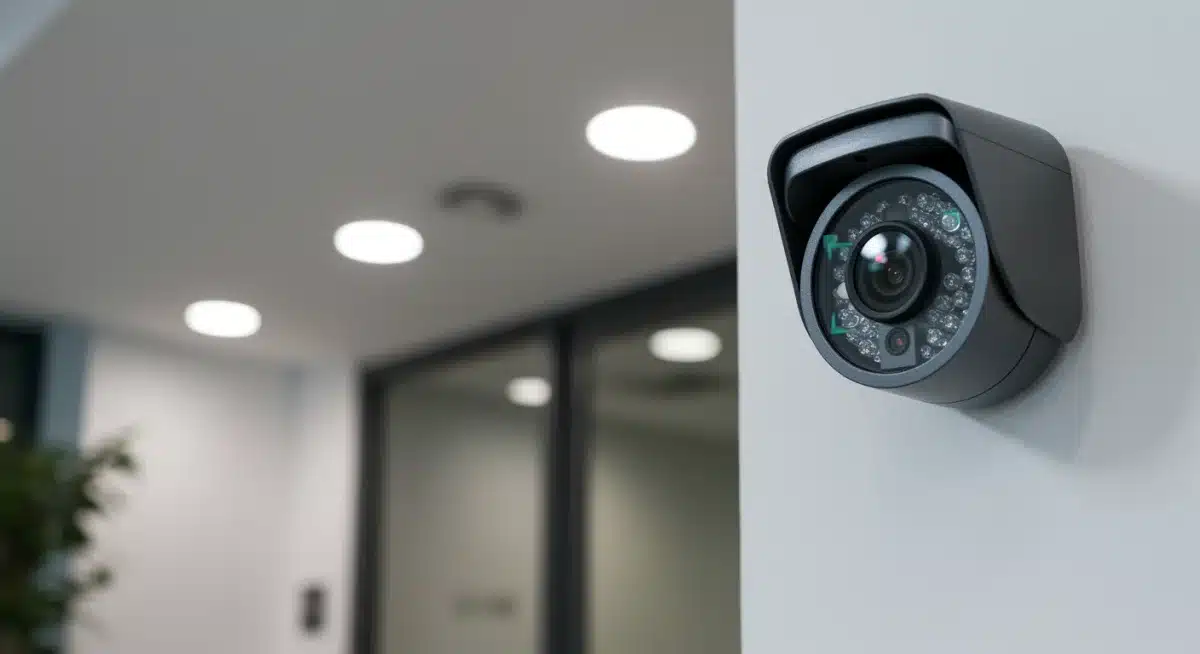
Perimeter defense is getting a significant upgrade with the introduction of autonomous drone surveillance as part of home security innovations 2026.
These drones can patrol property boundaries, responding to sensor triggers and providing aerial views of potential threats.
Equipped with high-definition cameras, thermal imaging, and even spotlights, security drones offer an unprecedented level of outdoor monitoring.
They can track intruders, assess situations from a safe distance, and provide crucial information to law enforcement.
The deployment of such technology significantly extends the reach of a home security system, covering large properties and difficult-to-monitor areas with ease.
This innovative approach to perimeter defense marks a new era in residential protection.
Autonomous Patrols and Rapid Response
Drones can be programmed for routine perimeter patrols, flying along predefined routes and actively scanning for anomalies.
In the event of a triggered alarm, they can autonomously launch and navigate to the disturbance, providing immediate visual verification.
This rapid response capability is invaluable in situations where time is critical, offering a bird’s-eye view that ground-based cameras cannot match. It is a key component of future home security innovations 2026.
Advanced Sensor Integration
- Thermal imaging: Detects intruders even in complete darkness or through foliage.
- Loudspeakers: Can issue warnings to intruders or communicate with emergency services.
- Spotlights: Illuminates suspicious activity for better visibility and deterrence.
- Geo-fencing: Keeps drones within property boundaries and alerts if they stray.
Cybersecurity for Smart Home Devices
As home security systems become more connected, the importance of robust cybersecurity measures for smart home devices cannot be overstated.
Protecting these systems from digital threats is as crucial as physical deterrence in the landscape of home security innovations 2026.
Vulnerabilities in smart devices can offer backdoors for hackers, compromising privacy and even allowing unauthorized access to physical property.
Therefore, advanced encryption, secure authentication protocols, and regular software updates are paramount.
Manufacturers are increasingly focusing on security-by-design principles, embedding cybersecurity features from the ground up.
This ensures that the digital infrastructure supporting your physical security is as strong as the locks on your doors.
End-to-End Encryption
All data transmitted between smart home devices and the central hub, or to the cloud, must be protected with strong encryption.
This prevents unauthorized interception and ensures that sensitive information, such as camera feeds or access codes, remains private.
Implementing the latest encryption standards is a non-negotiable aspect of modern home security innovations 2026. It safeguards against eavesdropping and data breaches, reinforcing trust in smart security solutions.
Secure Firmware and Updates
Regular and secure firmware updates are essential to patch vulnerabilities and introduce new security features.
Devices must be designed to receive these updates reliably and securely, preventing malicious actors from exploiting outdated software.
Automated update mechanisms, coupled with rigorous testing, ensure that your smart home devices remain protected against emerging cyber threats.
This ongoing maintenance is a critical, often overlooked, aspect of comprehensive home security.
Invisible and Discreet Security Solutions
The aesthetic integration of security technology is a growing trend, with invisible and discreet security solutions gaining prominence in home security innovations 2026.
Homeowners no longer want bulky cameras or visible sensors detracting from their home’s design.
Innovations include nearly invisible sensors embedded in walls and windows, cameras disguised as everyday objects, and smart locks that blend seamlessly with door hardware.
This approach offers powerful protection without compromising on visual appeal.
The subtlety of these systems can also be an advantage, as potential intruders may not realize the extent of the security measures in place.
This element of surprise adds an extra layer of deterrence, making the property a less attractive target.
Embedded Sensors and Micro-Cameras
New technologies allow for sensors to be seamlessly integrated into building materials, such as window frames or wall panels, making them virtually undetectable. Micro-cameras can be hidden within fixtures or decor, providing surveillance without being obvious.

Stealthy Smart Locks and Alarms
- Concealed smart locks: Appear as standard door hardware but offer advanced smart features.
- Hidden alarm components: Sounders and detectors are integrated into existing structures.
- Acoustic sensors: Detect glass breakage or unusual sounds without visible devices.
- Pressure mats: Discreetly placed under rugs or flooring to detect unauthorized entry.
Advanced Environmental Monitoring and Emergency Response
Beyond traditional intrusion detection, home security innovations 2026 are expanding to include advanced environmental monitoring and integrated emergency response.
These systems protect against a wider range of threats, including fires, floods, and carbon monoxide leaks.
Smart sensors can detect these hazards early, automatically alerting homeowners and emergency services.
Integration with smart home systems allows for automated responses, such as shutting off water mains or opening vents, to mitigate damage and ensure safety.
This comprehensive approach to safety transforms a security system into a full-fledged home protection solution, addressing both external and internal threats.
It provides a crucial layer of safety that extends beyond just preventing burglaries.
Integrated Smoke and CO Detectors
Next-generation smoke and carbon monoxide detectors are smart and interconnected, accurately differentiating between types of smoke (e.g., cooking vs. fire) to reduce false alarms.
They can communicate directly with emergency services and activate other smart home devices.
This intelligent detection and coordinated response capability significantly improves safety during critical incidents. It’s a vital part of comprehensive home security innovations 2026, ensuring rapid and effective action.
Water Leak and Freeze Detection
- Smart water sensors: Detect leaks in basements, bathrooms, or near appliances, preventing costly damage.
- Automatic shut-off valves: Can remotely or automatically close the main water supply if a leak is detected.
- Freeze sensors: Monitor pipes in unheated areas to prevent bursting during cold weather.
- Flood alerts: Provide immediate notifications to prevent extensive property damage from water incidents.
| Key Innovation | Brief Description |
|---|---|
| AI Predictive Analytics | Systems anticipate threats by analyzing behavioral patterns and data. |
| Biometric Access | Fingerprint, facial, and iris recognition for secure entry. |
| Integrated Ecosystems | All smart home devices communicate for holistic security. |
| Drone Surveillance | Autonomous drones patrol perimeters with advanced sensors. |
Frequently Asked Questions About Home Security Innovations 2026
AI in home security innovations 2026 offers predictive threat anticipation, significantly reducing false alarms by distinguishing genuine threats from routine activities. It learns behavioral patterns, adapts to changing risks, and provides proactive alerts, enhancing overall safety and peace of mind for homeowners.
Biometric access control, seen in home security innovations 2026, replaces traditional keys with unique identifiers like fingerprints or facial scans. This eliminates risks from lost keys or forgotten codes, provides secure, convenient entry, and integrates seamlessly with other smart home features for a personalized and highly secure experience.
Yes, integrated smart home security systems are significantly more effective. By allowing all devices—locks, cameras, sensors—to communicate, they create a cohesive defense network. This synergy enables automated responses to threats, centralized control, and a comprehensive security strategy that surpasses isolated components, a core aspect of home security innovations 2026.
Drones in home security innovations 2026 provide autonomous perimeter surveillance with aerial views, thermal imaging, and rapid response capabilities. They can patrol large properties, track intruders, and relay critical information to authorities, extending the reach and effectiveness of traditional security systems for advanced property protection.
Cybersecurity is paramount for smart home security devices. As systems become more connected, robust encryption, secure authentication, and regular updates prevent hacking, data breaches, and unauthorized access. Protecting the digital infrastructure ensures the physical security measures remain uncompromised, a critical focus for home security innovations 2026.
Looking Ahead
The rapid evolution of home security innovations 2026 signals a future where property protection is more intelligent, integrated, and proactive than ever before.
In this context, these advancements promise not just to deter threats but to anticipate and neutralize them with unprecedented efficiency.
Consequently, the convergence of AI and interconnected systems is setting a new standard for residential security, transforming how we safeguard our most valuable assets.
Furthermore, staying informed about these technologies and considering their integration into existing or new home setups will be crucial to maintaining peace of mind.
Ultimately, the landscape of security is dynamic, and embracing these innovations will ensure your property and financial interests remain protected against the challenges of tomorrow.
To discover the most reliable and affordable solutions for your residence, explore the latest smart home security systems from SimpliSafe and take the first step toward a safer 2026.
