
Stainless steel vs nonstick cookware for everyday cooking
Advertisements
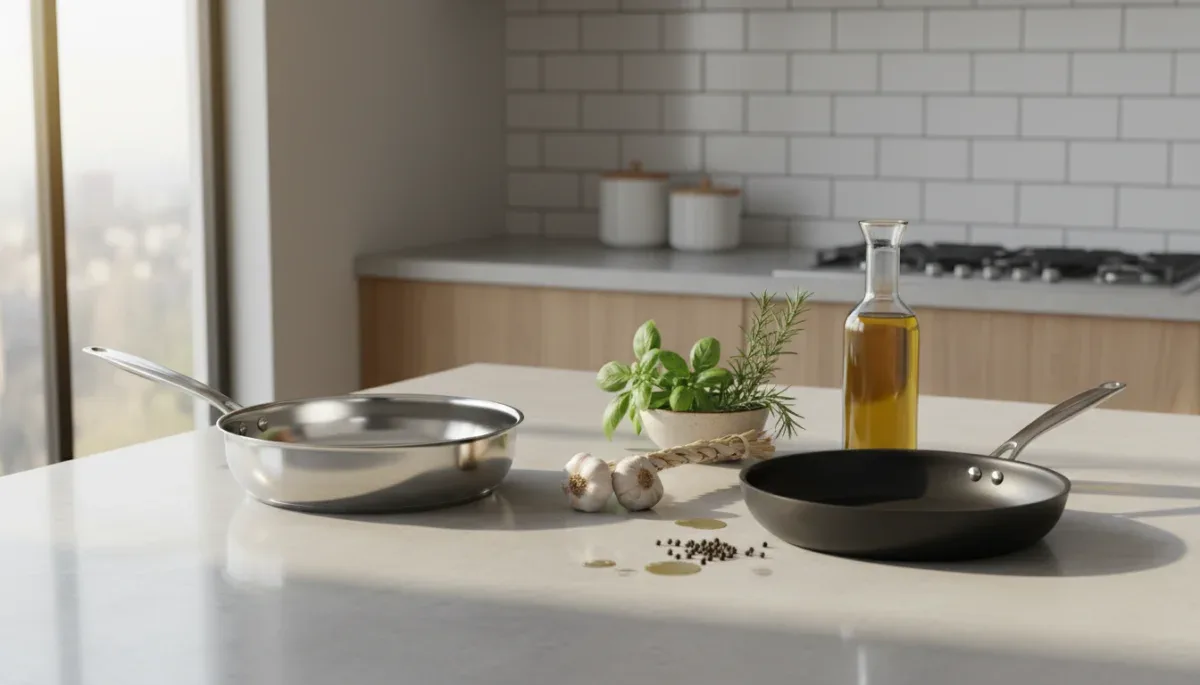
Choosing between stainless steel and nonstick pans comes down to whether you prioritize high-heat searing and lifelong durability or effortless food release and simple cleanup. Nonstick cookware excels at low-temperature, delicate foods like eggs and pancakes without sticking, while stainless steel handles high heat, oven roasting, and fond creation for rich pan sauces.
This comparison helps daily home cooks determine which material matches their everyday recipes, cooking techniques, and willingness to maintain their cookware. The main trade-off is longevity versus convenience: nonstick surfaces inevitably wear down over time and require gentle handling, whereas stainless steel requires proper preheating technique but lasts for decades without degrading.
How cooking performance and heat tolerance compare
Cooking performance differs sharply between these two materials due to how they conduct and retain thermal energy. Uncoated stainless steel pans, particularly those constructed with fully clad aluminum or copper cores between layers of steel, handle exceptionally high temperatures without warping or surface degradation. This construction allows home cooks to preheat the pan thoroughly, sear proteins at high heat, and transfer the vessel directly from the stovetop into a hot oven or under a broiler.
Advertisements
In contrast, nonstick cookware relies on a specialized coating, most commonly polytetrafluoroethylene (PTFE) or ceramic-based sol-gel, applied over an aluminum base. These chemical coatings break down when exposed to excessive heat, meaning nonstick skillets should strictly be kept on low to medium heat settings. When overheated above standard cooking temperatures, conventional nonstick coatings can emit fumes and lose their slippery characteristics permanently.
Advertisements
Key performance factors in daily cooking
- Heat limits: Stainless steel easily withstands temperatures above 500 degrees Fahrenheit, while nonstick coatings degrade above standard medium-heat thresholds.
- Browning capability: Stainless steel promotes the Maillard reaction and leaves caramelized fond on the pan surface, whereas nonstick prevents fond from adhering.
- Oven versatility: Clad stainless steel is fully oven-safe and broiler-safe, while nonstick handles and coatings often restrict oven use to moderate temperatures.
Durability, lifespan, and overall surface care
Durability represents the most significant divergence between stainless steel and nonstick cookware. A quality multi-clad stainless steel pan is virtually indestructible under normal household conditions. It has no delicate coating to chip, peel, or scratch, meaning metal utensils, vigorous scrubbing pads, and accidental drops will not ruin its core functionality. Even if food scorches onto the metal, the surface can be restored to its original condition using standard mineral cleaners or gentle abrasive scouring.
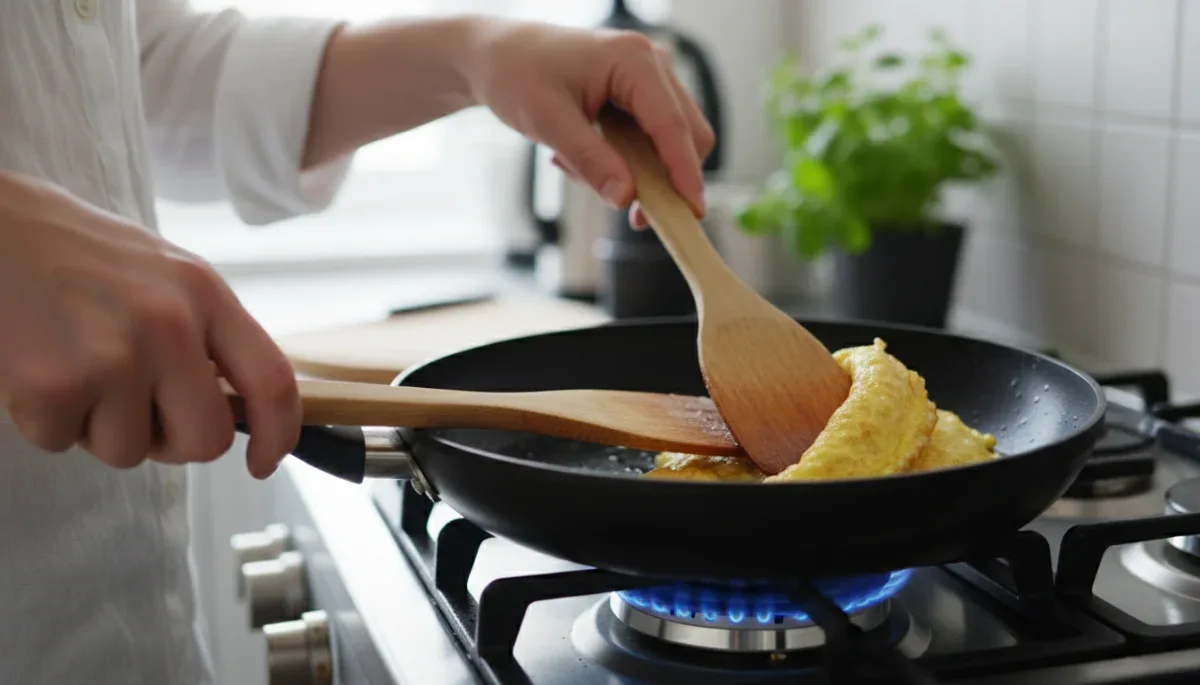
Nonstick cookware, regardless of price or brand tier, is inherently temporary. The nonstick layer is delicate and gradually degrades from thermal expansion, minor utensil friction, and standard cleaning cycles over time. Most manufacturers estimate the functional lifespan of a regularly used nonstick pan between one and five years. Once the surface begins flaking, peeling, or losing its release properties, the pan must be replaced rather than restored.
Habits that extend cookware lifespan
- Utensil choice: Use silicone, wood, or plastic tools on nonstick to prevent gouging, while stainless steel comfortably tolerates all metal utensils.
- Thermal shock prevention: Allow both pan types to cool to room temperature before washing, as sudden temperature drops warp metal bases.
- Storage protection: Place felt protectors or soft cloth liners between stacked nonstick pans to stop handles and bottoms from scratching the cooking surface.
Health, safety, and cooking surface chemistry
Health considerations frequently guide cookware purchases, particularly regarding chemical stability at high cooking temperatures. Stainless steel is entirely non-reactive, stable, and chemically inert. It does not leach synthetic chemicals into your food, even when cooking highly acidic ingredients like tomato sauces, vinegar reductions, or citrus-heavy glazes. This chemical stability makes stainless steel a reliable standard in both professional restaurant kitchens and safety-conscious homes.
Modern nonstick pans manufactured today are produced without perfluorooctanoic acid (PFOA), following global regulatory phaseouts over the past decade. However, traditional PTFE nonstick coatings still contain fluoropolymers that begin decomposing if an empty pan is accidentally left on a high burner. Ceramic nonstick alternatives use a silica-derived mineral coating instead of fluoropolymers, offering an inorganic option that releases no synthetic fumes at elevated temperatures, though ceramic surfaces typically lose their nonstick slickness faster than traditional PTFE.
Safety considerations for daily use
- Acid stability: Stainless steel allows long simmering of acidic ingredients without surface erosion or flavor alterations.
- Coating integrity: Discard nonstick pans showing visible scratches, blistering, or peeling to prevent ingesting loose coating flakes.
- Ventilation safety: Always run kitchen exhaust fans when cooking on high heat, especially when using coated pans in homes with pet birds, which are uniquely sensitive to airborne fumes.
Cleaning routine, maintenance, and dishwasher safety
Daily cleaning requirements often dictate which pan home cooks reach for during busy weekday routines. Nonstick cookware offers unmatched convenience after cooking. Because residues slide off effortlessly, a gentle wipe with a soft sponge, warm water, and mild dish soap is usually all that is needed. However, nonstick cookware should rarely be placed in an automated dishwasher, as harsh detergent enzymes and high water pressure rapidly deteriorate the nonstick matrix.
Stainless steel requires a slightly more deliberate cleaning routine. Starchy residues and proteins can form a tight bond with microscopic surface pores if the pan was not properly preheated with oil. While daily maintenance is straightforward with a standard sponge, stubborn oil polymerization or scorched spots require specialized cleaning powders containing oxalic acid. Unlike nonstick, stainless steel cookware is fully dishwasher safe, though hand drying prevents harmless cosmetic water spots.
Routine care instructions
- Soaking technique: Deglaze warm stainless steel with plain water immediately after cooking to lift stuck residues effortlessly before hand washing.
- Scrubbing tools: Avoid wire brushes, steel wool, or abrasive pads on nonstick coatings; reserve heavy-duty scrubbers exclusively for uncoated stainless steel.
- Oil selection: Avoid aerosol cooking sprays on nonstick pans, as the added lecithin propellant creates a stubborn residue that permanently compromises the nonstick coating.
Best food types for each cookware material
Understanding which ingredients perform best in each pan eliminates kitchen frustration and improves finished meal texture. Nonstick surfaces are uniquely suited for foods with minimal natural fats or delicate protein structures that tear easily. Scrambled eggs, French omelets, light white fish fillets, crepes, and melted cheese dishes glide across nonstick coatings without demanding excess butter or oil, making it an excellent tool for lighter everyday fare.
Stainless steel shines when cooking foods that benefit from high heat, deep caramelization, and surface contact. Steaks, chicken thighs, pork chops, and firm vegetables develop a crisp, golden crust in stainless steel because the metal draws out surface moisture and promotes even browning. Furthermore, when proteins leave behind browned bits on the bottom of the stainless pan, you can add wine, broth, or cream to dissolve those caramelized particles into a flavorful pan sauce.
Recommended pan assignments
- Choose nonstick for: Fried eggs, omelets, tofu scrambles, delicate fish fillets, pancakes, crepes, and reheating sticky grain dishes.
- Choose stainless steel for: Searing steaks, pan-roasting poultry, sautéing leafy greens, shallow frying, reducing pan sauces, and one-pan oven braises.
- Hybrid daily use: Keeping one dedicated nonstick skillet for morning eggs alongside a multi-piece stainless steel set provides balanced coverage for all recipes.
Budget considerations and long term kitchen value
When assessing overall cost, looking at the long-term price per year provides a clearer financial picture than examining retail shelf tags alone. Entry-level nonstick pans appear budget-friendly up front, often selling for modest prices in big-box retail stores. However, because their functional lifespan is limited to a few years, recurring replacement costs accumulate steadily over a decade of continuous cooking.
Quality stainless steel cookware requires a larger initial upfront investment, particularly for tri-ply or five-ply fully bonded metal constructions. Despite the higher purchase price, stainless steel pans do not require replacement during your cooking lifetime under ordinary household conditions. Over ten to twenty years, investing in a durable stainless steel skillet often proves significantly more economical than purchasing sequential replacement nonstick pans.
Financial comparison factors
- Initial outlay: Nonstick pans are generally less expensive at purchase, while bonded multi-clad stainless steel commands a premium price tag.
- Replacement cycle: Nonstick skillets require replacement every few years as coatings wear, whereas stainless steel serves as a permanent kitchen asset.
- Warranty coverage: Stainless steel manufacturers often provide lifetime structural warranties, whereas nonstick warranties explicitly exclude normal coating wear and surface scratches.
At a glance
| Cookware factor | What to know |
|---|---|
| Heat threshold | Stainless steel withstands high searing and oven broiling, whereas nonstick is restricted to low-and-medium heat. |
| Surface lifespan | Stainless steel lasts for decades without degradation, while nonstick coatings typically wear out within a few years. |
| Cooking style | Stainless steel excels at searing, fond creation, and pan sauces; nonstick is best for delicate foods and effortless release. |
| Cleaning method | Nonstick requires gentle hand washing without abrasives, while stainless steel handles dishwashers and scouring powders. |
Frequently asked questions
Can you use metal utensils on stainless steel pans?
Yes, you can safely use stainless steel spatulas, spoons, and tongs on stainless steel cookware. The solid metal surface has no delicate coating to chip or peel, though minor superficial swirl marks may appear over time without affecting cooking performance.
Why does food stick to stainless steel cookware?
Food sticks to stainless steel when the pan is not properly preheated before adding oil, or when cold proteins are placed on a dry surface. Preheating the pan until water droplets bead and glide ensures the metal pores expand, creating a smooth cooking surface.
Is nonstick cookware safe for everyday family meals?
Yes, modern nonstick cookware is safe for daily cooking when used within recommended low-to-medium temperature ranges. Avoid heating empty nonstick pans on high burners, and discard any coated pans that show deep scratching, bubbling, or peeling on the cooking surface.
Do you need both stainless steel and nonstick pans?
Most home cooks benefit from keeping both materials in their kitchen cabinet. A single dedicated nonstick skillet simplifies morning eggs and delicate fish, while stainless steel skillets and saucepans manage high-heat searing, sautéing, boiling, and oven-roasting tasks.
The bottom line
Stainless steel cookware is the superior choice for high-heat browning, durability, and lifetime value, while nonstick pans provide unmatched convenience for delicate ingredients like eggs and quick weeknight cleanup. Rather than choosing exclusively between the two, most home kitchens operate best with a durable stainless steel foundation supplemented by one dedicated nonstick skillet for low-heat tasks. Before buying, confirm whether your stove requires magnetic induction-compatible cookware and verify the manufacturer warranty terms.

Written by
Maria Teixeira
Maria Teixeira covers clothing and shoes for S2YOU, from seasonal sales and sizing guides to free-trial and review programs run by fashion brands. She compares prices, return policies and program rules across retailers, and checks every detail on the brand's official site before publishing.