
Thermal vs blackout curtains: which insulates best

Advertisements
Thermal curtains insulate windows more effectively than standard blackout curtains because they include dedicated thermal batting or dense foam cores engineered specifically to slow conductive and convective heat exchange. While both styles cover glass panes, blackout panels focus on blocking incoming light, whereas thermal panels prioritize trapping pockets of dead air to buffer room temperatures against outdoor extremes.
This distinction helps apartment renters and homeowners who want to reduce indoor drafts and stabilize heating or cooling demands without replacing window glass, though shoppers must examine interior construction rather than relying solely on retail category tags. Retailers frequently blur these definitions on packaging, meaning a product sold as light-blocking might offer minimal resistance against cold winter drafts.
How thermal curtains are constructed for temperature control
True thermal curtains rely on multiple distinct layers of material bonded or sewn together to interrupt the movement of heat. The visible front of the curtain usually consists of decorative home fabrics such as cotton, polyester blends, linen, or faux silk. Directly behind that face fabric lies an insulative core, typically made from high-density felt, polyester batting, or synthetic closed-cell foam. A durable backing layer faces the glass, protecting the interior insulating core from direct solar degradation and ultraviolet damage.
Advertisements
According to the U.S. Department of Energy, heat transfer through standard window glass occurs via conduction, convection, and radiation. Thermal drapes address convection by forming a physical barrier between the cool glass surface and warm interior room air. When warm indoor air hits an uninsulated window pane, it cools rapidly, sinks toward the floor, and pulls more warm air across the ceiling toward the glass. The dense core of a thermal drape limits this continuous air cycling, effectively holding indoor temperatures steady.
Advertisements
Core materials used in thermal drapery
- Thick acrylic foam coatings applied directly onto the back of decorative polyester yarns.
- Quilted polyester fiberfill batting sandwiched between a decorative face and a vapor barrier.
- Reflective radiant backing layers that bounce radiant heat back toward its primary source.
- Heavyweight wool or velvet weaves lined with secondary cotton flannel drop cloths.
How blackout curtains work and their insulating limits
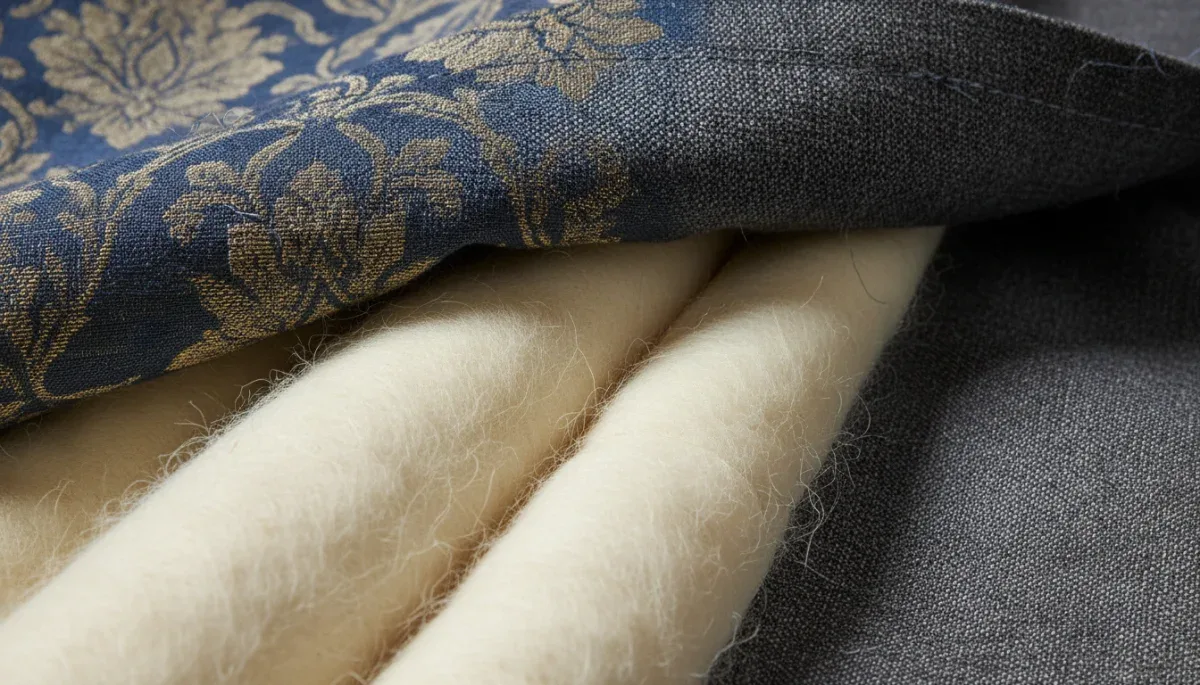
Blackout curtains are manufactured with the primary objective of eliminating visible light intrusion from street lamps, daylight, or vehicle headlights. To accomplish this, manufacturers weave dense black microfibers into the center of the fabric weave, known as triple-weave technology, or they spray a very thin, flexible polyurethane or acrylic coating directly onto the reverse side of the drape. Because the goal is visual darkness rather than thermal resistance, these panels can remain relatively thin and lightweight.
A standard blackout curtain does provide an incidental degree of temperature resistance simply by placing an extra fabric barrier between the room and the glass. By stopping direct sunlight from striking interior floors and furniture, blackout panels reduce solar heat gain on hot summer afternoons. However, because standard blackout panels lack a thick, porous center layer to trap dead air, their ability to stop conductive heat loss during freezing winter nights remains comparatively modest.
Seasonal performance in winter drafts versus summer heat
Thermal curtains outperform blackout panels during winter months because cold weather requires slowing conductive heat loss through glass. When outdoor temperatures drop below freezing, single-pane and unsealed double-pane windows turn into cooling surfaces. A thermal curtain with a padded middle core creates an insulating air buffer that keeps the interior room side of the drape significantly closer to the ambient room temperature, preventing the cold draft feeling caused by falling air currents.
During summer months, the performance gap between thermal vs blackout curtains narrows considerably. Both styles prevent solar radiation from entering through the glass, which stops the greenhouse effect inside rooms exposed to direct western or southern afternoon sun. However, a thermal drape with a white or reflective backing offers superior reflection compared to a dark-backed blackout curtain. The light-colored exterior surface reflects incoming solar energy outward through the glass before the panel can absorb the heat and radiate it inward.
Measuring fabric weight, weaves, and layer count
Evaluating window treatments by their physical specifications provides a clearer indication of performance than reading store display descriptions. Fabric weight is measured in grams per square meter, commonly abbreviated as GSM. A decorative curtain often weighs between 150 and 200 GSM, while true insulating panels generally range from 300 to over 500 GSM. When a product description omits GSM ratings, buyers can evaluate overall package shipping weights to assess the actual density of the textile fibers.
Weave density also determines whether air passes freely through the material. A loose weave permits convective air currents to travel directly through the curtain fibers, nullifying much of the insulation benefit regardless of the fabric thickness. Triple-weave blackout fabrics use tightly interlaced black yarns in the interior core, which arrests light effectively and blocks light breezes, but an additional drop-in thermal liner or coated foam backing remains necessary to maximize resistance against conductive heat loss.
Installation steps to prevent window air leakage
Even the heaviest thermal drapery fails to insulate effectively if air can circulate freely around the sides, top, and bottom of the installation. When curtains hang several inches away from the wall, warm room air enters the opening at the top, drops down the cold surface of the glass, and exits back into the room underneath the hem. Proper installation seals these perimeter gaps to establish a stable pocket of trapped air between the fabric and the glass surface.
Techniques to secure window treatment perimeters
- Mount curtain rods close to the ceiling and extend brackets at least four inches beyond the window frame.
- Install wraparound French return rods that curve back toward the drywall to seal side gaps.
- Ensure curtain hems lightly brush the floor or sill rather than hovering several inches above them.
- Overlap overlapping panel edges in the center using magnetic closures or hook-and-loop tape strips.
- Attach a closed wooden cornice or pelmet board above the rod to halt top airflow currents.
Care labels, washing risks, and longevity
The internal construction of thermal vs blackout curtains directly influences their cleaning requirements and long-term durability. Draperies featuring sprayed acrylic or polyurethane backings are vulnerable to heat damage in home appliances. Exposure to hot water or high-heat dryer cycles can cause bonded foam backings to melt, bubble, or peel away from the decorative face fabric, permanently ruining both the light-blocking and insulating properties of the panel.
In contrast, multi-layered thermal curtains made with stitched woven linings and unbonded polyester batting frequently tolerate gentle machine washing in cold water, followed by low-heat line drying. Shoppers should verify care instructions on the sewn-in label before purchasing, particularly for window panels installed in high-humidity spaces like kitchens or drafty bathrooms where frequent laundering or steam cleaning may be required to control ambient dust accumulation.
At a glance
| Factor | What to know |
|---|---|
| Primary function | Blackout panels stop visible light intrusion, while thermal curtains stabilize room temperatures against heat transfer. |
| Internal construction | Thermal drapes feature dense foam cores or batting, whereas blackout drapes use thin acrylic coatings or woven dark threads. |
| Winter draft control | Thermal panels significantly outperform blackout styles by trapping dead air against cold window glass. |
| Washing maintenance | Bonded foam backing requires cold water and delicate handling to prevent peeling or heat damage. |
Frequently asked questions
Can blackout curtains keep cold air out?
Blackout curtains offer minimal draft resistance compared to dedicated thermal panels because they lack dense internal batting. While heavy woven blackout fabric creates a slight physical barrier against air movement, it cannot prevent conductive heat loss through cold window glass during freezing weather.
Do thermal curtains block out sunlight completely?
Most thermal curtains block substantial light due to their dense, multi-layer design, but not all achieve complete total darkness. If zero light transmission is necessary for daytime sleeping, verify that the curtain specification explicitly includes a full blackout layer alongside the thermal core.
Are thermal curtains noticeably heavier than regular curtains?
Yes, thermal curtains weigh considerably more than unlined drapes due to their multi-layered construction and batting cores. Installers must secure curtain rod brackets directly into wall studs or utilize heavy-duty drywall anchors to prevent the hardware from pulling free under the extra weight.
Do thermal curtains save money on energy bills?
The U.S. Department of Energy states that properly hung window draperies can reduce seasonal heat loss and solar gain when drawn closed. Actual savings depend on home insulation quality, climate zone, window conditions, and whether perimeter gaps are sealed.
The bottom line
Choosing between thermal vs blackout curtains comes down to your primary environmental problem: buy blackout panels if street lights or early sun ruin your sleep, but choose thermal curtains if cold window drafts or scorching summer solar gain make your room uncomfortable. Before purchasing any panel, verify the interior layer construction and measure your window frame to allow for wraparound mounting hardware.

Written by
Maria Teixeira
Maria Teixeira covers clothing and shoes for S2YOU, from seasonal sales and sizing guides to free-trial and review programs run by fashion brands. She compares prices, return policies and program rules across retailers, and checks every detail on the brand's official site before publishing.