
Viscose vs polyester: choosing the right everyday fabric
Advertisements
Viscose delivers superior breathability and a silk-like drape that keeps you comfortable in warm weather, whereas polyester excels in structural durability, moisture resistance, and low-effort maintenance. Choosing between them comes down to whether you prioritize natural skin comfort or long-lasting durability that withstands repeated laundering.
This comparison helps shoppers shopping online evaluate garment composition tags before spending money on everyday basics, workwear, or weekend loungewear. The catch is that neither textile is universally superior, as both fibers behave differently when exposed to moisture, body heat, friction, and domestic washing machines.
How viscose and polyester fibers are manufactured
Viscose is classified as a semi-synthetic regenerated cellulose fiber. Manufacturers derive the raw pulp from wood sources such as beech trees, pine, or bamboo, dissolving the plant material in chemical baths before extruding the mixture through fine spinnerets into solid filaments. Because its base raw material is plant cellulose, the resulting yarn retains several natural properties common to cotton and linen, including high moisture absorption and a soft surface texture. However, the heavy chemical processing required to transform wood pulp into yarn gives viscose its signature silk-like smoothness and fluid drape, which is why it often appears in affordable blouses, dresses, and lightweight summer shirts.
Advertisements
Polyester, by contrast, is a fully synthetic petroleum-derived polymer known chemically as polyethylene terephthalate. Produced through a chemical reaction between purified terephthalic acid and ethylene glycol, molten polyester is extruded and drawn into resilient plastic filaments. These synthetic strands do not absorb liquid water, possess immense tensile strength, and retain their shape under mechanical strain. Apparel companies rely on polyester for everything from fleece jackets and athletic leggings to budget-friendly suits and everyday tees because the fiber is cost-effective to produce and simple to stabilize during manufacturing.
Advertisements
Key differences in fiber origins
- Viscose begins with plant-based wood cellulose that undergoes intensive chemical regeneration.
- Polyester is synthesized entirely from crude oil derivatives and polymer chemistry.
- Viscose fibers absorb moisture readily due to natural cellulose pathways.
- Polyester fibers remain naturally hydrophobic and repel liquid absorption.
Breathability and temperature regulation in daily wear
When dressing for daily errands, long office hours, or warm afternoon commutes, fabric breathability dictates your physical comfort. Viscose permits ambient air to circulate through its yarn structures while simultaneously pulling perspiration away from your skin through capillary absorption. In temperatures above seventy degrees Fahrenheit, a loose-weave viscose shirt feels notably cooler to the touch than an equivalent synthetic top. The fiber prevents heat from building up against the torso, reducing the sticky, humid sensation that often accompanies humid summer days.
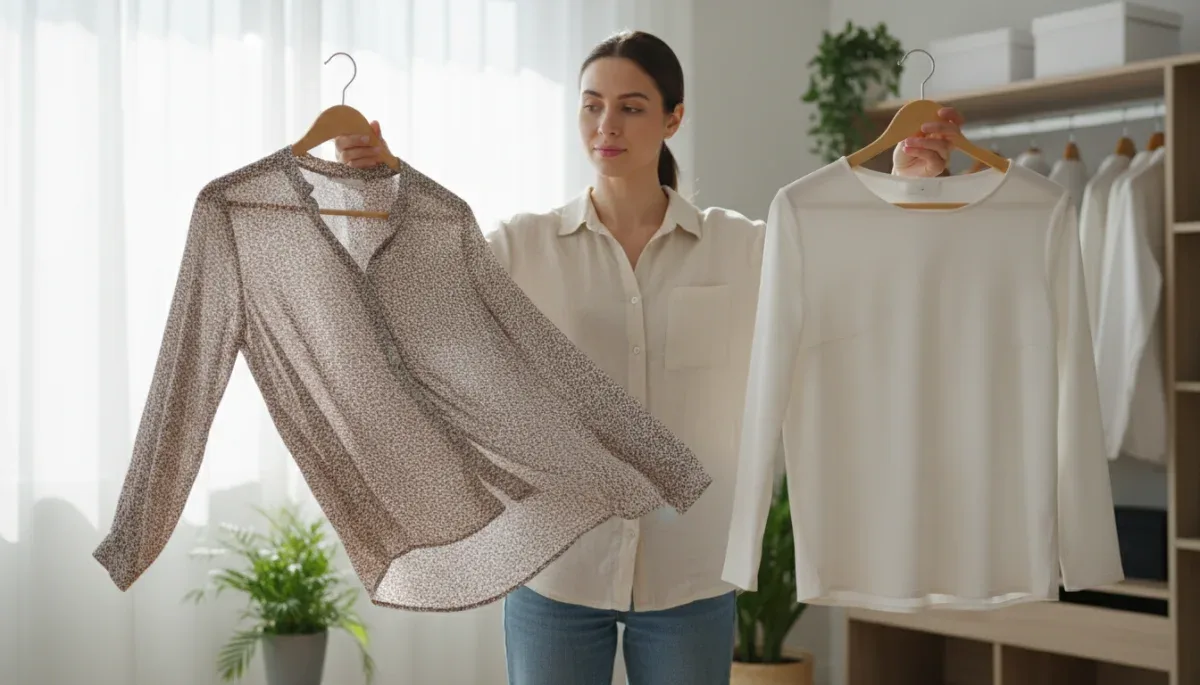
Polyester is inherently non-porous and hydrophobic, meaning the individual fibers cannot absorb liquid sweat. When unventilated standard polyester is worn in warm conditions, heat and evaporated body moisture become trapped between the fabric and your skin, creating an insulating greenhouse effect. While athletic garments utilize specialized microfiber polyester knits engineered with moisture-wicking channels to pull surface sweat to the exterior, ordinary non-athletic polyester garments found in fast-fashion tops tend to feel clammy and hot during extended daytime wear.
In colder weather, polyester reverses this dynamic by functioning as a dependable thermal barrier. Because it traps still air and resists moisture from exterior humidity, lightweight polyester linings and thermal knits keep warmth closer to the body. Viscose, conversely, can feel cool and damp in winter if you begin sweating under heavy outerwear, because the cellulose holds onto moisture and conducts heat away from the skin.
Odor retention and sweat management
Daily clothing must withstand natural perspiration without developing permanent odors after a few weeks of use. Viscose manages body odor similarly to natural cotton. Because cellulose absorbs aqueous sweat and allows it to evaporate across the surface of the garment, sweat does not pool heavily on the skin. Furthermore, natural cellulose fibers provide an inhospitable environment for lipid-loving skin bacteria. As a result, viscose shirts rarely develop stubborn underarm odors that linger after a standard laundry cycle.
Polyester presents a well-documented challenge regarding body odor retention. Synthetic fibers are oleophilic, meaning they naturally attract and bind to non-polar oils, sebum, and fatty acids secreted by human apocrine glands. Once skin oils penetrate the micro-crevices of polyester filaments, ordinary detergent rinses struggle to strip them clean. Over weeks of daily wear, standard domestic washing often fails to fully break down these lipid deposits, leading to a phenomenon known colloquially as permastink, where synthetic shirts release unpleasant odors as soon as body heat warms the fabric.
Practical habits for managing garment odors
- Select viscose or cotton-blend garments for warm, enclosed indoor spaces.
- Wash polyester items promptly after sweating rather than leaving them in damp hampers.
- Use targeted laundry detergents containing enzymes capable of dissolving body lipids.
- Avoid fabric softeners on synthetic tops, as wax coatings lock odors into polyester yarns.
Durability, stretch, and long-term shape retention
Longevity is where the balance tilts heavily in favor of polyester. Synthetic polymer chains have high tensile strength, meaning they tolerate abrasion, stretching, and friction without breaking or snapping. You can wear a polyester dress or trousers dozens of times, pull them over your head, pack them tightly into travel luggage, and brush against rough surfaces without causing fiber breakdown. Polyester maintains its dimensional stability throughout hundreds of wash and dry cycles, showing little to no seam distortion or fabric thinning.
Viscose exhibits significantly lower mechanical durability, particularly whenever it gets wet. Water molecules interrupt the hydrogen bonds between the regenerated cellulose chains, reducing the fabric's tensile strength by up to fifty percent while damp. Agitation inside an aggressive washing machine drum can easily warp viscose seams, stretch collar openings out of alignment, or tear delicate hems. Furthermore, viscose is prone to surface pilling when subjected to daily friction from purse straps, seat belts, or underarm motion, giving well-worn garments a fuzzy, aged appearance relatively early in their lifecycle.
Wrinkle resistance is another clear point of divergence. Polyester possesses natural elastic memory, which allows the filaments to snap back into a flat alignment after being folded, crumpled, or sat upon for hours. Viscose lacks structural elasticity and wrinkles readily from normal sitting or folding. An unironed viscose garment often displays deep horizontal creases across the lap and lower back after a short commute, requiring regular steam treatment to look crisp.
Washing instructions and shrinkage risks
The practical effort required to clean a garment plays a central role in everyday wardrobe satisfaction. Polyester is one of the easiest fabrics to maintain at home. It withstands standard machine cycles on warm or cold water settings, tolerates regular spin extraction, and dries rapidly when hung on a line or tumbled on low heat. Because the polymer melting point is relatively high compared to standard wash temperatures, polyester does not shrink in lukewarm water and resists fading from domestic detergents.
Viscose demands cautious handling to avoid permanent garment damage. Cellulose fibers swell when submerged in water, and if that wet swelling is accompanied by heat or vigorous mechanical tumbling, the fibers contract irreversibly as they dry. A single accidental cycle through a hot dryer can shrink a viscose dress by one or two entire clothing sizes. Even cold-water machine washing can leave viscose looking stiff and misshapen until it is gently reshaped by hand while damp and treated with a warm iron or clothes steamer once dry.
Safe laundering rules for both textiles
- Read the sewn-in care label carefully, as many pure viscose garments mandate dry cleaning or hand washing.
- Wash viscose inside a mesh garment bag using cold water and low-speed spin cycles.
- Air-dry viscose flat on a drying rack to prevent water weight from stretching the shoulders.
- Tumble dry polyester garments on low heat to avoid static cling and thermal surface glazing.
At a glance
| Factor | What to know |
|---|---|
| Breathability | Viscose stays airy and cool against the skin, while standard polyester traps body heat and humidity. |
| Wash and care | Polyester handles standard machine wash cycles easily, whereas viscose shrinks and distorts under heat. |
| Durability | Polyester resists tearing, abrasion, and pilling, while viscose weakens significantly when damp. |
| Odor resistance | Viscose releases sweat cleanly, but polyester binds to body oils and can trap persistent odors over time. |
Frequently asked questions
Does viscose shrink more easily than polyester?
Yes, viscose shrinks substantially more than polyester when exposed to water and heat. Plant-derived cellulose fibers absorb liquid, swell, and contract tightly under mechanical agitation or tumble drying. Polyester is synthetic plastic that does not absorb moisture, maintaining its original dimensions even after regular laundering.
Which fabric is better for warm summer days?
Viscose is generally better for hot summer weather because its porous fibers allow air circulation and absorb moisture. Standard non-athletic polyester traps body heat against the skin, creating a damp, clammy feeling. However, specialized polyester athletic garments with engineered wicking knits handle vigorous exercise sweat effectively.
Why does my polyester clothing smell bad after washing?
Polyester smells bad because its oleophilic synthetic fibers attract and chemically bind with natural skin oils and sebum. Standard mild detergents and cold water rinse cycles frequently fail to strip these oily residues from deep within the plastic strands, causing bacterial odors to reactivate with body heat.
Can you iron viscose and polyester clothes safely?
You can iron both fabrics safely by using low heat settings without direct, prolonged pressure. High heat will melt polyester filaments into a shiny plastic sheen, while scorching can burn dry viscose. Using a pressing cloth or a handheld vertical garment steamer is the safest approach for both materials.
The bottom line
Viscose provides unmatched warm-weather comfort, a flattering drape, and natural breathability, making it well-suited for blouses, summer dresses, and relaxed indoor clothing that you do not mind washing gently. Polyester offers unbeatable structural durability, wrinkle resistance, and zero-fuss machine maintenance, making it the practical pick for structured outerwear, work trousers, and active layers. Before purchasing, verify the care tag for dry-clean warnings and check whether the item is pure fiber or a blend.

Written by
Lucas Bastos
Lucas Bastos covers electronics and gadgets for S2YOU, from audio, smart-home and phone accessories to product-testing programs for tech. He compares specs, prices and return policies across retailers, and checks every detail on the brand's official site before publishing.