
Choosing Between Wooden and Plastic Cutting Boards
Advertisements
Choosing between wooden and plastic cutting boards comes down to how you wash dishes, how often you sharpen kitchen knives, and which raw ingredients you prepare most frequently. Both materials provide functional surfaces for everyday meal preparation, yet they react differently to moisture, sharp edges, and chemical sanitizers over years of household use.
This comparison helps home cooks equip their prep stations efficiently without overspending on kitchen accessories. The catch is that neither material is universally superior across every task, meaning many kitchens function best with a deliberate combination rather than an exclusive choice.
How food safety and bacteria absorption differ
The primary concern for most shoppers centers on how each surface interacts with foodborne pathogens like Salmonella and Campylobacter from raw meat and poultry. For decades, home cooks assumed that nonporous plastic was inherently more sanitary than porous wood because moisture cannot penetrate synthetic polymers. However, published food safety research conducted by researchers at the University of Wisconsin-Madison demonstrated that fine hardwoods possess natural capillary action that pulls residual bacteria below the cutting surface, where microbes dry out and fail to multiply.
Advertisements
Plastic boards present a clean, impervious surface when straight out of retail packaging, making initial sanitation straightforward. Over time, repeated contact with sharp chef knives creates fine trenches and ragged plastic burrs across the prep zone. These microscopic grooves trap meat proteins and moisture, resisting hand washing with warm water and dish soap. The United States Department of Agriculture advises that once plastic boards develop deep knife grooves that are difficult to clean, you should discard and replace them.
Advertisements
Wood requires manual washing because high-temperature dishwasher cycles warp laminated seams and crack natural grain lines. When cleaned promptly after use with hot water, mild dish detergent, and an occasional chlorine bleach or diluted white vinegar rinse, quality wood remains safe for raw produce, bread, and cooked proteins. For households that prepare raw poultry several nights a week, having distinct prep surfaces remains the most effective safeguard against cross-contamination regardless of base material.
Impact on knife edge retention and blade wear
Kitchen knives represent an ongoing investment, and your prep surface dictates how frequently those blades require honing and stone sharpening. Hardwood boards, particularly those milled from rock maple, beech, walnut, and cherry, exhibit yielding cellular structures that cushion steel cutting edges upon impact. End-grain wooden boards, assembled so the wood fibers point vertically toward the blade, allow sharp edges to slip between grain bundles rather than severing horizontal fibers.
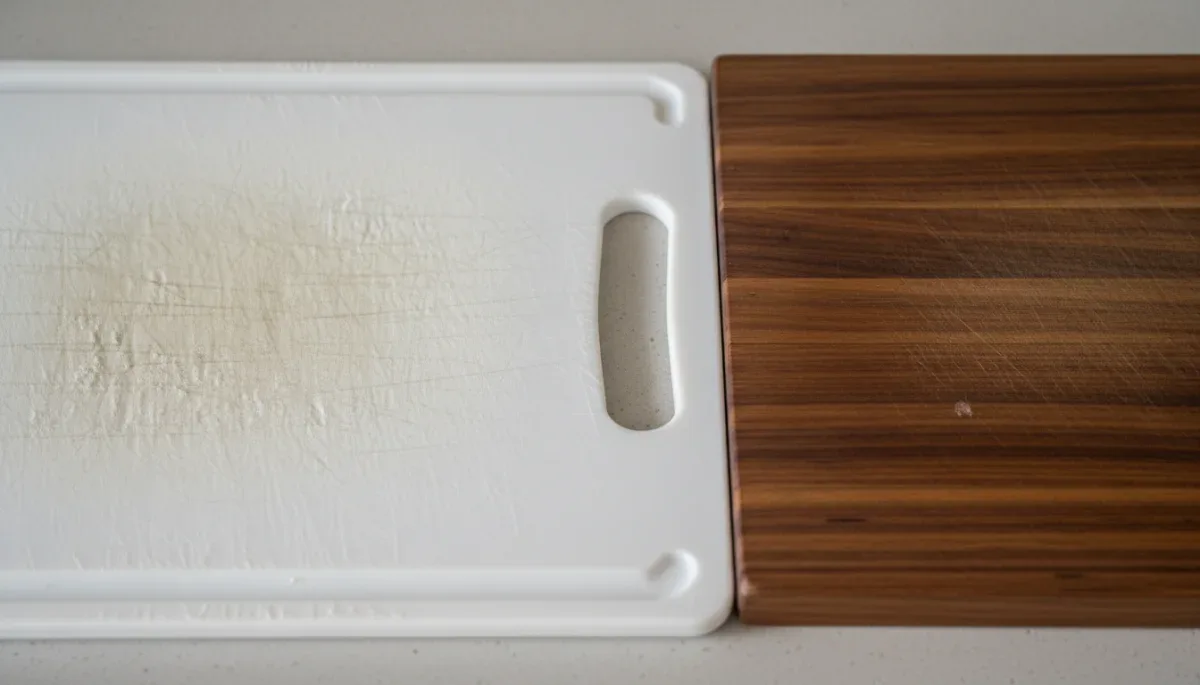
Standard plastic boards are manufactured from high-density polyethylene, known as HDPE, or polypropylene. These materials provide sufficient give for basic utility work, but they lack the self-healing grain dynamics found in dense timber. Thin or cheap flexible cutting mats often use rigid composite plastics that cause knife edges to roll over, dulling fine Japanese or German cutlery significantly faster than seasoned hardwood blocks.
Key factors affecting blade wear across surfaces
- Wood grain orientation: End-grain boards preserve sharp edges longest, whereas edge-grain boards offer intermediate durability at lower production costs.
- Plastic polymer density: Thick commercial HDPE provides a softer landing for steel blades than cheap rigid polypropylene mats.
- Surface texture: Heavily textured plastic finishes increase friction against delicate blade tips during rapid slicing motions.
- Bamboo hardness: Bamboo grass contains high levels of natural silica, which abrades cutting edges faster than domestic maple or walnut.
Cleaning requirements and maintenance routines
Daily maintenance demands divide these two materials more sharply than any other practical consideration. A plastic cutting board fits directly into standard residential dishwashers, where prolonged exposure to water above 140 degrees Fahrenheit and concentrated detergents strips grease and kills surface pathogens. This ease of cleaning makes plastic an attractive choice for busy weeknight cooking and quick lunch prep where time is limited.
A wooden prep board demands consistent hand care to maintain structural stability. Submerging wood in a sink full of soapy water causes the dry fibers to absorb moisture unevenly, resulting in cupping, warping, and joint separation along glue lines. Once washed by hand and wiped dry with a clean towel, a wooden board must dry standing on edge so air circulates across both faces simultaneously.
Long-term timber care involves applying food-grade mineral oil or beeswax board cream every few weeks depending on indoor humidity and usage frequency. This non-drying oil fills porous cell walls, repelling surface liquid and preventing the wood from drying out and checking. If a wooden surface develops rough patches or shallow stains, the owner can restore it using fine-grit sandpaper and fresh mineral oil, an option that synthetic boards do not support.
Material lifespan and environmental waste
Longevity shapes the true cost of kitchen tools over years of daily meal preparation. A well-constructed hardwood cutting board measuring at least one inch in thickness can last for decades when maintained with regular oiling and timely resurfacing. Because wood is organic, small scratches settle naturally, and substantial wear can be planed away without releasing microplastic particles into the domestic wastewater stream or food supply.
Plastic boards provide shorter working lifespans under daily household use. As knife cuts accumulate across the central working area, the rough texture becomes impossible to sanitize thoroughly, requiring complete disposal. While polyethylene and polypropylene carry resin identification codes for municipal recycling programs, food-contaminated plastics with heavy internal staining are frequently rejected by recycling processing facilities and redirected to municipal landfills.
Recent environmental health studies have also raised questions regarding secondary microplastic shedding during food slicing on textured plastic boards. Microscopic shavings cut from high-density plastic boards can adhere to moist ingredients like garlic, cheese, and damp meats during aggressive chopping. Home cooks looking to minimize synthetic materials in direct contact with warm or acidic food often gravitate toward untreated solid timber or pressed wood-fiber composite surfaces for this specific reason.
Cost comparison across retail budgets
Pricing for prep surfaces spans modest single-digit purchases to substantial culinary investments. Entry-level plastic boards and color-coded flexible mats sell for five to fifteen dollars at national department stores and mass online retailers, allowing shoppers to buy dedicated boards for meat, fish, and produce without straining their kitchen budget. Commercial-style HDPE utility boards with juice grooves typically sell between twenty and forty dollars depending on dimensions and thickness.
Quality wooden boards carry higher initial price tags due to raw lumber harvesting, seasoning, and multi-step joinery work. Modest edge-grain bamboo and acacia boards are widely available between fifteen and thirty dollars, though acacia varies in density and bamboo relies heavily on adhesive resins. Domestic rock maple and American walnut boards from established kitchenware brands usually retail between fifty and one hundred fifty dollars for standard counter sizes.
Evaluating overall value requires balancing upfront expenditure against replacement intervals. Replacing a twenty-dollar plastic board every two years yields a cumulative expense comparable to buying a durable sixty-dollar maple slab that lasts fifteen years with routine care. Shoppers prioritizing short-term convenience and tight starting budgets benefit from affordable plastic, while those looking for enduring kitchen furniture find better long-term return in solid American hardwood.
Choosing the best setup for your kitchen workflow
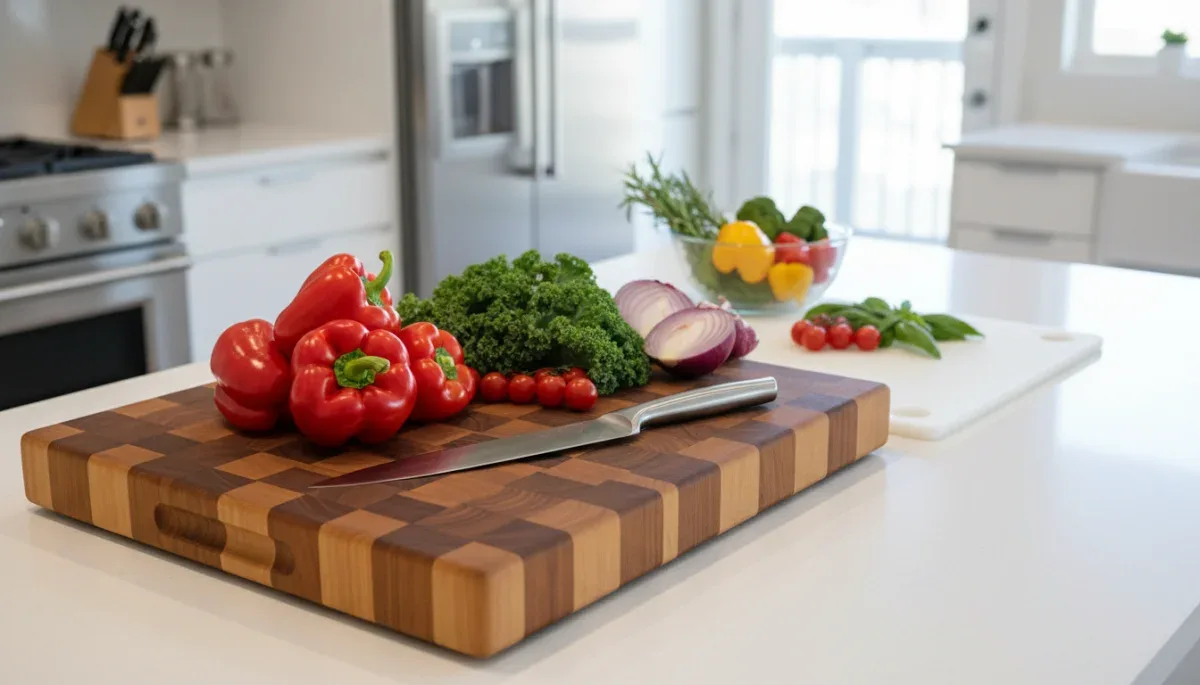
Most functional residential kitchens avoid relying on a single prep board for every culinary task. A hybrid workflow combines the low-maintenance sanitation of plastic with the knife-friendly stability of a large hardwood block. Under this practical system, home cooks designate one dishwasher-safe plastic board exclusively for breaking down raw poultry, beef, and seafood, keeping potential pathogens confined to an easily sanitized, high-heat wash cycle.
Meanwhile, a large, heavy wooden board remains stationed permanently on the main prep counter for daily chopping of onions, herbs, root vegetables, fruits, and bread. Because produce and dry ingredients carry lower pathogen transfer risks compared to raw butchery, wiping down the wooden station with hot soapy water requires minimal physical effort while providing an expansive, stable cutting field that preserves your chef knife edge.
When selecting your setup, measure your countertop prep depth and sink interior before ordering. A massive wooden butcher block looks appealing online but causes frustration if it cannot tilt comfortably under your kitchen faucet for routine rinsing. Similarly, verify that any plastic utility board you purchase fits inside your dishwasher rack without obstructing the rotating spray arm or preventing the door latch from sealing properly.
At a glance
| Factor | What to know |
|---|---|
| Dishwasher safety | Plastic tolerates high-heat sanitizing cycles, while wood must always be washed by hand. |
| Knife longevity | Hardwood cushions sharp edges, whereas scarred or rigid plastic accelerates blade dulling. |
| Service life | Wood lasts decades through sanding and oiling, while deeply grooved plastic requires disposal. |
| Upfront price | Plastic offers lower initial costs, whereas quality hardwood represents a higher initial investment. |
Frequently asked questions
Can you put a wooden cutting board in the dishwasher?
No, you should never place wooden boards inside a dishwasher. Prolonged heat, harsh detergents, and sustained immersion in standing water cause solid wood and glued seams to swell, warp, crack, and separate permanently.
How do you know when to throw away a plastic cutting board?
Discard a plastic cutting board when its surface displays deep knife grooves, ragged plastic burrs, or persistent discoloration that normal dishwashing cannot lift. These scarred crevices trap bacteria and can shed microplastics into ingredients.
Is bamboo considered a wooden cutting board?
Bamboo is technically a fast-growing grass rather than timber, though manufacturers bind its culms with adhesives to form solid panels. It resists water absorption well, but its natural silica content dulls kitchen knife blades faster than traditional maple.
What oil is safe to use on wooden cutting boards?
Use only food-grade pure mineral oil, refined walnut oil, or commercial board creams blended with beeswax and carnauba wax. Standard vegetable oils like olive, canola, and corn oil spoil over time, turning rancid and causing sour odors inside wood grain.
The bottom line
Plastic cutting boards excel at simple dishwasher sanitation and low-cost raw meat preparation, while hardwood blocks provide superior knife protection, surface repairability, and multi-decade lifespans on your counter. Combining an affordable dishwasher-safe synthetic board for animal proteins with a spacious oiled maple board for produce creates a clean, durable prep routine. Before purchasing, measure your sink interior and dishwasher rack clearance to ensure your chosen board sizes fit your daily cleaning setup.

Written by
Maria Teixeira
Maria Teixeira covers clothing and shoes for S2YOU, from seasonal sales and sizing guides to free-trial and review programs run by fashion brands. She compares prices, return policies and program rules across retailers, and checks every detail on the brand's official site before publishing.