
Cast iron vs carbon steel skillets for beginners
Advertisements
Cast iron and carbon steel skillets share nearly identical cooking properties, but carbon steel heats up faster and weighs less, while cast iron holds heat longer and generally costs less upfront.
This comparison helps beginner home cooks pick their first durable, non-Teflon skillet without overspending, though both metals demand manual washing and routine seasoning to stay rust-free.
Material composition and physical weight differences
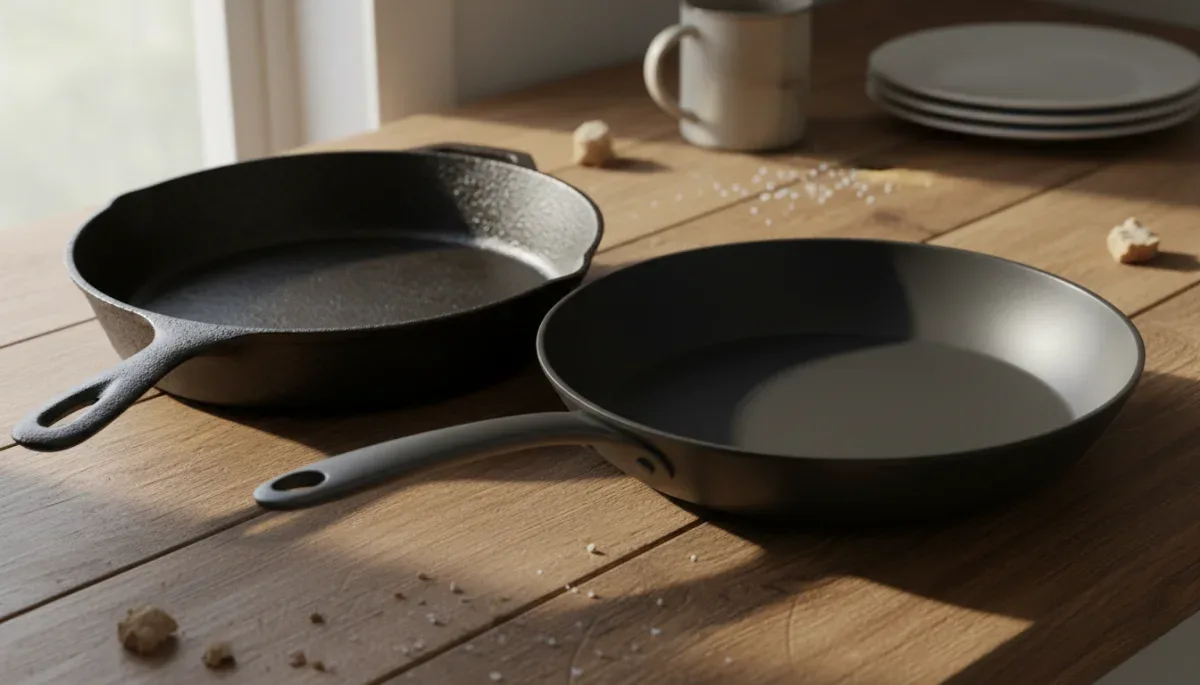
Understanding the difference between cast iron and carbon steel begins with metallurgy. Both cookware types consist of iron and carbon alloys. Traditional cast iron contains roughly two to four percent carbon, which makes the metal brittle during production. Because liquid iron is poured into sand molds to form pans, manufacturers must cast the walls and cooking floor relatively thick to ensure structural strength. A standard ten-inch cast iron skillet typically weighs between five and six pounds without food.
Advertisements
Carbon steel contains less carbon, generally around one to two percent. This lower carbon content allows manufacturers to roll and press the metal into sheets rather than pouring it into molds. The resulting skillet is stamped into shape, yielding thinner walls and a smoother surface straight from the factory. A standard ten-inch carbon steel pan usually weighs between three and four pounds, making it noticeably lighter than its cast iron equivalent.
Advertisements
For beginner cooks, physical weight determines how comfortably a pan moves between the stovetop, oven, and sink. Maneuvering a six-pound cast iron pan with one hand requires substantial wrist strength, especially when carrying hot oil or heavy proteins. Carbon steel feels more like a conventional restaurant sauté pan, offering greater agility during daily preparation.
Heat retention versus temperature responsiveness
Thermal properties dictate how each pan responds when you turn the stove burner up or down. Cast iron is known for exceptional thermal mass, which refers to the total amount of heat energy the material can store. Because the pan is thick and dense, it takes several minutes to preheat evenly. Once hot, however, cast iron drops very little in temperature when cold food enters the cooking surface.
This steady heat retention makes cast iron dependable for searing thick cuts of meat, baking cornbread, and deep-frying at stable oil temperatures. The disadvantage is slow responsiveness. If a delicate sauce starts to scorch, removing the burner flame will not cool the pan quickly enough to prevent burning.
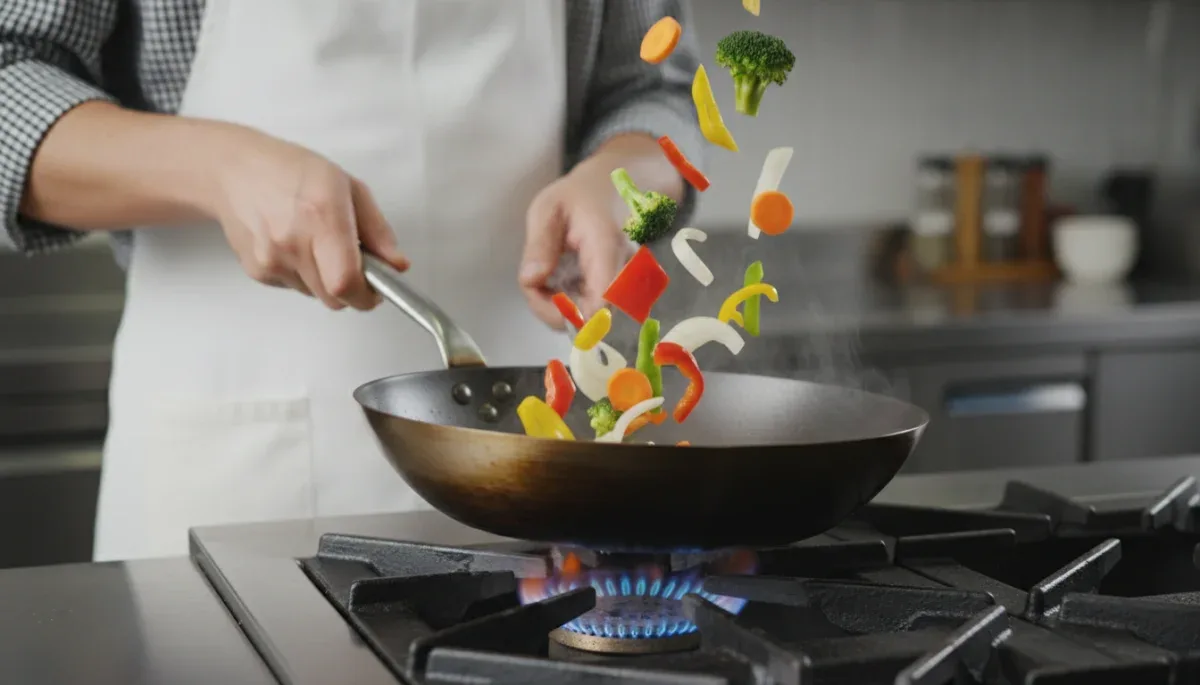
Carbon steel behaves with greater agility. It heats up in a fraction of the time required by cast iron and cools down promptly when you lower the burner flame or pull the pan off the heat source. This rapid thermal response makes carbon steel practical for quick stovetop tasks where timing matters.
Dishes that benefit from rapid temperature changes
- Stir-fried vegetables that need high initial heat without softening into mush
- French omelets that require delicate heat management to avoid browning
- Pan sauces that must reduce quickly and stop cooking on command
Seasoning processes and daily maintenance routines
Both cast iron and carbon steel lack synthetic chemical coatings. Instead, they rely on seasoning, which is a layer of cooking oil bonded to the metal through polymerization under high heat. Once established, this natural patina creates a slick cooking surface and protects bare metal against moisture and rust.
Factory-purchased cast iron pans usually arrive pre-seasoned with vegetable oil, allowing beginners to cook immediately after a quick rinse. Carbon steel skillets, by contrast, almost always ship with a protective layer of beeswax or industrial machine oil to prevent corrosion during transit. Beginners must scrub this coating away with hot water and dish detergent before applying their first layers of seasoning in the oven or on the stovetop.
Daily cleaning follows similar guidelines for both metals. Neither pan can go into a dishwasher, and neither should soak in a sink full of water. Wash the pan by hand using warm water and a non-abrasive sponge. A small drop of gentle dish soap will not strip polymerized oil, contrary to persistent kitchen myths. Dry the pan immediately on a warm stovetop burner and wipe on a microscopic film of neutral oil before storage.
Cooking performance across common beginner recipes
When cooking daily meals, pan shape and surface texture influence results just as much as thermal properties. Cast iron pans traditionally feature straight vertical walls and dual pour spouts. This architecture excels at retaining grease during shallow frying and accommodating liquid layers in casseroles or Dutch baby pancakes.
Carbon steel pans feature flared, sloping sides designed for movement. If you like flipping eggs, sautéing diced vegetables with a wrist flick, or sliding an omelet directly onto a plate, the angled rim of carbon steel facilitates that motion. Cast iron vertical walls make spatula access slightly more awkward for delicate foods like fish fillets.
Both materials share one critical limitation that beginners must respect: acid sensitivity. Simmering acidic ingredients like tomato sauce, white wine reductions, or heavy lemon glazes for extended periods will strip the seasoning layer and produce a metallic taste in the food. Enamel-coated pans or stainless steel remain better choices for acidic preparations.
Price points and retail availability for budget shoppers
Budget constraints frequently guide cookware purchases, and cast iron holds an edge in affordability within the United States market. Entry-level American-made cast iron skillets from brands like Lodge retail between twenty and thirty dollars at major department stores and online retailers. These pans last indefinitely and require minimal financial risk for someone testing non-synthetic cookware.
Carbon steel pans generally cost more at consumer retail outlets. Entry-level models from established European and commercial kitchen supply brands typically run between forty and eighty dollars for a ten-inch model. While affordable commercial carbon steel pans exist at restaurant supply stores, consumer-packaged brands carry a modest price premium over standard cast iron.
What to check before purchasing either skillet
- The diameter of your primary stove burner compared to the pan base
- The clearance of your home oven racks if the pan has an extended handle
- Whether the product arrives pre-seasoned or coated in shipping wax
- Return policies from online sellers regarding surface scratches or warpage
Ergonomics and handling on home stoves
Handle design and stovetop compatibility heavily influence long-term satisfaction. Cast iron skillets feature integral handles cast as a single piece with the body. These handles are relatively short, which helps the pan fit into compact ovens, but they conduct heat directly from the cooking surface. Users must keep silicone handle covers or folded kitchen towels nearby to prevent burns.
Carbon steel pans feature long, flat handles made of strip steel attached by heavy rivets. These handles stay cool longer during standard stovetop cooking because heat dissipates along the extended metal strip. However, the extra length can make storage in tight kitchen cabinets challenging and may prevent the pan from fitting into small toaster ovens.
Both cookware styles work reliably on gas, electric coil, and induction cooktops. On smooth glass-top ranges, the lighter weight and smoother base of carbon steel present less risk of scratching the glass surface during accidental drops, provided the base remains completely flat and free of heat-induced warping.
At a glance
| Factor | What to know |
|---|---|
| Physical weight | Carbon steel weighs around thirty percent less than cast iron of the same diameter. |
| Thermal behavior | Cast iron holds heat longer for hard searing; carbon steel adjusts rapidly to flame changes. |
| Initial preparation | Cast iron arrives pre-seasoned; carbon steel requires stripping shipping wax before first use. |
| Retail pricing | Standard ten-inch cast iron skillets cost less than comparable carbon steel models. |
Frequently asked questions
Can I use soap on cast iron and carbon steel?
Yes, modern mild dish soap will not damage properly polymerized seasoning on either pan. Avoid harsh lye-based cleaners, abrasive scouring pads, and automatic dishwashers, which strip oil layers and cause bare iron to oxidize quickly.
Which pan is better for cooking eggs?
Carbon steel is generally easier for eggs because its smooth, stamped surface and sloping sides allow spatulas to slide underneath easily. Both pans release eggs cleanly once a stable seasoning layer develops.
Do these pans work on induction cooktops?
Yes, both cast iron and carbon steel are magnetic metals that perform well on induction stoves. Heat carbon steel gradually on induction to prevent rapid thermal shock from warping the thinner base.
Can either pan go inside the oven?
Yes, both pans handle high oven temperatures without damage. Check whether your carbon steel handle features an epoxy or silicone coating, as coated handles often have specific manufacturer temperature limits.
The bottom line
Beginner cooks who prioritize low cost, steady searing power, and instant usability out of the box will appreciate the forgiving nature of cast iron. Those who prefer lighter cookware with responsive temperature control and sloped sides for tossing ingredients will find carbon steel worth the extra initial cost. Before buying either pan, measure your storage cabinet depth and oven interior to ensure the handle length fits your kitchen space comfortably.

Written by
Maria Teixeira
Maria Teixeira covers clothing and shoes for S2YOU, from seasonal sales and sizing guides to free-trial and review programs run by fashion brands. She compares prices, return policies and program rules across retailers, and checks every detail on the brand's official site before publishing.