
Down vs Down Alternative Comforters: What to Choose
Advertisements
Choosing between a down comforter and a down alternative comforter comes down to how you balance thermal insulation, allergy risks, cleaning habits, and upfront costs. Down provides natural, lightweight insulation with exceptional breathability and long-term resilience, while synthetic alternatives offer dependable warmth, straightforward home maintenance, and safe materials for allergy sufferers.
This comparison helps sleepers who want consistent nighttime temperature regulation identify the specific specifications that affect comfort and durability, though finding the right balance requires evaluating how often you wash your bedding and the climate inside your bedroom. Examining fill types, construction methods, and retail specifications prevents unexpected maintenance problems down the road.
Natural down insulation and thermal performance
Natural down consists of the soft, fluffy plumage found beneath the exterior feathers of waterfowl, primarily geese and ducks. Unlike rigid quill feathers, down clusters feature thousands of delicate filaments radiating from a central point, forming a three-dimensional structure that traps pockets of air. This trapped air functions as a thermal buffer, retaining body heat while permitting moisture to evaporate outward into the room.
Advertisements
Because natural clusters expand to fill space without adding significant mass, genuine down provides the highest warmth-to-weight ratio among bedding fills. A comforter insulated with quality goose or duck down feels light across the body while preventing cold air pockets from settling around the shoulders. Duck down typically features slightly smaller clusters than goose down, though high-grade duck plumage performs comparably to standard goose down when cleaned and sorted correctly.
Advertisements
Natural fills also adapt well across variable bedroom temperatures because the organic structure breathes efficiently. While down insulates exceptionally well in winter, lighter-weight fills stay comfortable into spring by releasing excess humidity before sweat accumulates.
Key characteristics of natural plumage
- High loft that traps body heat without creating heavy physical pressure.
- Natural moisture dispersion that prevents humid sweat buildup under covers.
- Resilience that allows clusters to regain shape over years of use.
- Susceptibility to water retention that requires specialized cleaning procedures.
Down alternative materials and fiber performance
Down alternative comforters use manufactured or plant-derived fibers designed to mimic the loft and insulating behavior of natural plumage. The most common fill material is polyester microfiber, spun into exceptionally thin strands that trap ambient air between fine synthetic layers. Other common options include recycled polyester, modal, bamboo rayon, and natural cotton batting.
Synthetic microfibers do not harbor the organic dander, dust mites, or residual animal proteins that sometimes trigger allergic reactions or asthma flare-ups. For sleepers sensitive to biological fills, synthetic alternatives deliver reliable thermal comfort without respiratory irritation. The materials are inherently moisture-resistant, meaning they do not clump or lose structure when exposed to sweat or humidity.
The primary trade-off with synthetic fibers involves density and breathability. Because manufactured strands lack the microscopic interlocking architecture of bird plumage, manufacturers must pack more material into the shell to achieve equivalent thermal resistance. Consequently, a down alternative insert usually feels noticeably heavier and denser than a down insert providing identical warmth.
Common down alternative fill types
- Polyester microfiber engineered for lightweight softness and quick drying.
- Siliconized polyester clusters designed to resist clumping after repeated agitation.
- Lyocell and modal fibers sourced from wood pulp to improve vapor breathability.
- Recycled plastic fibers processed to lower environmental consumption.
Fill power and warmth ratings explained
Fill power measures the volume in cubic inches that one ounce of down occupies under laboratory testing conditions. A higher fill power number indicates larger clusters, greater loft, and superior insulating efficiency relative to weight. Bedding down typically ranges between 500 and 800 fill power, with premium goose varieties occasionally reaching higher marks.
Comforters using 550 to 600 fill power provide moderate warmth suitable for climate-controlled rooms or shoulder seasons like autumn and spring. Fill power ratings between 650 and 750 offer robust winter insulation, making them suitable for cold climates or bedrooms where heating is reduced overnight. Options reaching 800 fill power represent luxury grades, yielding immense loft with almost imperceptible physical weight.
Synthetic alternative comforters do not use fill power metrics because manufactured strands do not expand in identical volumetric patterns. Instead, manufacturers state synthetic warmth using overall fill weight measured in ounces or grams per square meter. A light summer synthetic insert generally contains 150 to 200 grams per square meter, whereas cold-weather inserts often contain 350 to 500 grams per square meter.
Interpreting weight and fill metrics
- Low fill power requires more ounces of material to reach equivalent warmth.
- High fill power produces airy comforters that drape lightly over the mattress.
- Grams per square meter directly reflect the physical heaviness of synthetic bedding.
- Overall warmth depends on both fill grade and bedroom ambient temperature.
Baffle box and shell construction methods
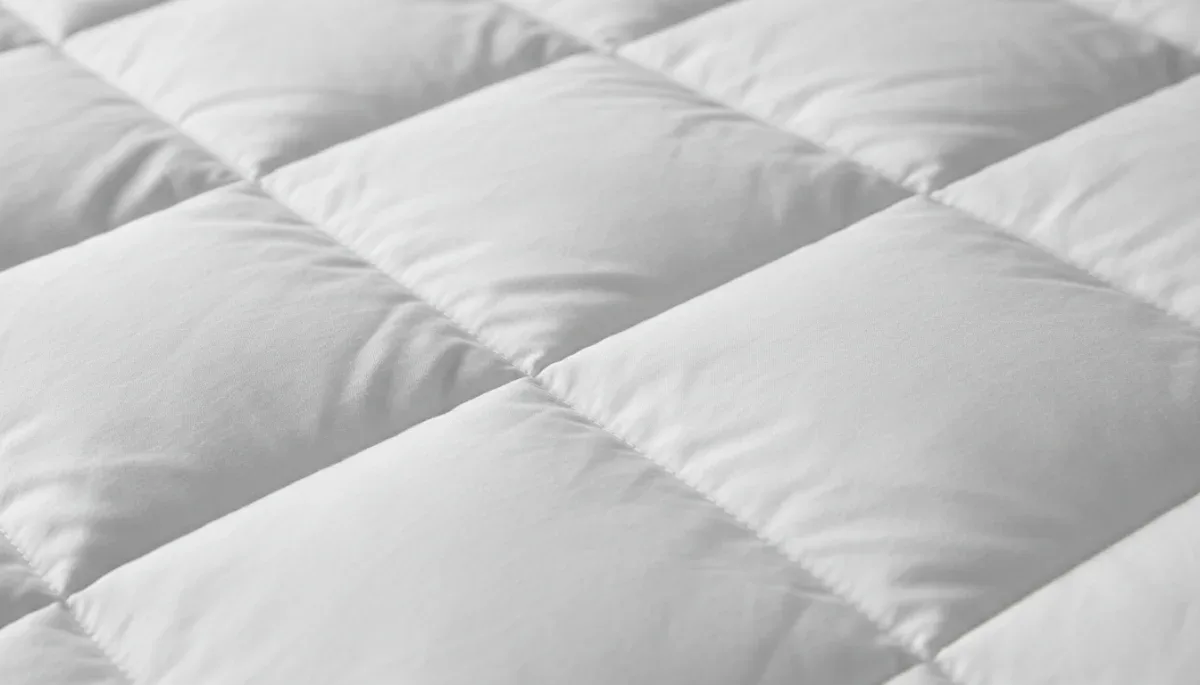
The internal architecture of the comforter shell determines whether the fill stays evenly distributed or shifts into corners over time. The two primary assembly techniques are baffle box construction and sewn-through construction. Baffle box shells incorporate thin strips of fabric sewn vertically between the top and bottom fabric layers, creating three-dimensional chambers that allow fill to expand upward to its maximum loft.
Sewn-through construction simply stitches the top and bottom sheets of fabric directly together in a grid pattern. While this method prevents the fill from migrating into adjacent sections, the stitching lines compress the material completely flat. These flattened seams create cold spots where heat escapes and chilly room air penetrates the bedding.
The exterior shell fabric also plays an essential role in durability and comfort. Cambric cotton weaves provide tight, down-proof barriers that prevent sharp quills or fine synthetic hairs from poking through the surface. Sateen weaves deliver a smoother hand-feel with a gentle sheen, while percale weaves offer crisp, matte breathability that keeps warm sleepers cool.
Structural elements to verify
- Internal fabric walls in baffle box shells that eliminate thermal leakage.
- Sewn-through grids that reduce manufacturing costs for mild-weather inserts.
- Down-proof fabric barriers that stop loose fibers from escaping the exterior.
- Corner loops and anchor tabs that secure the insert inside a duvet cover.
Maintenance, washing rules, and product lifespan
Routine maintenance practices differ sharply between down and synthetic comforters, directly influencing long-term ownership satisfaction. Down naturally repels routine dirt, but washing it requires careful handling. Submerging natural plumage strips away protective oils if done with harsh household detergents, causing clusters to become brittle, break down, and lose their insulating fluff.
When natural down must be laundered, it requires a front-loading commercial washing machine, gentle enzyme-free cleansers, and hours of low-heat tumble drying with clean wool dryer balls to break apart wet clumps. If left slightly damp inside the shell, wet down quickly develops mildew, destroying the comforter. As a result, many owners use protective duvet covers and limit natural down washing to once every few years.
Down alternative comforters tolerate frequent home washing in standard residential appliances. Synthetic fibers dry rapidly, resist clumping, and withstand regular water cycles without developing unpleasant biological odors. However, repeated exposure to high dryer heat can melt or weaken synthetic microfibers, gradually reducing loft and shortening overall product lifespan compared to properly maintained down.
Standard care requirements
- Dry down comforters on low heat for multiple hours to prevent hidden mildew.
- Wash synthetic comforters on gentle cycles using standard mild liquid detergent.
- Avoid fabric softeners that coat synthetic fibers and reduce vapor breathability.
- Use an outer duvet cover to shield both fill types from oils, sweat, and stains.
Ethical sourcing and health certifications to verify
When purchasing down bedding, independent third-party certifications provide transparency regarding animal welfare and industrial processing. The Responsible Down Standard and the Global Traceable Down Standard track plumage from agricultural hatcheries through sorting facilities, ensuring that down is collected as a byproduct of food production and prohibiting practices like live-plucking or force-feeding.
Purity testing is equally critical for allergy management. Clean down undergoes rigorous multi-stage washing and chemical-free steam sterilization to remove dander, pollen, and bacteria. The Downpass label and the International Down and Feather Bureau verification certify that the insulation meets rigorous sanitary cleanliness standards, rendering natural down safe for many people who mistakenly believe they are allergic to feathers.
For synthetic alternatives, health certifications focus on chemical safety and fabric emissions. The Standard 100 by OEKO-TEX ensures that the shell fabric and synthetic fill carry no harmful thresholds of formaldehydes, heavy metals, or volatile organic compounds. The Global Recycled Standard verifies that synthetic fills labeled as recycled plastic indeed use legitimate post-consumer PET bottles.
Certifications worth checking on labels
- Responsible Down Standard verifying that animal welfare protocols were met.
- Standard 100 by OEKO-TEX confirming fabrics are free of hazardous chemicals.
- Downpass certification verifying clean processing and trace-backed supply chains.
- Global Recycled Standard validating post-consumer plastic content claims.
At a glance
| Factor | What to know |
|---|---|
| Warmth to weight | Natural down delivers maximum insulation with noticeably less bulk than synthetic fibers. |
| Allergy resistance | Down alternative fibers prevent reactions to organic dander and resist dust mites naturally. |
| Cleaning routine | Synthetics wash easily in home machines, while down requires rare, specialized low-heat laundering. |
| Expected durability | Quality down retains loft for decades, whereas synthetic fibers compress after repeated washings. |
Frequently asked questions
Is natural down always warmer than down alternative?
Natural down is not inherently warmer in every configuration, but it requires far less material mass to achieve a high warmth level. A heavy synthetic comforter can match or exceed the insulation of a lightweight summer down comforter, though the synthetic option will weigh noticeably more across your legs.
Can people with feather allergies sleep under genuine down?
Many individuals sensitive to bedding can sleep under down if the fill has undergone proper multi-stage washing and sterilization. Most adverse reactions stem from dust mites and residual dander rather than the keratin in clean feathers, though verified hypoallergenic down or synthetic alternatives remain the safest options.
How often should a comforter be washed?
A comforter protected inside a clean duvet cover only needs washing once every one to two years. If used directly against the skin without an exterior cover, synthetic alternative comforters should be washed every few months, whereas down requires careful seasonal spot cleaning or professional laundering.
Why does a down alternative comforter feel heavier?
Down alternative feels heavier because solid polyester strands lack the intricate air-trapping clusters found in biological down. Manufacturers must incorporate a significantly higher volume of synthetic fibers to achieve identical thermal insulation, resulting in a denser and more substantial blanket drape.
The bottom line
Down comforters offer superior long-term loft, exceptional breathability, and unmatched lightweight insulation, while down alternative options deliver affordable, hypoallergenic comfort with hassle-free household laundry care. If you want a blanket that lasts for decades and sleep best without heavy fabric pressure, invest in certified down. If you need frequent machine washing or manage sensitive respiratory allergies, choose a high-density synthetic microfiber insert. Before buying, check the manufacturer care tag to ensure the comforter dimensions and washing instructions match your home washer capacity.

Written by
Maria Teixeira
Maria Teixeira covers clothing and shoes for S2YOU, from seasonal sales and sizing guides to free-trial and review programs run by fashion brands. She compares prices, return policies and program rules across retailers, and checks every detail on the brand's official site before publishing.